

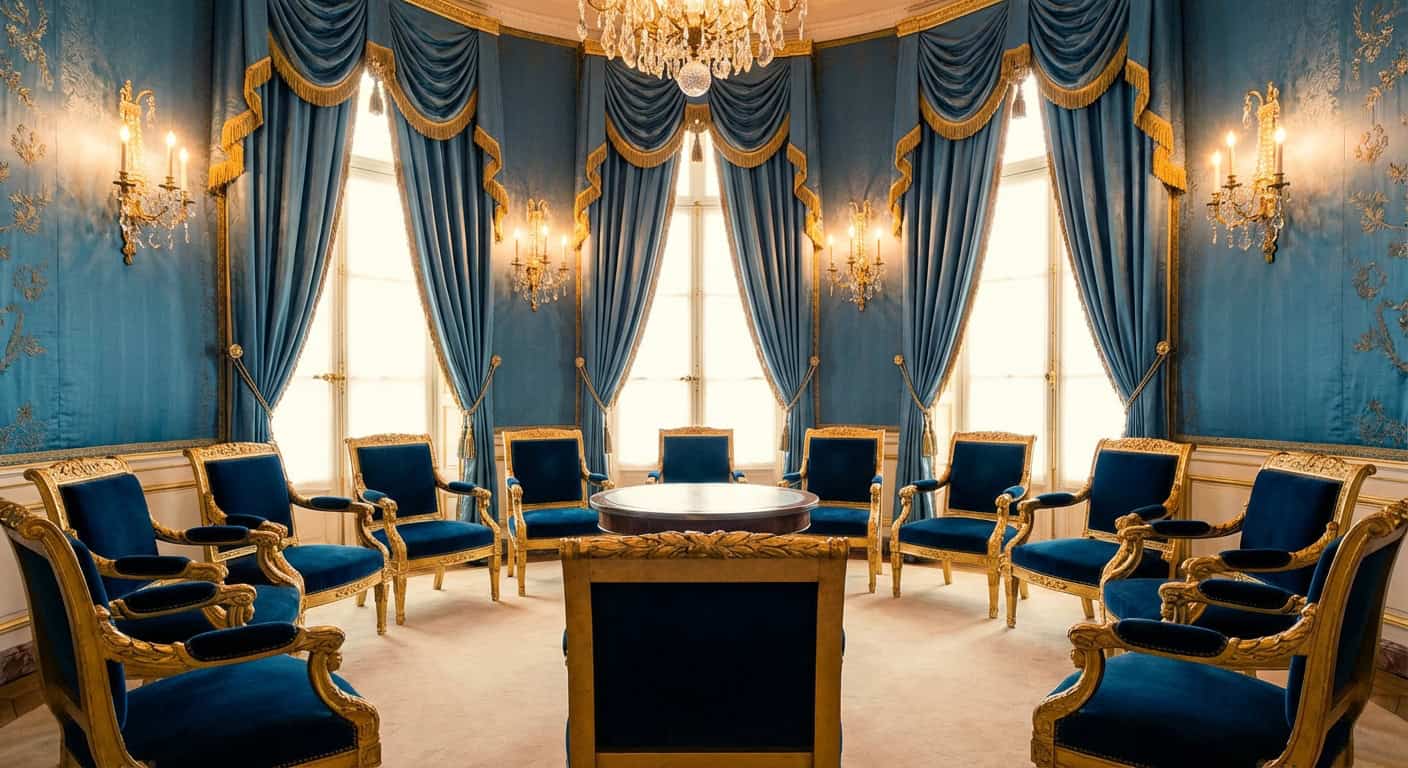
The White House has over 60,000 objects in its permanent collection.
Paintings, china, silverware, textiles — but the most fascinating pieces are the furniture. Desks where presidents signed documents that changed the world. Chairs that survived a fire set by a foreign army. Tables that have hosted kings, queens, and prime ministers for over two centuries.
Every piece of furniture in the White House has a story. Some were purchased by presidents who went over budget and got yelled at by Congress. Some were rescued from auction houses decades later by a first lady who refused to let them disappear. Some were gifts from foreign leaders. Some were handmade by American craftsmen whose names have been forgotten.
Here are 21 of the most famous pieces of furniture inside the White House right now — and the stories behind each one.
1. The Resolute Desk
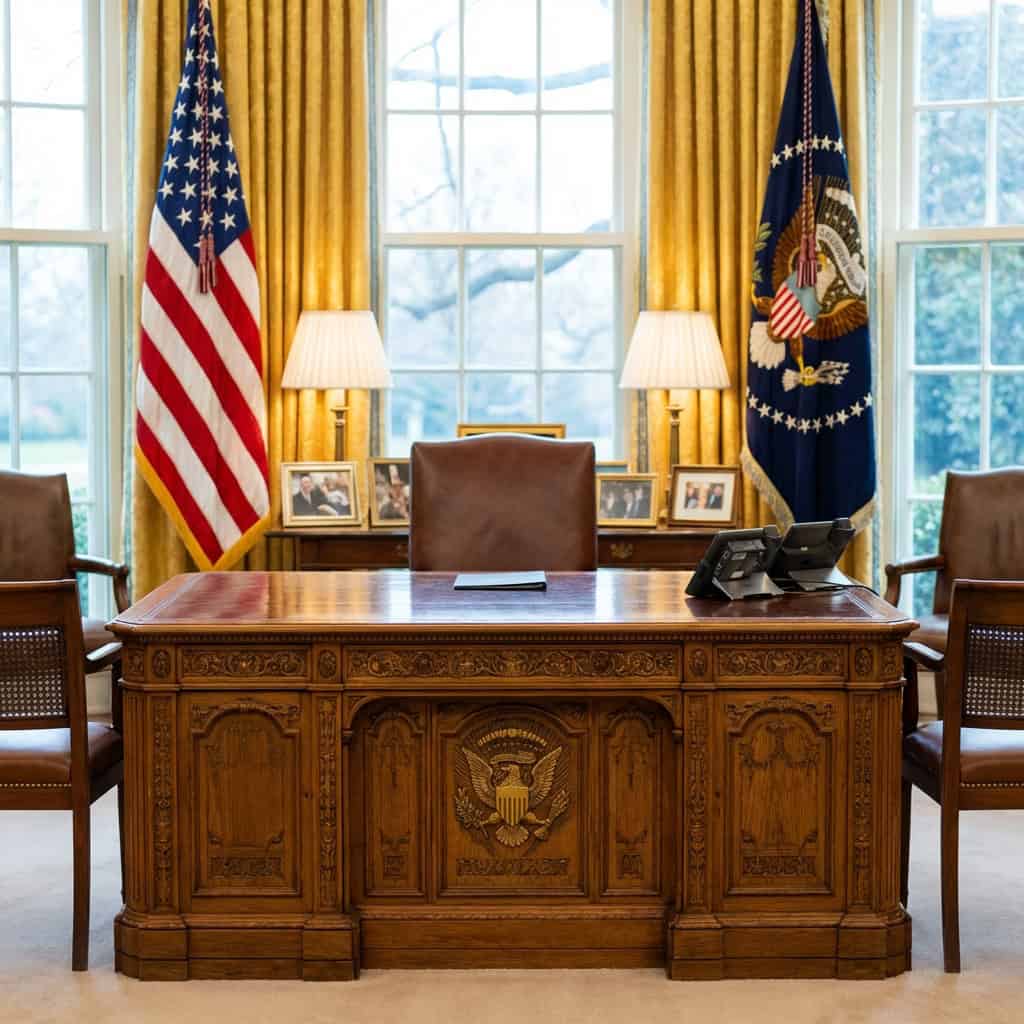
This is the most famous desk in the world, and it was built from a shipwreck.
In 1854, the British exploration ship HMS Resolute was abandoned in Arctic ice during an expedition. A year later, an American whaling vessel found the ship adrift, and Congress funded its repair and return to England as a gesture of goodwill.
When the Resolute was eventually decommissioned, Queen Victoria had its oak timbers crafted into a large partners desk and presented it to President Rutherford B. Hayes in 1880. It has been used by nearly every president since.
The desk is massive — over five feet wide, heavily carved, and weighing several hundred pounds. Franklin Roosevelt added a modesty panel to the front, which is the panel that John F. Kennedy Jr. was famously photographed peeking through as a toddler in 1963.
It sits in the Oval Office today, just as it has for decades. A gift from a queen, built from a rescued ship, sitting in the most powerful office on earth. That is a story no furniture maker could invent.
2. The Bellangé Suite
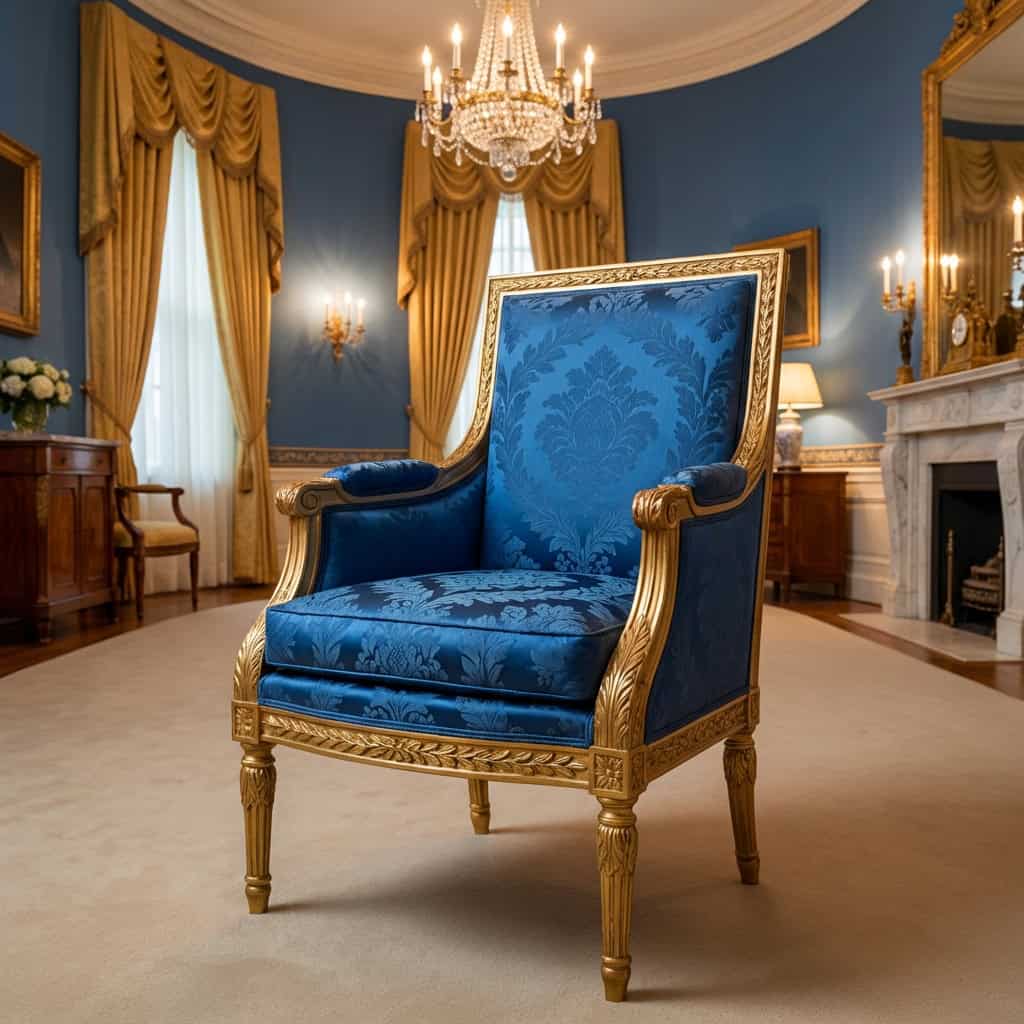
In 1817, President James Monroe needed to refurnish the White House after the British burned it to the ground during the War of 1812. Everything was gone — every chair, every table, every piece of silver.
Monroe sent agents to France with a budget and instructions to buy mahogany furniture for the Blue Room. The agents came back with gilded beechwood furniture instead — made by the renowned Parisian cabinetmaker Pierre-Antoine Bellangé — and a bill that was double what Congress had authorized.
The agents explained that “mahogany is not generally admitted in the furniture of a saloon, even at private gentlemen’s houses” in France. Monroe paid the difference out of his own pocket.
The original suite included 53 pieces — chairs, sofas, stools, and a pier table — all decorated with carved olive branches and upholstered in crimson satin. Most were sold at auction in 1860. Only the pier table remained continuously in the White House.
Jackie Kennedy made it her personal mission to track down and recover the originals. She found and acquired several chairs and a sofa, had reproductions made to fill in the gaps, and restored the Blue Room to something close to what Monroe envisioned two centuries ago.
3. The Lincoln Bed
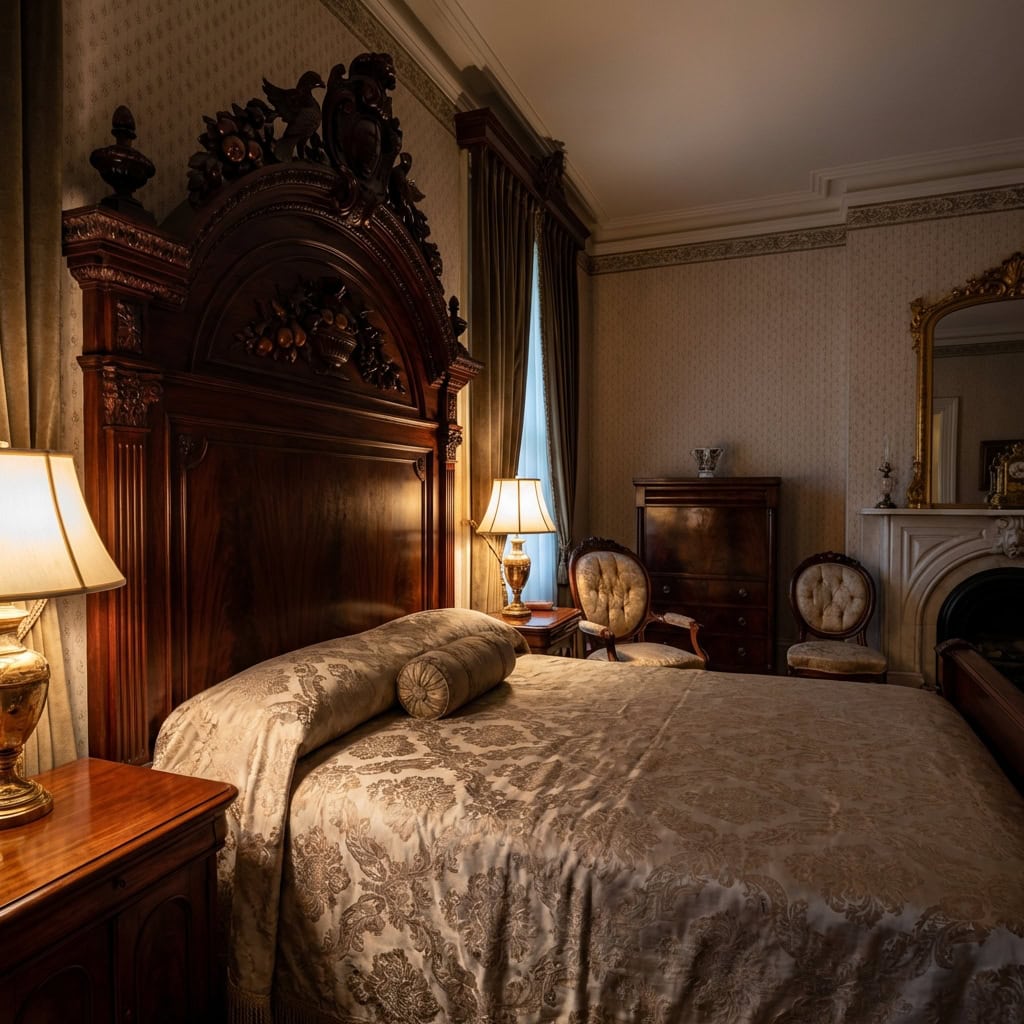
The Lincoln Bed is one of the most famous pieces of furniture in the White House — and Abraham Lincoln almost certainly never slept in it.
The bed was purchased by First Lady Mary Todd Lincoln in 1861 as part of an extravagant redecorating campaign that went wildly over budget. It is an enormous rosewood bed — over eight feet long and nearly six feet wide — with an ornately carved headboard that rises several feet above the mattress.
The bed was placed in what is now called the Lincoln Bedroom, but during Lincoln’s presidency, that room was used as his office and cabinet room. He signed the Emancipation Proclamation in that room. He did not sleep there.
The bed was used as a guest bed by later administrations, and its association with Lincoln became more legend than fact over time. But the piece itself is extraordinary — the scale, the carving, and the sheer weight of it make it one of the most imposing pieces of furniture in the entire building.
It is still there. It is still made up. And guests who sleep in it are sleeping in a bed that Mary Todd Lincoln chose — even if her husband never did.
4. The Monroe Doctrine Desk
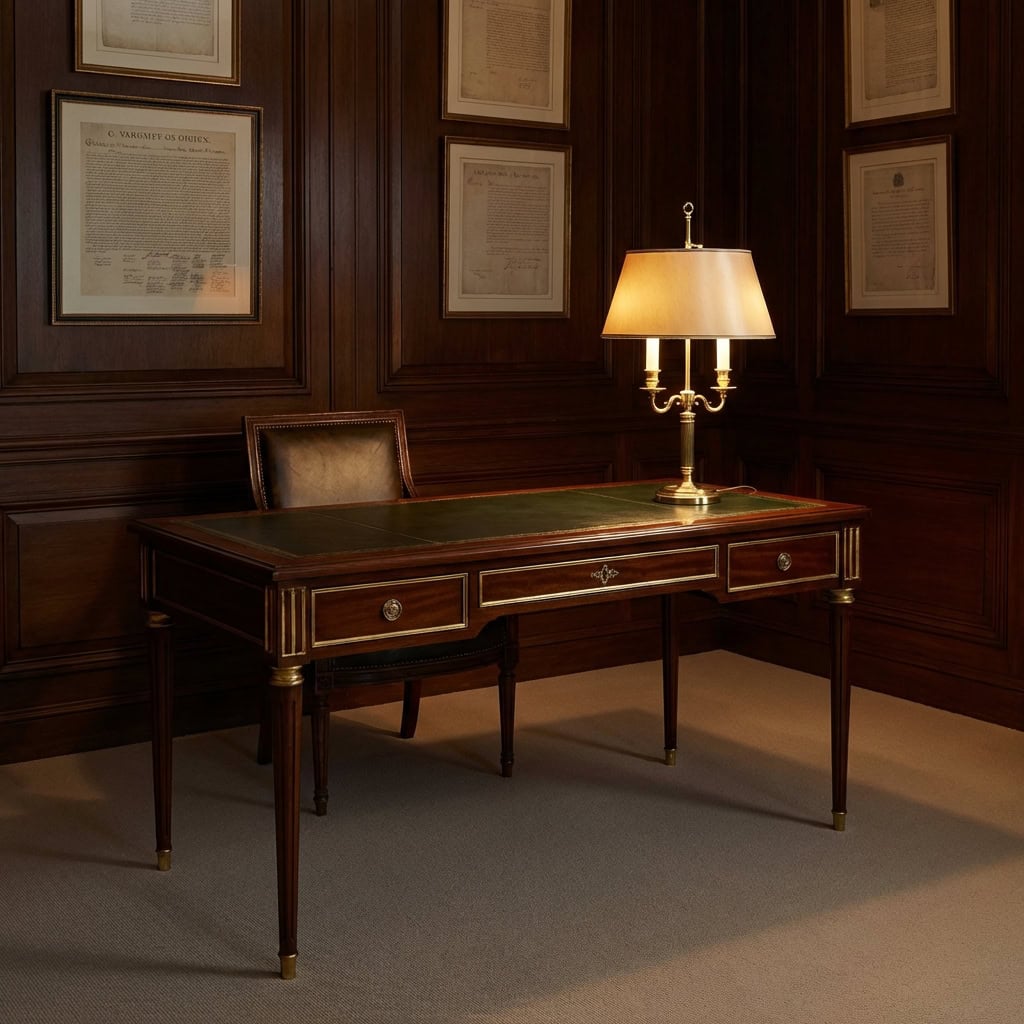
In December 1823, President James Monroe delivered his Annual Message to Congress — a document that would become known as the Monroe Doctrine, one of the most consequential foreign policy statements in American history.
The desk where he reportedly wrote and signed that message is still in the White House.
It is a French writing desk that the Monroes brought back from Paris after his time as Ambassador to France in the 1790s. It is elegant, compact, and distinctly French in design — a reflection of Monroe’s personal taste and his deep connection to French culture and craftsmanship.
First Lady Lou Hoover had a reproduction made in 1932 and placed it in a room she called the “Monroe Room” on the second floor. The space was later renamed the Treaty Room during the Kennedy administration.
The desk is not large. It is not flashy. But the document that was written on it told the entire Western Hemisphere that the United States would not tolerate European interference — and that declaration still shapes American foreign policy today.
5. The Monroe Plateau
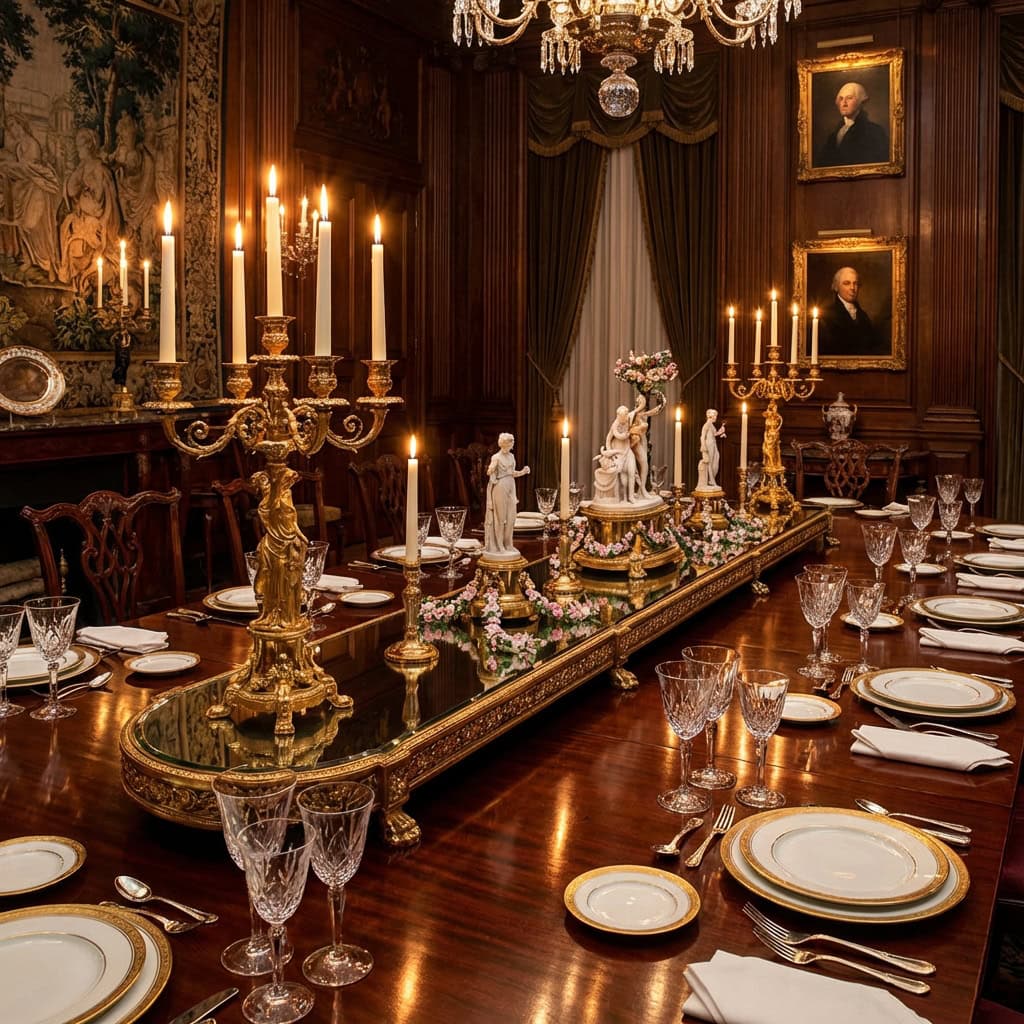
This is the single most elaborate object on any table in the White House — and it has been in continuous use for over 200 years.
The Monroe Plateau is a 14-foot-long bronze-doré centerpiece consisting of mirrored platforms, candelabra, and decorative figures. James Monroe purchased it from France as part of his post-fire refurnishing effort, and it has been the centerpiece of every State Dinner since.
It sits in the middle of the State Dining Room table during formal events — heads of state, monarchs, and prime ministers have eaten dinner on either side of it for two centuries.
The plateau is not technically furniture in the traditional sense — it is more of a sculptural table object — but it is one of the most famous and continuously used pieces in the entire White House collection. It survived the burning of the White House because it was purchased after the fire. It survived every renovation, every redecorating, and every change of administration because nobody — not one president, not one first lady — has ever looked at it and thought it should go.
Some things earn their place at the table.
6. The Treaty Table
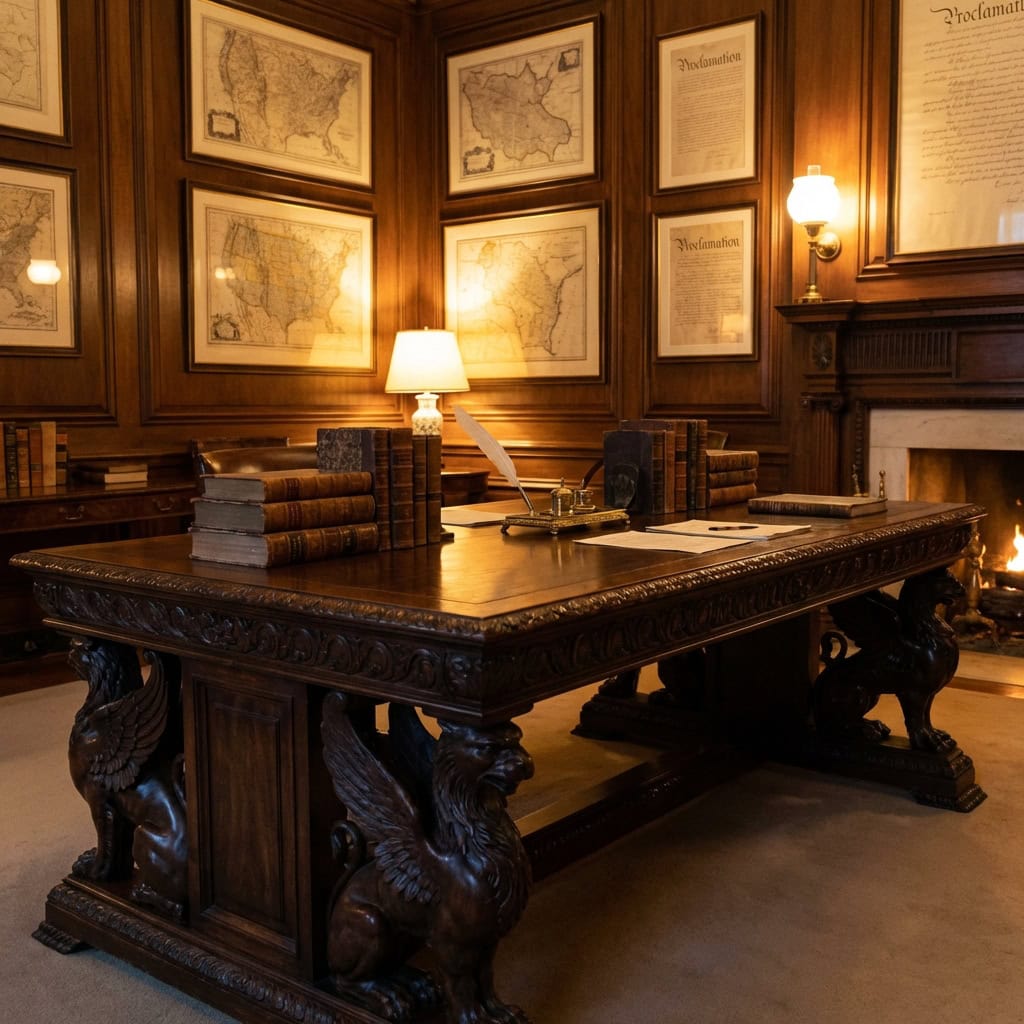
The Treaty Room on the second floor of the White House gets its name from the table at its center — a massive Victorian piece where multiple historic agreements have been signed.
The table is a large, heavy, dark wood piece with ornate carved legs that reflects the late 19th-century taste for substantial, imposing furniture. It has served as both a working surface and a ceremonial one — the kind of table that makes whatever you sign on it feel permanent.
The room itself has served many purposes over the years — it was Lincoln’s Cabinet Room, it was a telegraph office during the Civil War, and it was where the protocol ending the Spanish-American War was signed in 1898.
Presidents have used the table for signing ceremonies, late-night work sessions, and private meetings. It is not the most beautiful piece of furniture in the White House. But it might be the most used.
7. The Red Room Empire Sofa
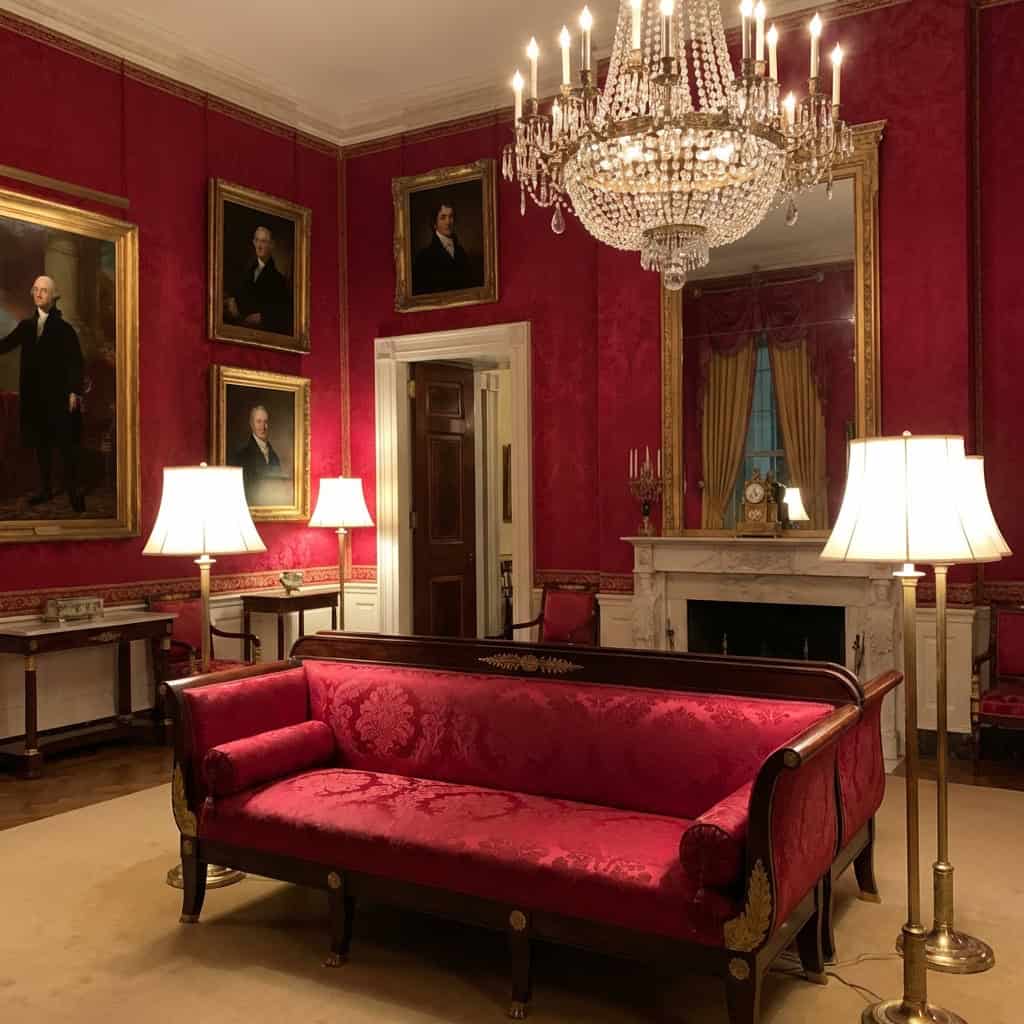
The Red Room is one of the most photographed rooms in the White House, and its centerpiece is a Federal-period Empire sofa that has survived more redecorations than almost any other piece of furniture in the building.
The sofa is upholstered in red silk and features the clean, symmetrical lines of early 19th-century American Federal design — a style influenced by ancient Greek and Roman forms that was popular in the decades after the Revolution.
First ladies have redecorated the Red Room repeatedly over the last two centuries — changing the wall coverings, the curtains, the carpet, and the accent furniture. But the Empire sofa has remained, anchoring the room through every change.
It is a testament to a simple truth about great furniture — when something is built well and designed with proportion and restraint, it outlasts every trend that passes through the room around it.
8. The East Room Grand Piano
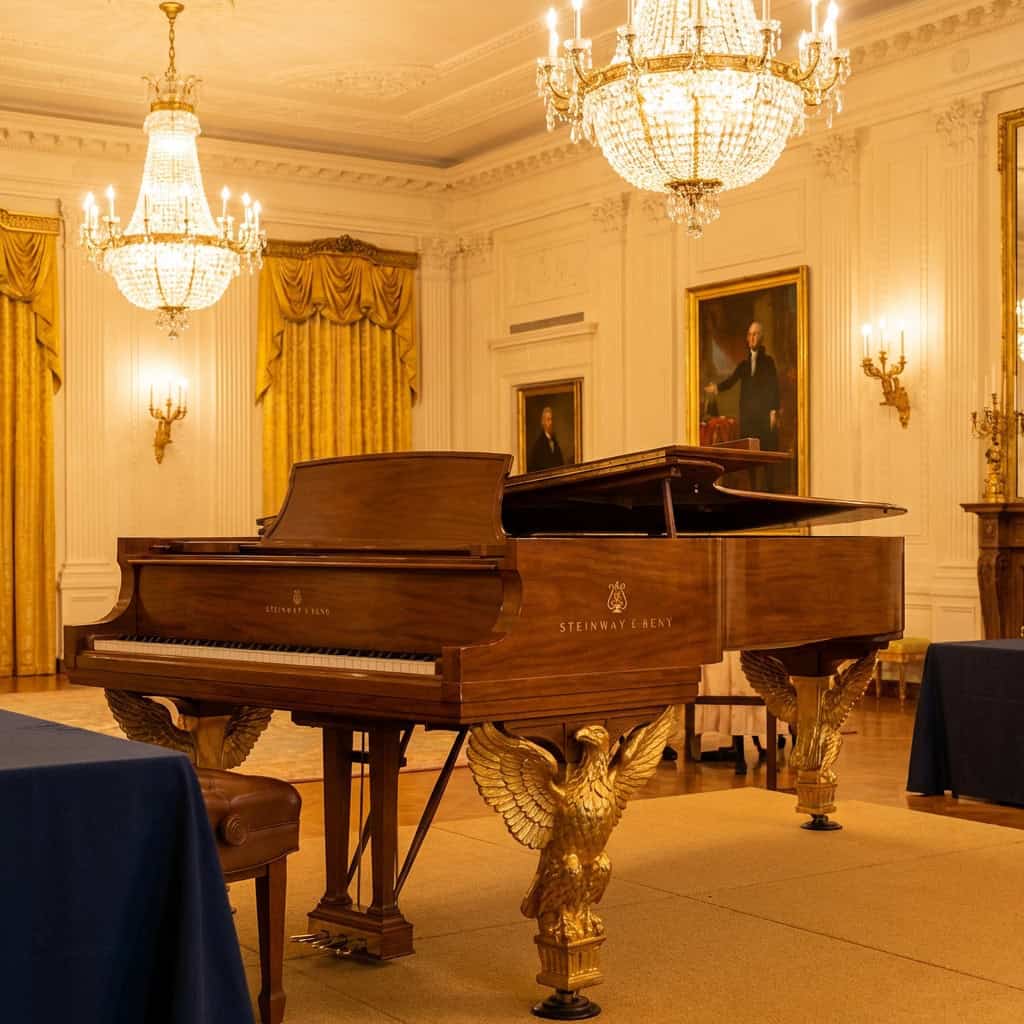
In 1938, the Steinway company presented the White House with a 300,000th anniversary piano — a concert grand with a case designed by architect Eric Gugler, supported by three gilded American eagle legs.
The piano is enormous. The eagles are dramatic. And the instrument itself is a Steinway concert grand capable of filling the largest room in the White House with sound.
It sits in the East Room — the grand ceremonial space where concerts, press conferences, and state events are held. Every pianist who has performed at the White House in the last 85 years has played this instrument, including Van Cliburn, who performed for multiple presidents.
The piano was restored in the 1990s and remains in active use. Its gilded eagles catch the light from the East Room chandeliers in a way that makes it impossible to ignore — which is exactly the point of putting three golden eagles on a piano.
9. The Val-Kill Furniture
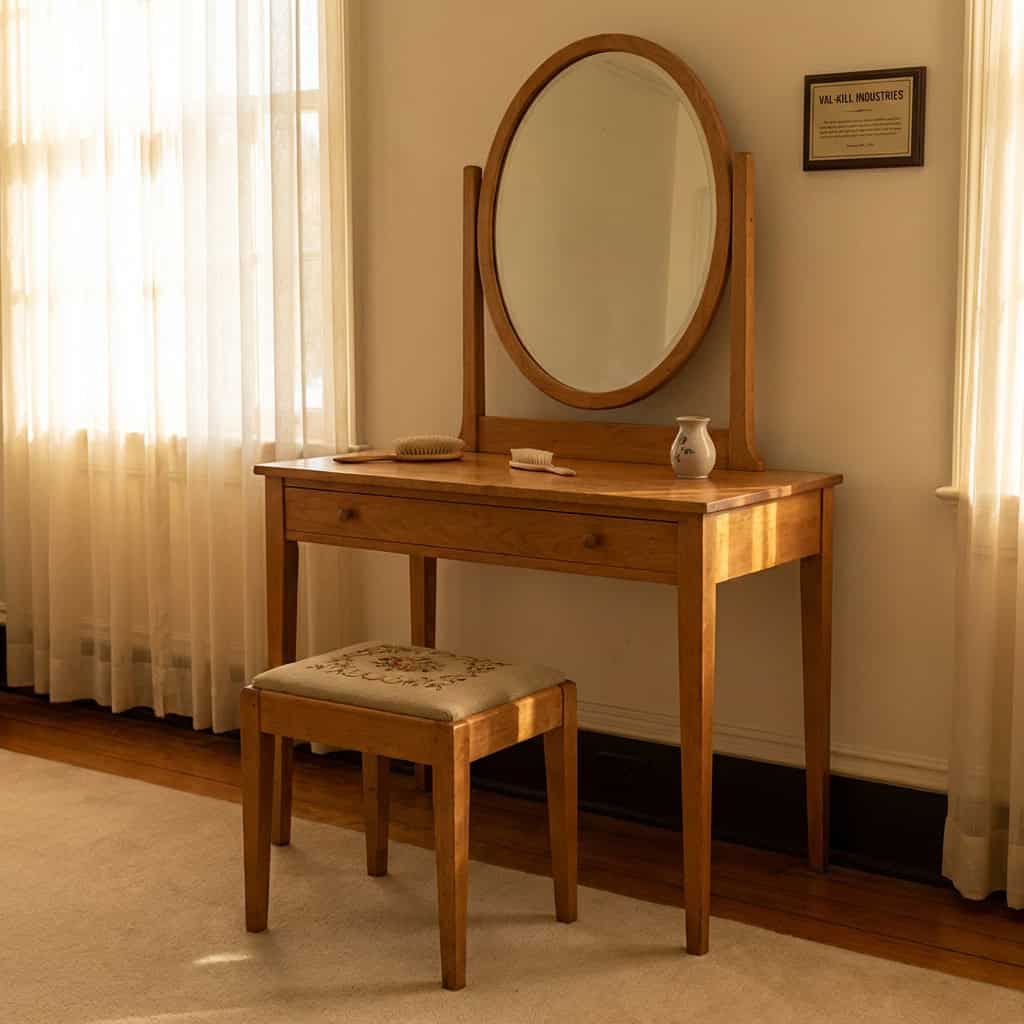
In 1927, Eleanor Roosevelt and a small group of friends founded the Val-Kill Furniture Shop near her home along the Hudson River in New York. The shop was created to provide jobs for local workers during a time of economic hardship — a forerunner of the New Deal programs her husband would later establish as president.
The shop produced handmade furniture in Colonial Revival styles — pieces that replicated the forms and joinery of early American furniture using traditional methods.
When Franklin Roosevelt entered the White House in 1933, Eleanor brought eleven pieces of Val-Kill furniture with her. They were not the most expensive pieces in the building. They were not the most historically significant. But they were handmade by American workers in a shop that Eleanor built to keep people employed during one of the darkest economic periods in American history.
The pieces brought a personal touch to the White House that went beyond decoration — they represented a philosophy about work, craftsmanship, and the value of making things by hand.
10. The Blue Room Bellangé Chairs
When Jackie Kennedy moved into the White House in 1961, she was horrified by the state of the historic furnishings. Priceless pieces had been sold at auction, lost, damaged, or replaced with reproductions over the decades.
She made it her mission to get them back.
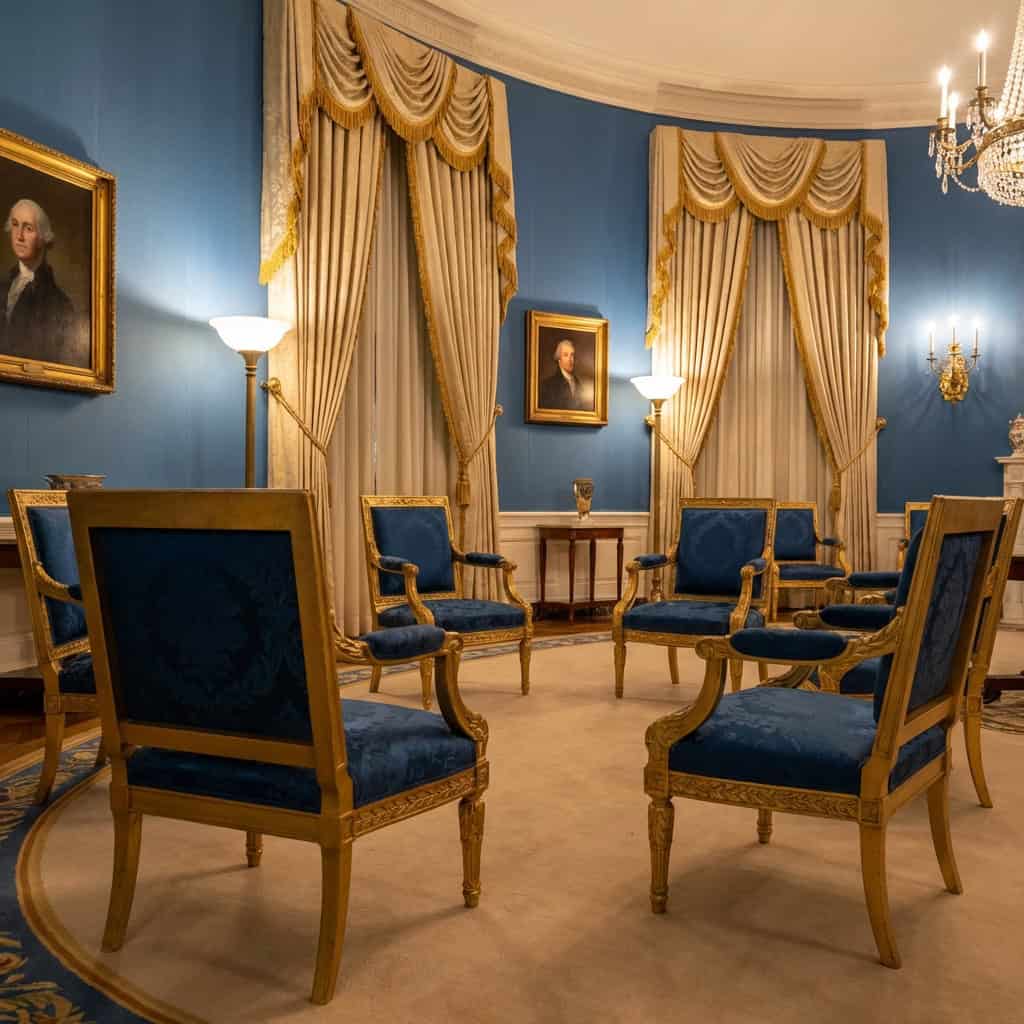
Her most significant recovery effort focused on the Bellangé furniture that Monroe had purchased for the Blue Room in 1817. Of the original 53 pieces, most had been auctioned off in 1860 and scattered across the country. The pier table was the only piece that had remained continuously in the White House.
Kennedy’s Fine Arts Committee tracked down original Bellangé chairs and a sofa from private collectors and antique dealers. She acquired five armchairs, two side chairs, and one sofa — each one authenticated and restored. She commissioned reproductions of additional pieces to complete the suite.
In September 1961, Congress passed legislation ensuring that furniture of “historic or artistic interest” would become permanent property of the White House — a direct result of Kennedy’s efforts.
She did not just redecorate a room. She established the principle that the White House is a museum — and that its furniture belongs to the American people, not to whoever happens to be living there.
11. The State Dining Room Pier Tables
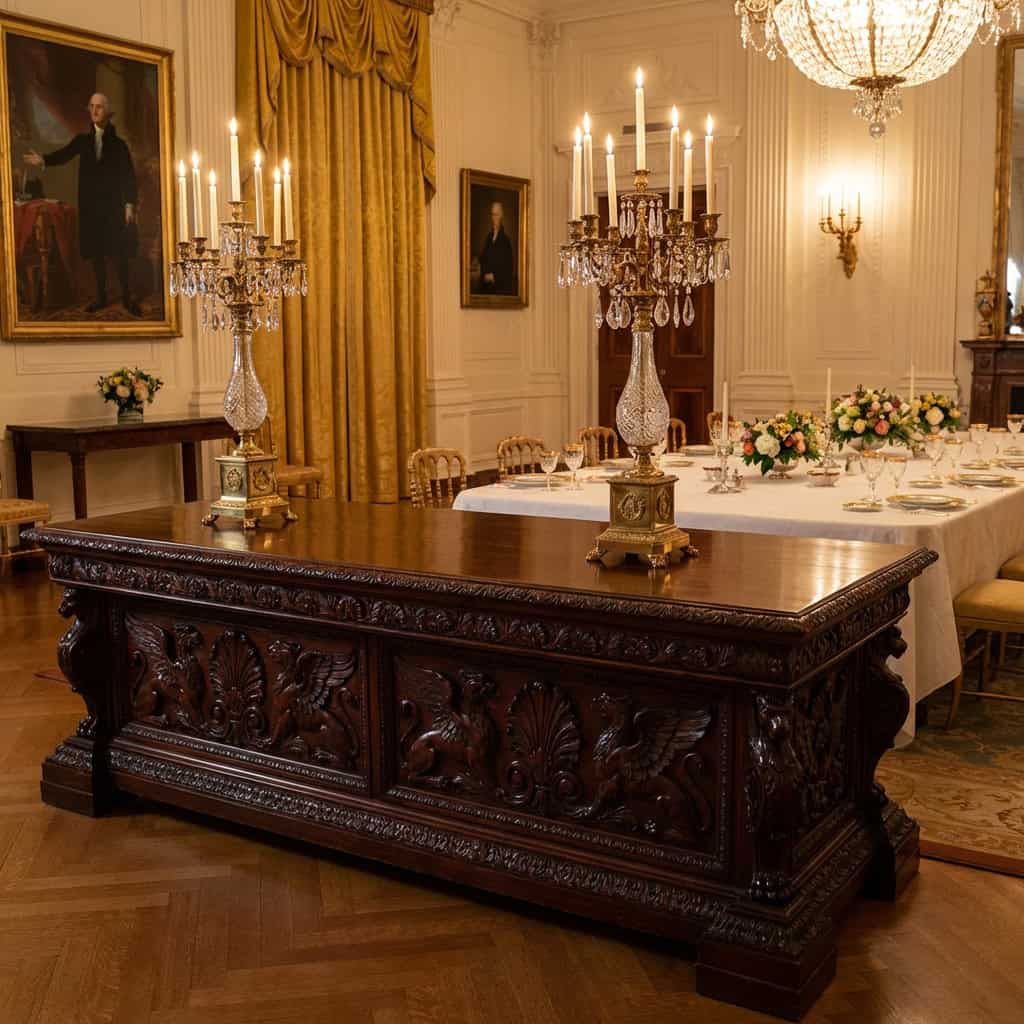
When Theodore Roosevelt hired the architecture firm McKim, Mead & White to renovate the White House in 1902, the State Dining Room received a complete transformation.
The Boston furniture manufacturer A.H. Davenport was commissioned to build new furnishings for the room, including a set of pier tables inspired by designs from the Andrew Jackson era. These tables — large, formal, and built with the kind of craftsmanship that does not exist at scale anymore — were placed along the walls of the State Dining Room.
They are still there.
Over 120 years later, the Davenport pier tables remain in the same room they were built for, serving the same function they were designed to serve. Every State Dinner, every formal reception, every event in that room is framed by furniture that was commissioned by Teddy Roosevelt and built by one of the finest furniture manufacturers in American history.
A.H. Davenport closed its doors in 1973. The tables it built for the White House will outlast the company by centuries.
12. The Cabinet Room Table
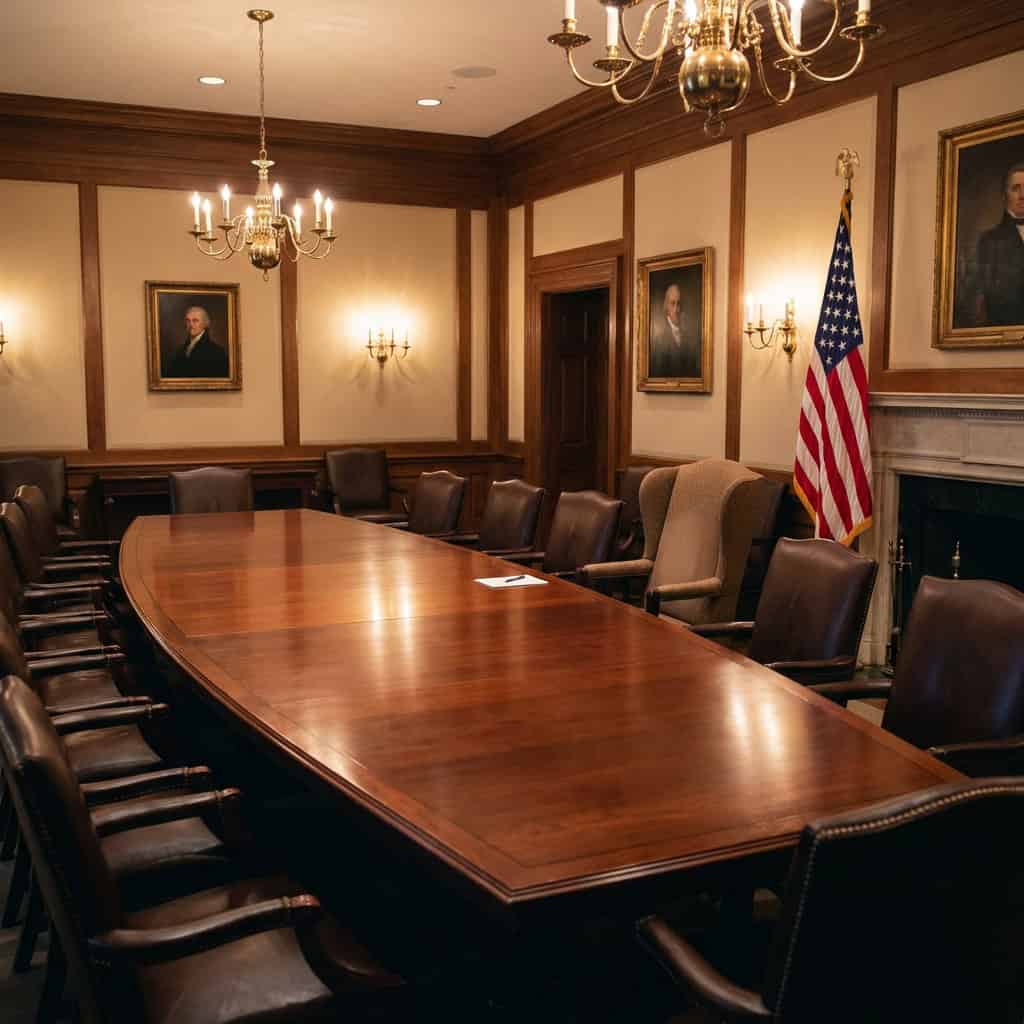
Every photograph you have ever seen of a president meeting with their cabinet — the long table, the leather chairs, the serious faces — was taken in the Cabinet Room, and that table is the center of it.
The current Cabinet Room table is a large, boat-shaped mahogany conference table surrounded by leather chairs, each one assigned to a specific cabinet member. The president’s chair is slightly taller than the others — the only visible distinction of rank in the room.
The table has hosted some of the most consequential meetings in American history. Cuban Missile Crisis deliberations. War planning. Budget negotiations. Supreme Court discussions. Every major decision that required the president to sit across from the people running the government happened at this table.
It is not ornate. It is not gilded. It is a working table in a working room — and that simplicity is what makes it powerful. The furniture does not need to be impressive when the decisions being made on it are reshaping the world.
13. The Green Room Duncan Phyfe Card Table
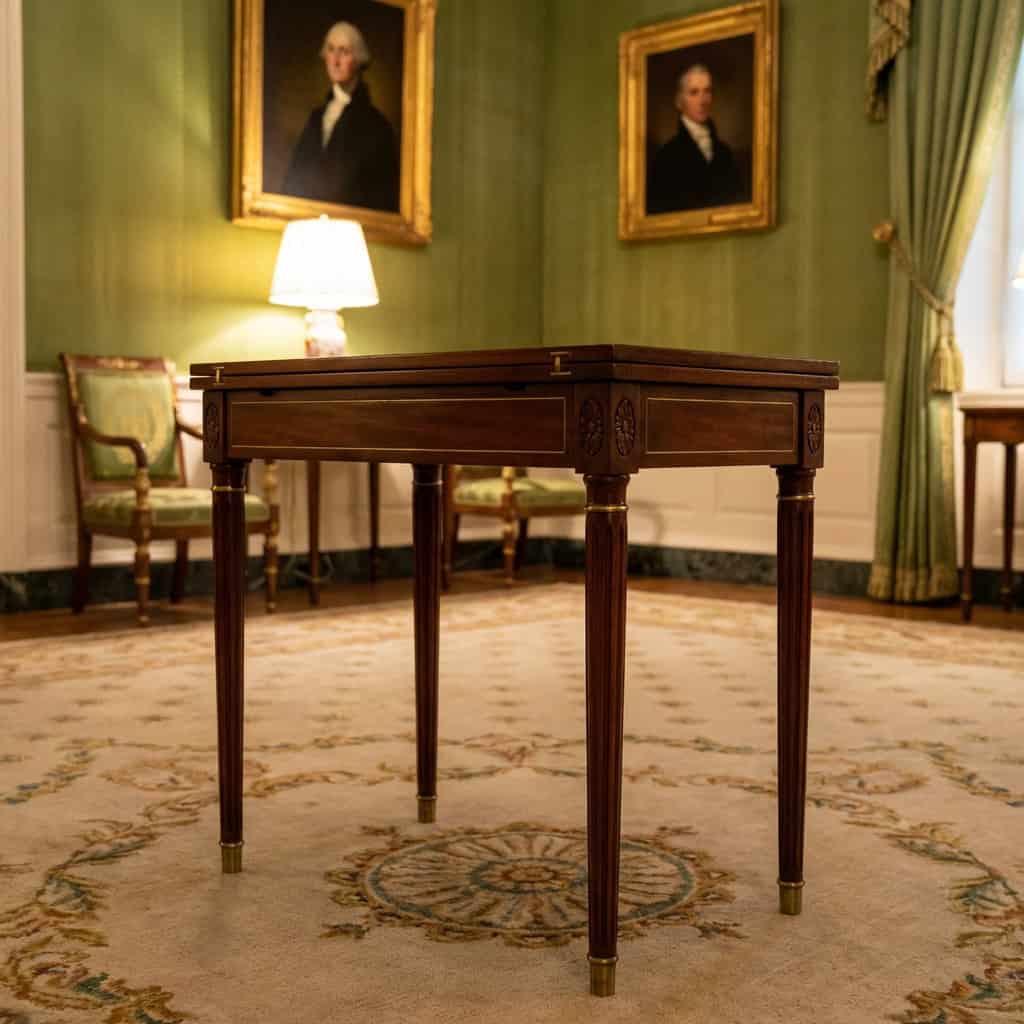
Duncan Phyfe is one of the most important furniture makers in American history — a Scottish-born New York cabinetmaker whose work defined the Federal and Empire styles in the early 1800s.
A card table attributed to Phyfe sits in the Green Room of the White House. It is a small, elegant piece with the clean lines, tapered legs, and restrained ornamentation that made Phyfe’s work recognizable and widely imitated.
Phyfe’s furniture was the gold standard of American craftsmanship in his era. His workshop on Fulton Street in New York City employed over 100 workers at its peak, and his pieces were sought by the wealthiest families in the country.
Having a Duncan Phyfe piece in the White House is not just decoration. It is a statement that American-made furniture belongs alongside the French and English pieces that dominated the building for its first century. The craftsmanship is equal. The design is equal. And the table has proven it by sitting in the Green Room for generations.
14. The Lincoln Sitting Room Victorian Chair
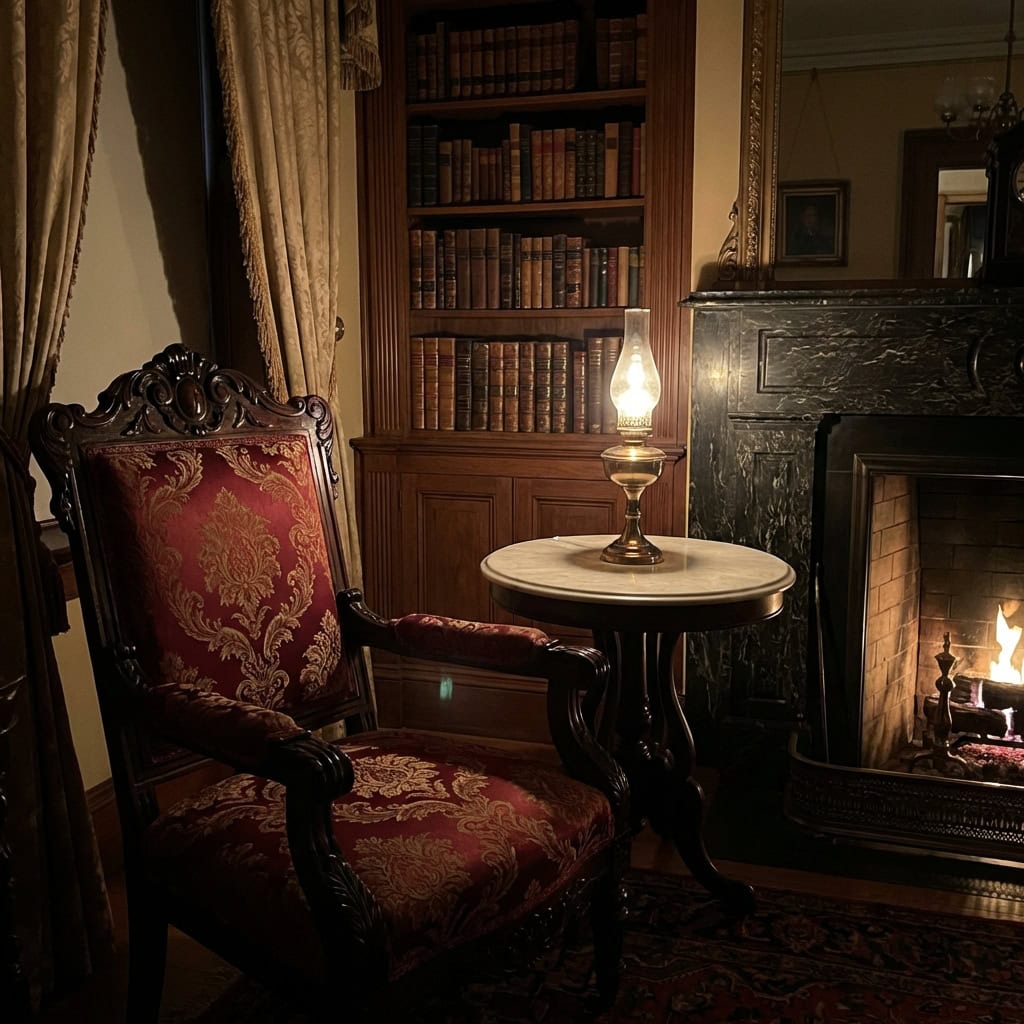
The Lincoln Bedroom gets all the attention, but across the hall is the Lincoln Sitting Room — a smaller, more intimate space that contains one of the few pieces of furniture that was actually purchased during Lincoln’s presidency.
The chair is a Victorian-era parlor chair — dark wood, carved details, upholstered in period fabric. It is not as dramatic as the Lincoln Bed, and it does not carry the same mythology. But it is authentic to the Lincoln administration in a way that the bed, ironically, is not.
Lincoln used the sitting room as a private retreat — a place to read, think, and escape the relentless demands of the presidency during the Civil War. The chair is the kind of piece a man would sit in at the end of a long day, in a small room, with a book and a fire.
It is quiet furniture for a man who carried the loudest burdens in the country.
15. The Andrew Jackson Pier Table
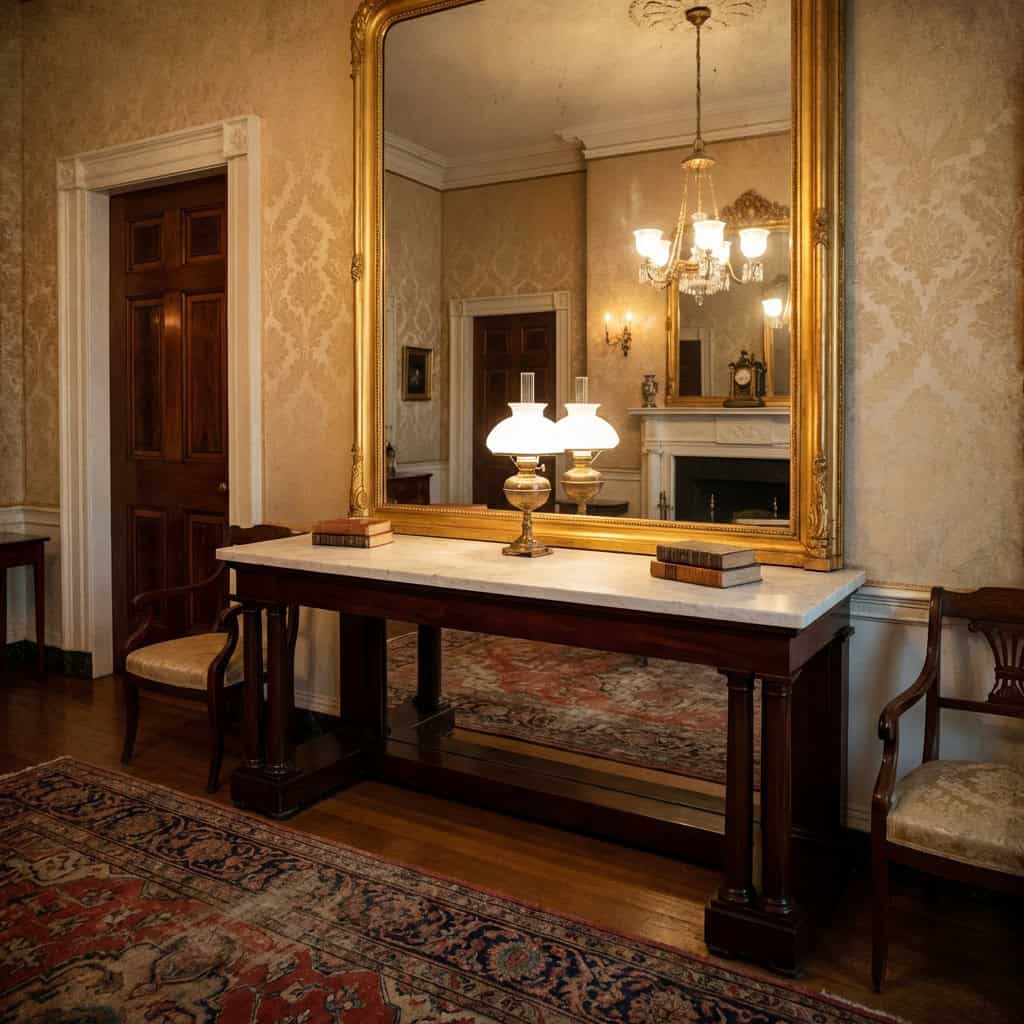
The White House was burned by the British in 1814. Nearly everything inside was destroyed. The handful of pieces that predate the fire are among the most historically significant objects in the entire collection.
The Andrew Jackson pier table is one of the surviving pieces from the era immediately following the rebuilding. It dates to Jackson’s presidency in the 1830s and represents one of the earliest layers of the White House furniture collection that still exists.
A pier table is a decorative side table designed to stand against a wall between two windows — the “pier” being the wall space between them. They were common in formal rooms of the period and served as display surfaces for candelabra, vases, or decorative objects.
Jackson’s pier table has survived nearly 200 years of renovations, redecorations, and changes of administration. When Jackie Kennedy’s team found it, they recognized it immediately as one of the oldest surviving pieces and ensured it was preserved and displayed.
16. The State Dining Room Chairs
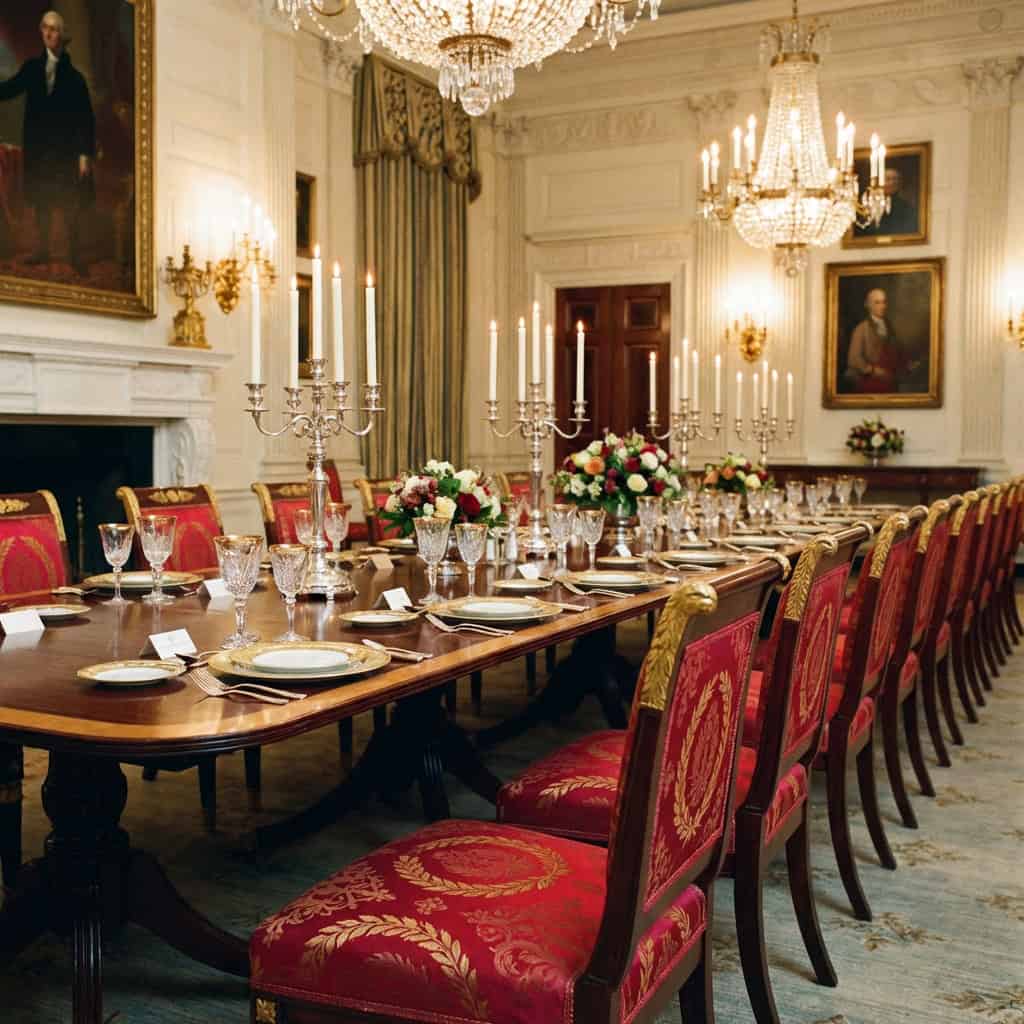
The chairs in the State Dining Room have been updated multiple times over the centuries, but the current set tells a story about how the White House balances history with modernity.
During Barack Obama’s second term, the State Dining Room was refurbished. The project included nearly three dozen new chairs inspired by a set that James Monroe had commissioned for the East Room in 1818. The design referenced the original Monroe chairs but was adapted for contemporary use — sturdy enough for daily State Dinners, comfortable enough for multi-course meals, and finished to match the room’s updated decor.
The result is furniture that looks like it has been there for 200 years but was actually built in the 21st century. That is the constant challenge of furnishing the White House — honoring the past without turning the building into a museum where nobody can sit down.
17. The Map Room Desk
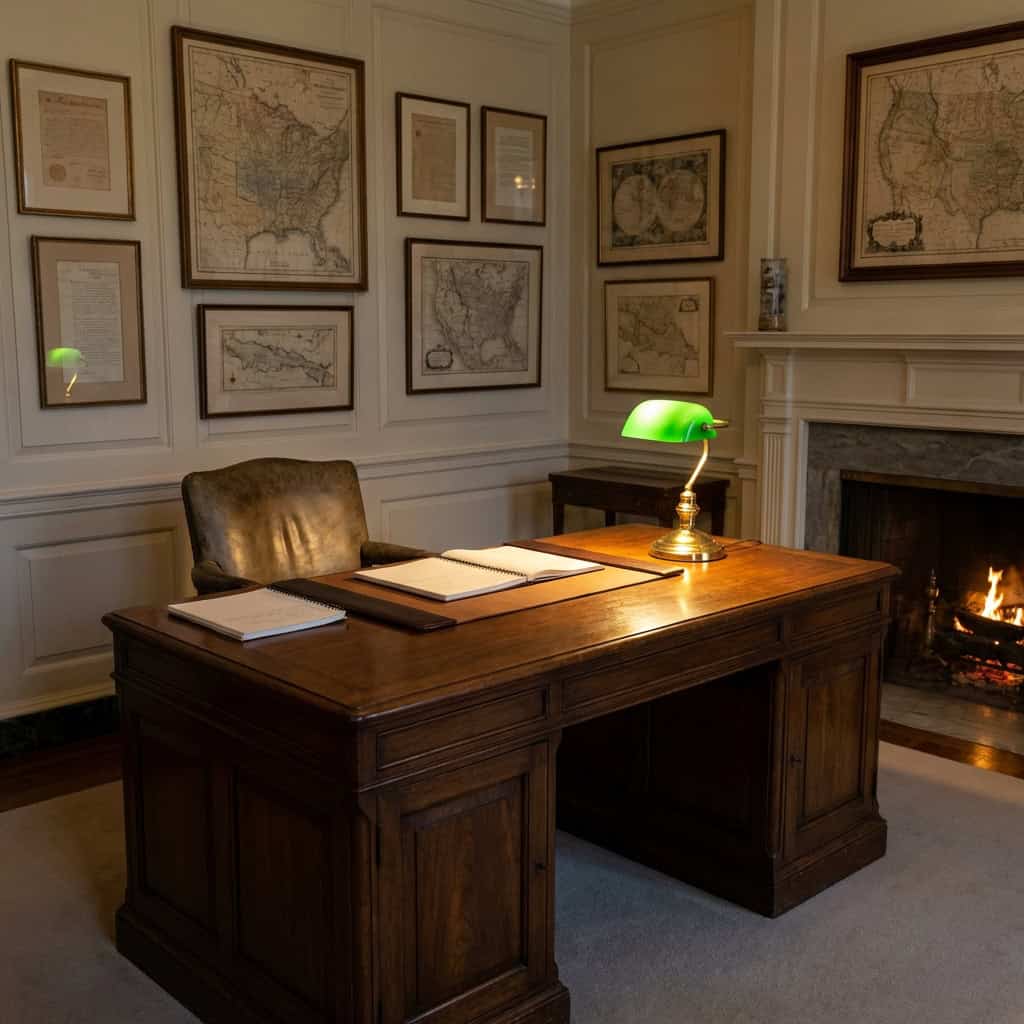
During World War II, Franklin Roosevelt converted a ground-floor room in the White House into a situation room — a private space where he could monitor the progress of the war using maps pinned to the walls.
The room became known as the Map Room, and at its center was a desk where Roosevelt reviewed intelligence reports, tracked troop movements, and made decisions that shaped the course of the war.
The Map Room was a working space — not a ceremonial one. The furniture was functional, not decorative. The desk was chosen for utility, not beauty. And that is what makes it significant — this was the desk where a president managed a global war from inside his own house.
The room has been restored and redecorated since the war, but the Map Room name stuck, and the furniture carries the weight of what happened there.
18. The Library Duncan Phyfe Table
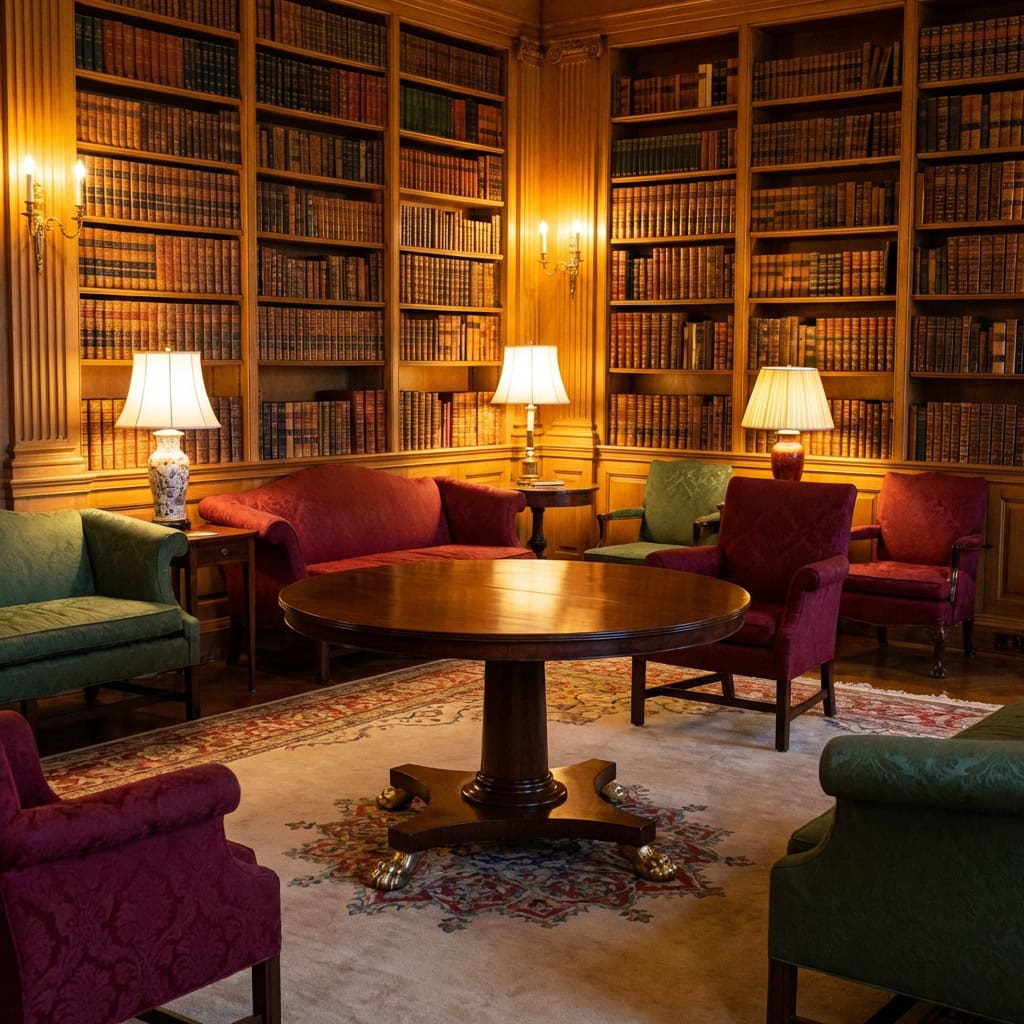
The White House Library on the ground floor contains another piece attributed to Duncan Phyfe — a center table that exemplifies the elegance and proportion that made Phyfe the most celebrated American furniture maker of the early 19th century.
The table is circular, with a pedestal base and the refined proportions that distinguish Phyfe’s work from the heavier, more ornate furniture of later periods. It sits in the center of the Library, surrounded by books and comfortable seating.
The Library was not always a library — it has served various functions over the years. But since its designation as the official White House Library in the 1930s, the room has been furnished to reflect the best of American craftsmanship and design.
Having two Duncan Phyfe pieces in the White House — the card table in the Green Room and this center table in the Library — is a quiet but unmistakable tribute to American furniture making at its highest level.
19. The China Room Display Cabinets
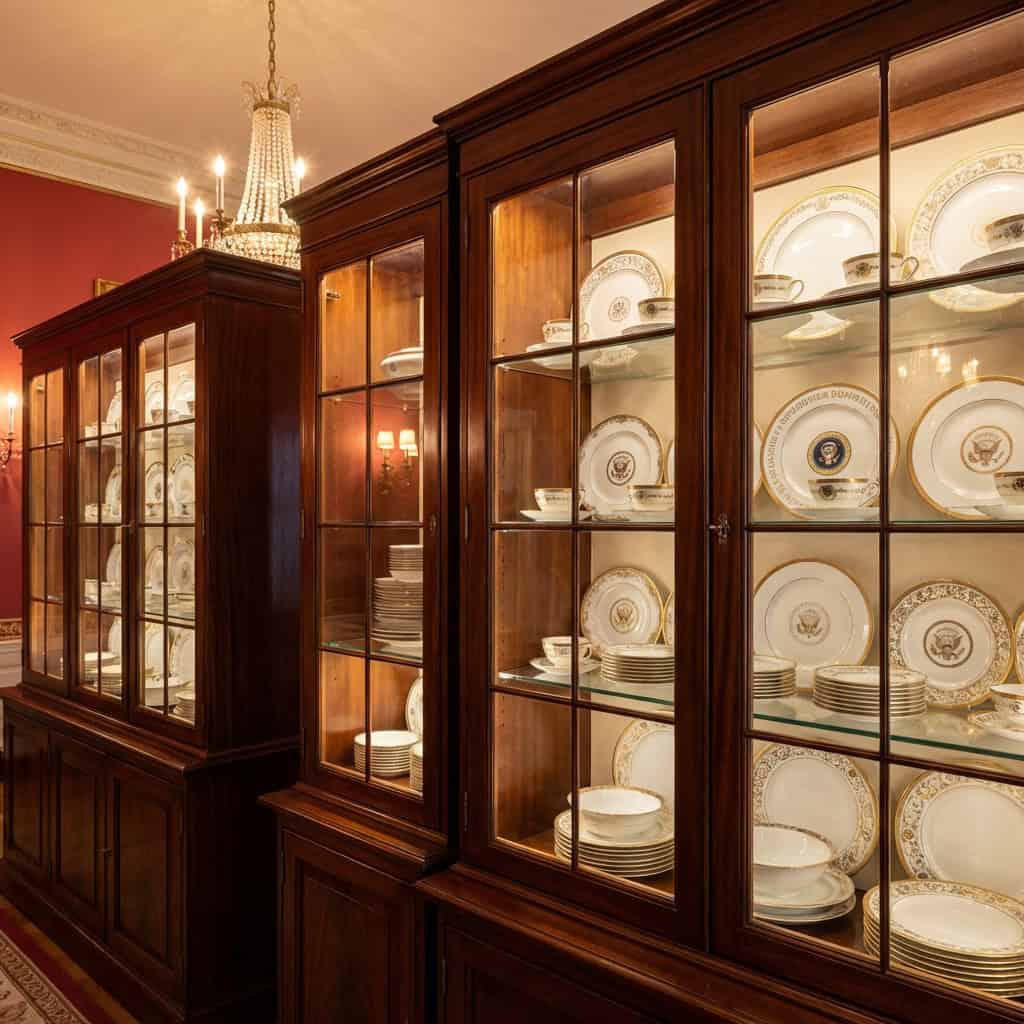
The China Room on the ground floor of the White House exists for one purpose — to display the presidential china collections that date back to George Washington.
The room is lined with glass-fronted display cabinets that house place settings from nearly every administration. Each set of china reflects the taste of the president and first lady who commissioned it — from the simple elegance of Washington’s era to the elaborate custom designs of more recent administrations.
The cabinets themselves are part of the story. They are formal, built to museum standards, and designed to protect and display objects that are irreplaceable. Some of the china inside is over 200 years old.
The room was designated by First Lady Edith Wilson in 1917, and it has served as a timeline of American presidential taste ever since. Walking past the cabinets is like walking through history — one place setting at a time.
20. The First Lady’s Sitting Room Writing Desk
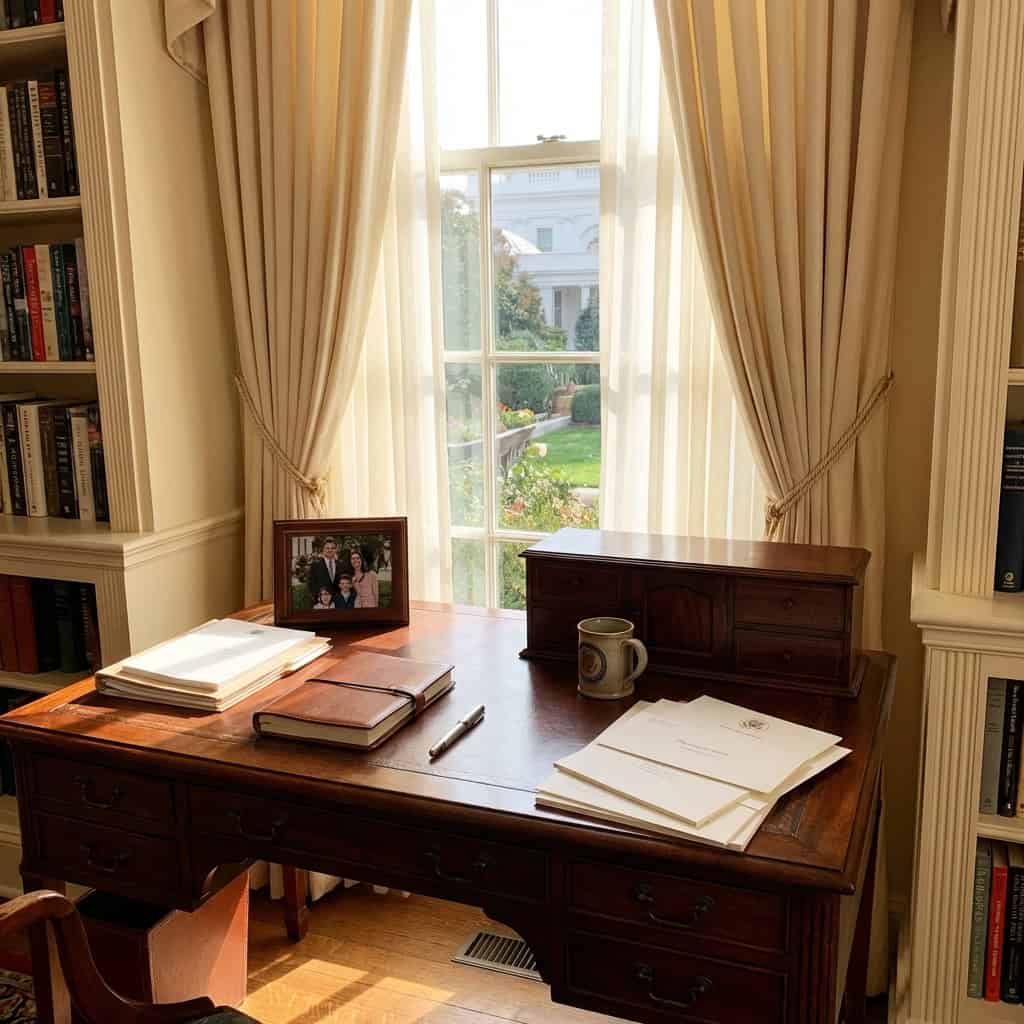
On the second floor of the White House, in the private quarters, there is a writing desk that has been used by first ladies for generations.
It is a personal piece — not a ceremonial one. It is where first ladies have written correspondence, planned events, managed household affairs, and handled the enormous volume of communication that comes with the role.
The desk is not on any public tour. It does not appear in State Dinner photographs. But it is one of the most continuously used pieces of furniture in the building — a workspace that has served the needs of women who managed one of the most demanding households in the world while simultaneously navigating the expectations of an entire nation.
Most of the famous furniture in the White House was chosen by men or purchased for public rooms. This desk belongs to the women who actually ran the house.
21. The George Washington Chairs
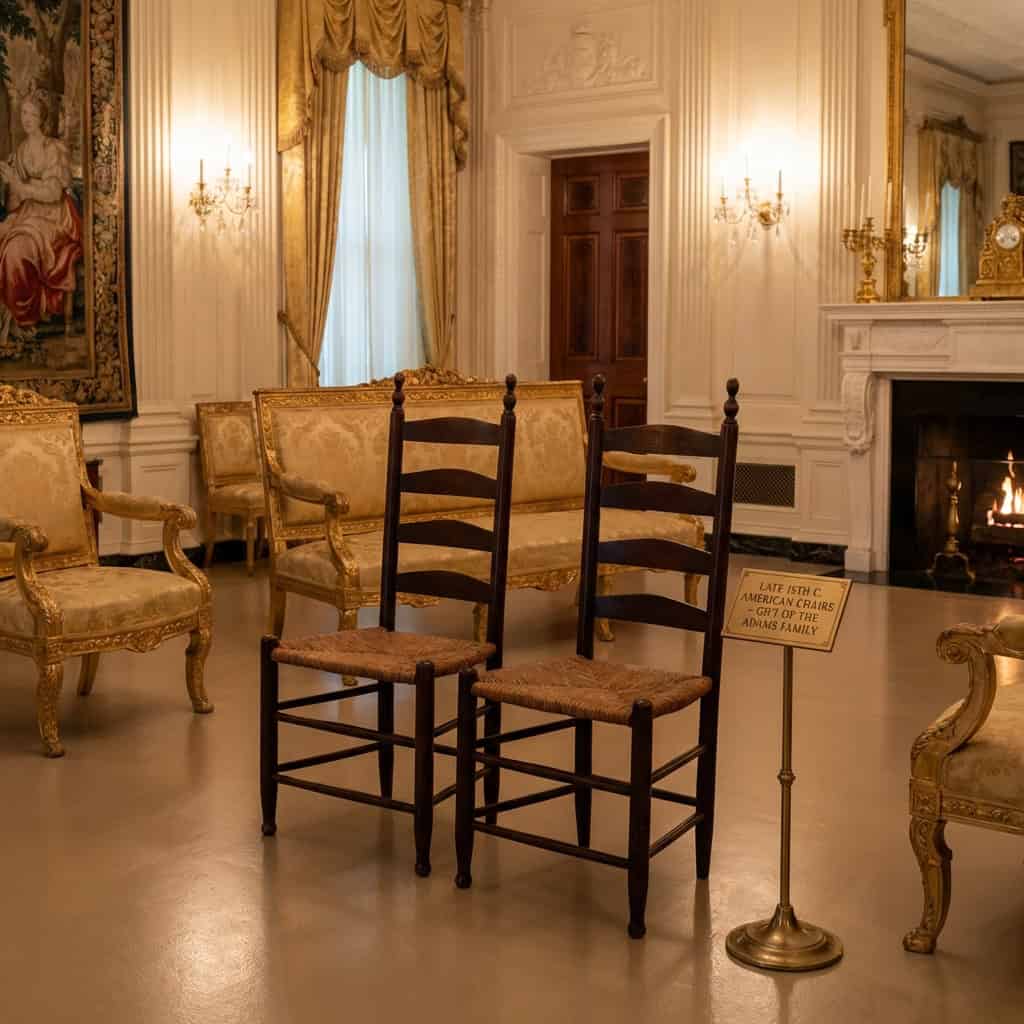
Two chairs from George Washington’s first presidential home — the Samuel Osgood House in New York City, where Washington lived in 1789 before the capital moved to Philadelphia — were acquired by the White House during the Clinton administration.
These chairs predate the White House itself. They were in use during the first months of the American presidency, in the first home the first president occupied in his official capacity. They are among the oldest pieces of presidential furniture in existence.
The chairs are modest by White House standards — they are not gilded, not French, not monumental. They are American chairs from an American home where the first American president sat down at the end of a day that nobody in history had experienced before.
Having them in the White House closes a circle that stretches back to the very beginning of the republic. The presidency started in a rented house in New York with borrowed furniture. Over 230 years later, two of those chairs finally made it to the house that was built for the job.
The White House is not a museum. It is a working home where people live, eat, argue, and make decisions that shape the world. But the furniture inside it carries a weight that goes beyond function.
Every desk, every chair, every table in that building was chosen by someone — a president, a first lady, a committee — for a reason. Some of those reasons were practical. Some were political. Some were deeply personal.
The furniture remains after the people leave. It absorbs the history, holds the stories, and waits for the next occupant to pull up a chair.
That is what great furniture does. It outlasts everyone who sits in it.