

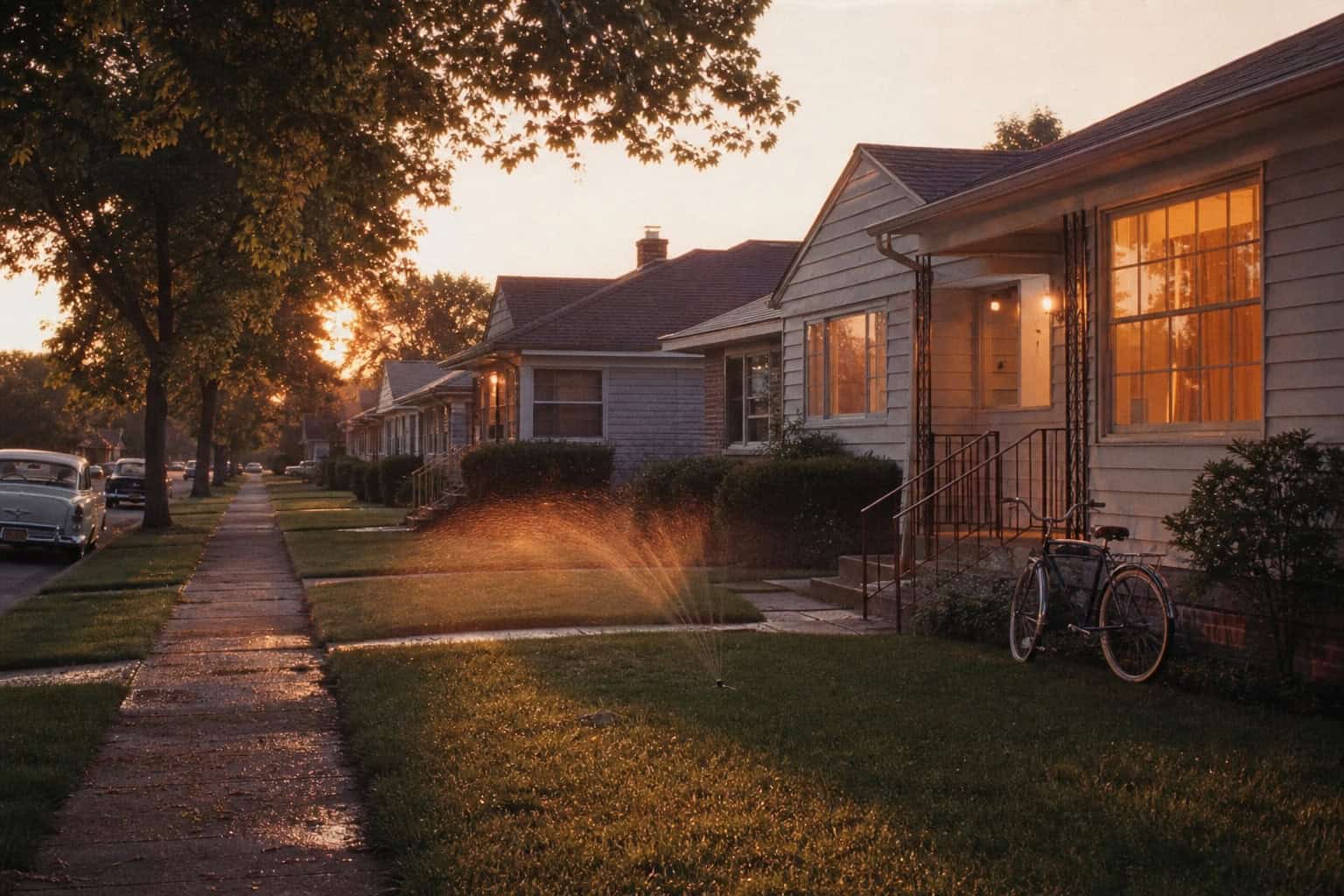
In 1955, America was a decade into the biggest building boom in its history, and the house it was building looked nothing like the one it would build ten years later.
The 1955 house was small. Two bedrooms, one bath, a kitchen you turned sideways to walk through, and a price tag under nine thousand dollars.
It sat on a slab or a shallow crawlspace. It had a picture window, a single carport, and a yard that was mostly dirt waiting on grass seed.
A young couple with one income and a GI Bill loan could buy it, and millions of them did.
It was also a stranger house than the one that came later. The boom was still young, the styles were still experimental, and builders were still trying out ideas that wouldn’t survive the decade.
Steel houses you cleaned with a garden hose.
Storybook cottages with scalloped trim and diamond-pane glass. Tiny prewar holdovers that the ranch was about to bury. Half-barrel huts left over from the war.
Drive through a 1950s neighborhood today and the bones are still there. But a lot of what made 1955 specific — the smallness, the whimsy, the experiments, the materials that turned out to be mistakes — got renovated away, sided over, or torn down for something three times the size.
Here are 25 house styles that were everywhere in 1955. And the reasons you almost never see new ones being built today.
1. The Minimal Traditional
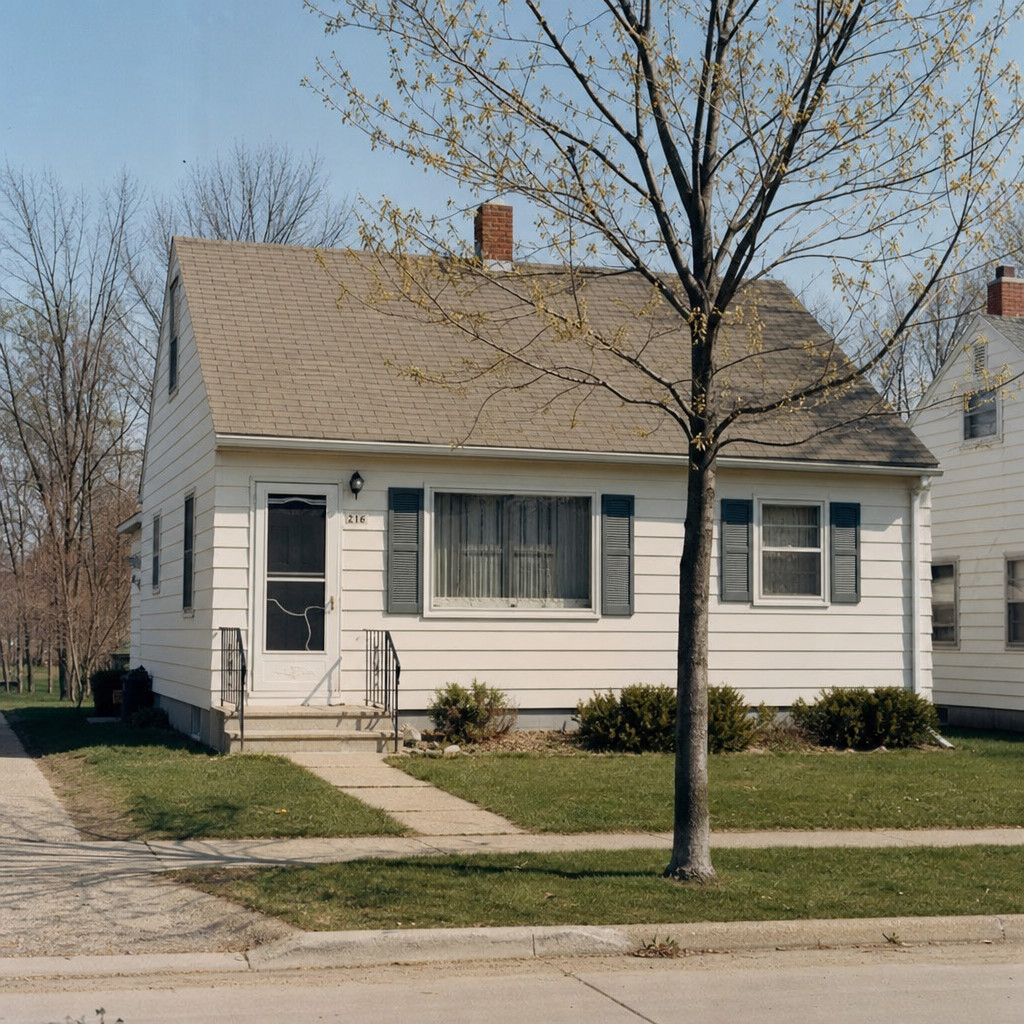
This was the house the ranch replaced, and in 1955 it was still standing on every other corner. A small, plain, gabled box with a low or medium roof, narrow eaves, and a front door set off to one side instead of dead center.
The Minimal Traditional was the Depression-and-war house — a stripped-down version of the cozy cottages and bungalows of the 1920s, with all the ornament shaved off because nobody could afford ornament. It kept the comforting shape of a traditional house but dropped the trim, the porches, and the detail.
By 1955 it was already on its way out. The ranch was lower, longer, and more modern, and buyers wanted modern. The little hip-roofed and gable-roofed boxes stopped going up almost the moment the ranch took over.
You can still find whole neighborhoods of them, usually the oldest postwar streets in any town. They read as small and dated now. Nobody builds a brand-new one, because the entire point of the style was doing without — and doing without went out of fashion the second the country could afford not to.
2. The Cinderella / Storybook Ranch
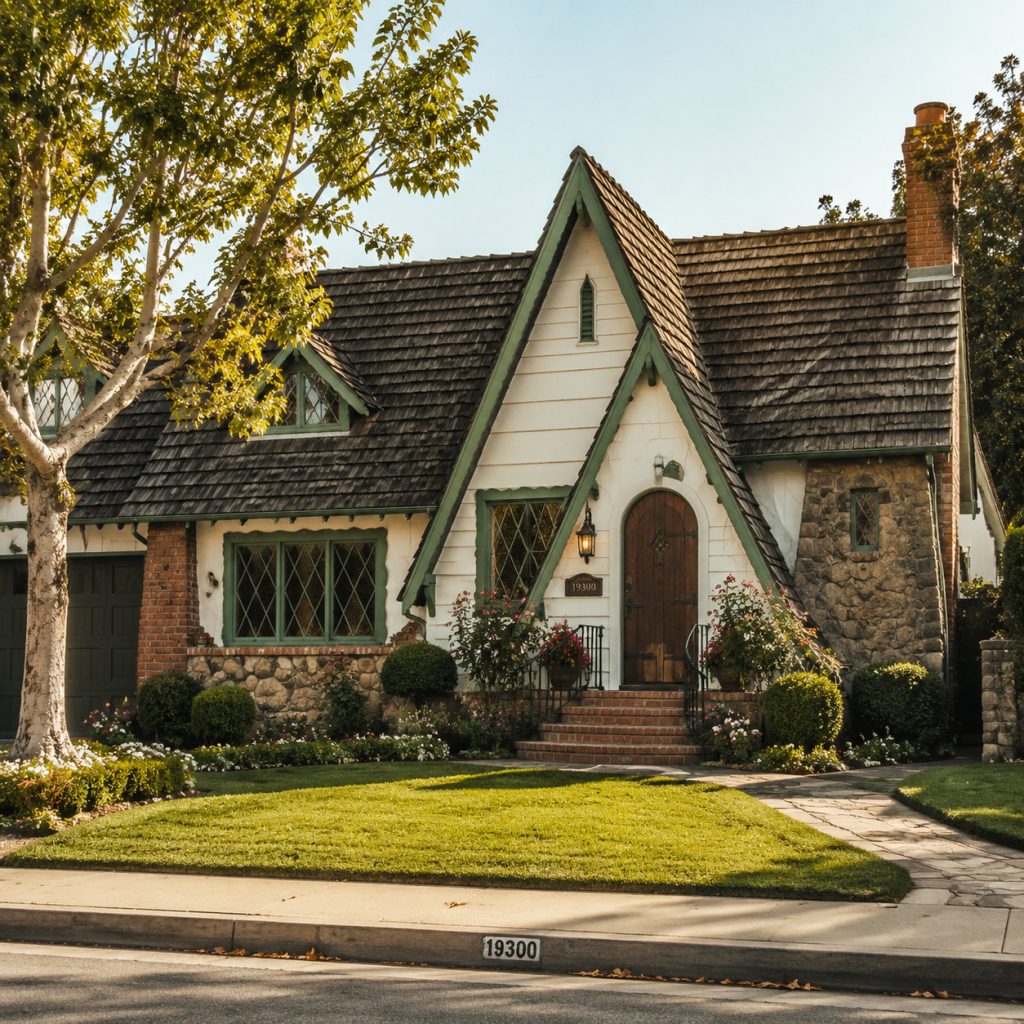
In the mid-1950s a Southern California builder named Jean Vandruff started putting up ranch houses that looked like they belonged in a fairy tale, and people lost their minds over them. Families camped out overnight to buy one.
The Cinderella Home took a normal ranch footprint and dressed it up. High gabled entryways, big overhangs, Victorian gingerbread trim, diamond-shaped windows with scalloped, cartoonish frames, shake-shingle roofs, and custom stone and brickwork that flowed inside to a massive fireplace. It was a midcentury fairy tale you could actually move into.
They were a sensation. More than six thousand were built, and the style was copied by so many other builders that it nearly put some of them out of business. Architects hated them — too cute, too sentimental — but buyers couldn’t get enough.
The whimsy is exactly why nobody builds them now. The diamond-pane windows, the scalloped trim, and the hand-cut shake roofs are all custom, labor-heavy work that no production builder will price out today. The look also reads as dated in a way that plain ranches don’t — it’s stamped “1955” the moment you see it. The originals are beloved and protected in the neighborhoods that have them. New ones don’t get built.
3. The Lustron All-Steel House
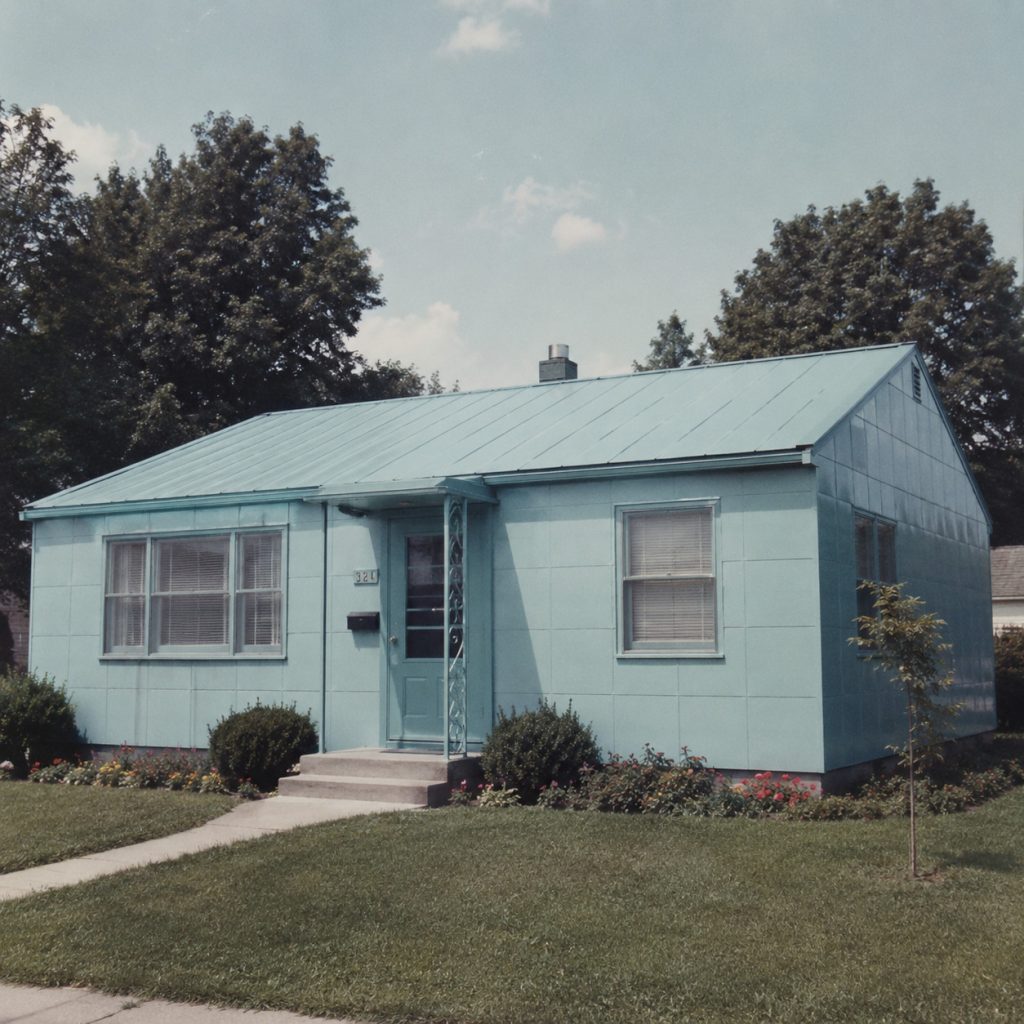
For a few years right before 1955, you could buy a house made entirely of porcelain-enameled steel — the same finish as a bathtub or a kitchen range — bolted together from more than three thousand factory-made parts.
The Lustron was the answer to the postwar housing shortage. One story, built from steel panels coated in porcelain enamel, available in 1950s colors like surf blue, dove gray, desert tan, and maize yellow. It had a round fireplace, a radiant ceiling heating system built into the metal walls, and a combination washing machine and dishwasher built in. The big selling point was that you never painted it and never really fixed it — you cleaned the inside walls with water and hosed off the outside.
It should have worked. From 1948 to 1950 the company built thousands of them before going bankrupt. Strict local building codes, permit fights, and delivery problems strangled it, and the factory shut down before it ever turned a profit.
So by 1955 the Lustron was already a finished experiment — a house you’d see and recognize but could no longer order. The survivors are now on historic registers, and many have been torn down for bigger homes. Of eleven built in one Arlington, Virginia neighborhood, only two remain. Nobody will ever mass-produce a steel house like it again.
4. The Picture-Window Rambler
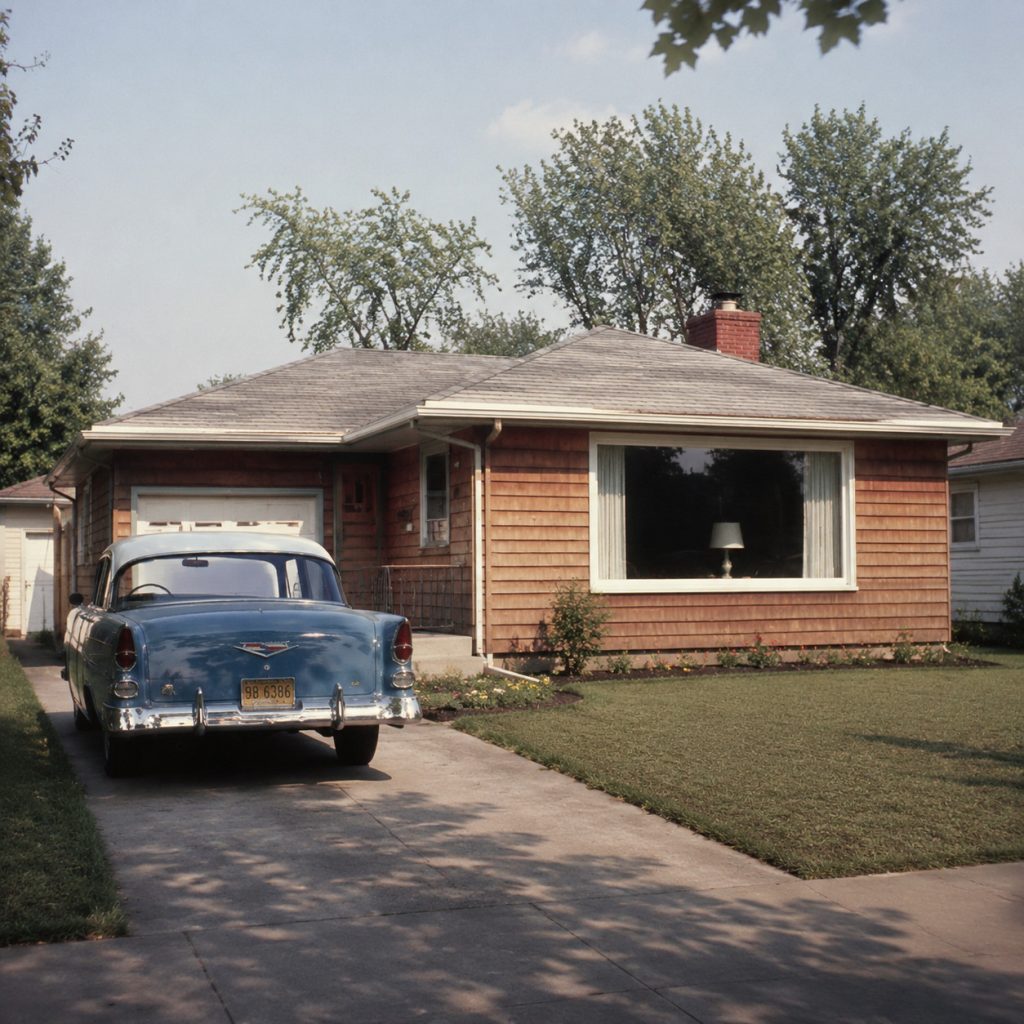
The ranch of 1955 wasn’t the ranch of 1965. The earlier version was smaller, simpler, and built around one feature above all others — the picture window.
This was the transitional rambler, often with a cross-hipped roof, horizontal siding, and a single enormous fixed pane of glass dominating the front. The window faced the street and the front lawn, and it told the neighborhood that this was a modern house, an informal house, a house with nothing to hide.
The early rambler was tight. Twelve hundred square feet was generous. Two or three small bedrooms, one bath, a galley kitchen, and a living room built around that one big window.
The style didn’t die so much as it inflated. By the 1960s the rambler got longer and added a garage; by the 2000s it sprouted a second story, a three-car garage, and cathedral ceilings. The modest 1955 picture-window rambler — small, low, honest — isn’t something any builder offers now. It’s been replaced by a much bigger house wearing the same basic roofline.
5. The Expansion-Attic Cape
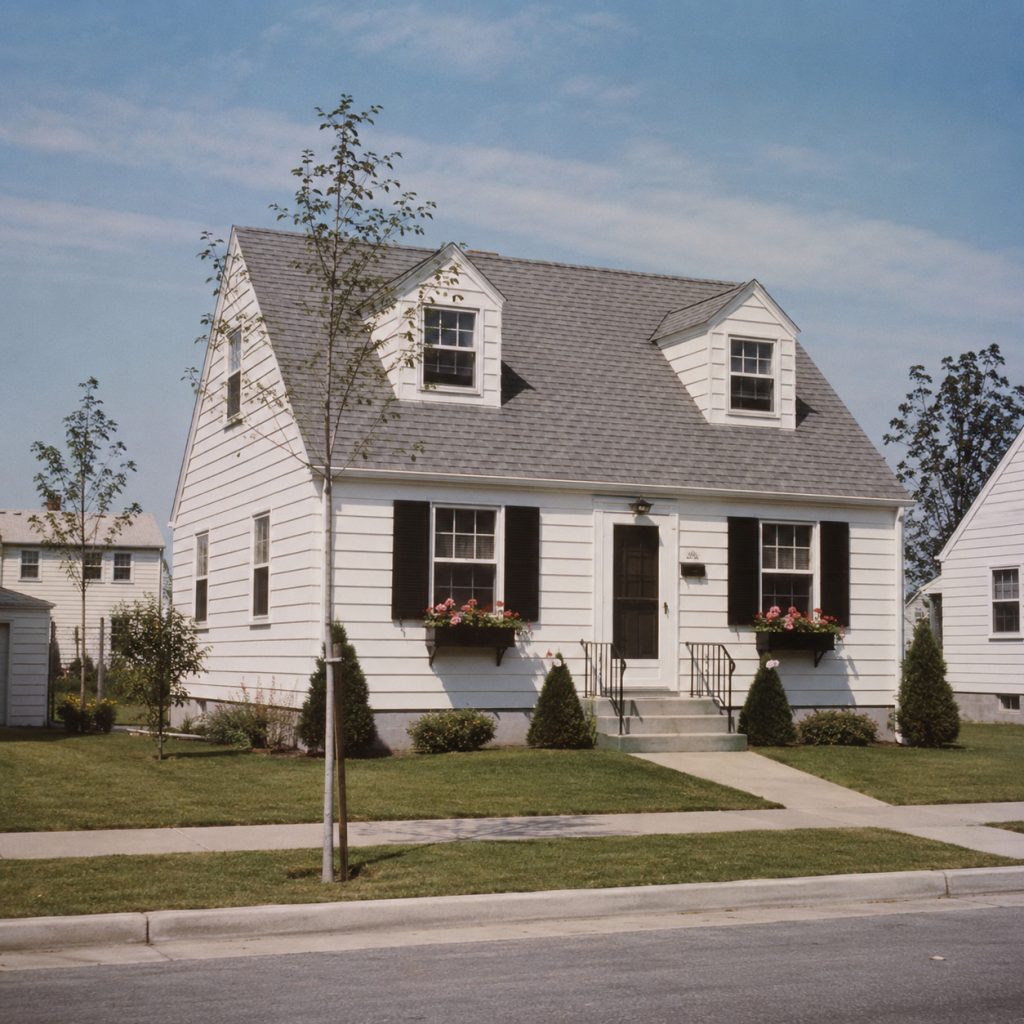
The classic 1955 starter was a Cape Cod you weren’t finished building when you moved in. In 1955 the typical new home was a one-story two-bedroom Cape that cost $8,900.
The trick was the upstairs. The steep Cape roof left a full attic that the builder framed but left raw — no walls, no heat, just subfloor and rafters. A staircase led up to the unfinished second floor that could be turned into more bedrooms as the family grew. You bought what you could afford and finished the upstairs later, by yourself, when there were more kids and more money.
It was a brilliant answer to a one-income budget. The house grew with the family instead of forcing the family to buy ahead of itself.
Nobody sells a house this way now. Code requires the whole conditioned space to be finished and inspected, the “finish it yourself later” model doesn’t survive a modern mortgage appraisal, and buyers expect a move-in-ready house. The expansion attic — the deliberately unfinished upstairs — is gone as a sales concept entirely.
6. The Breezeway Ranch
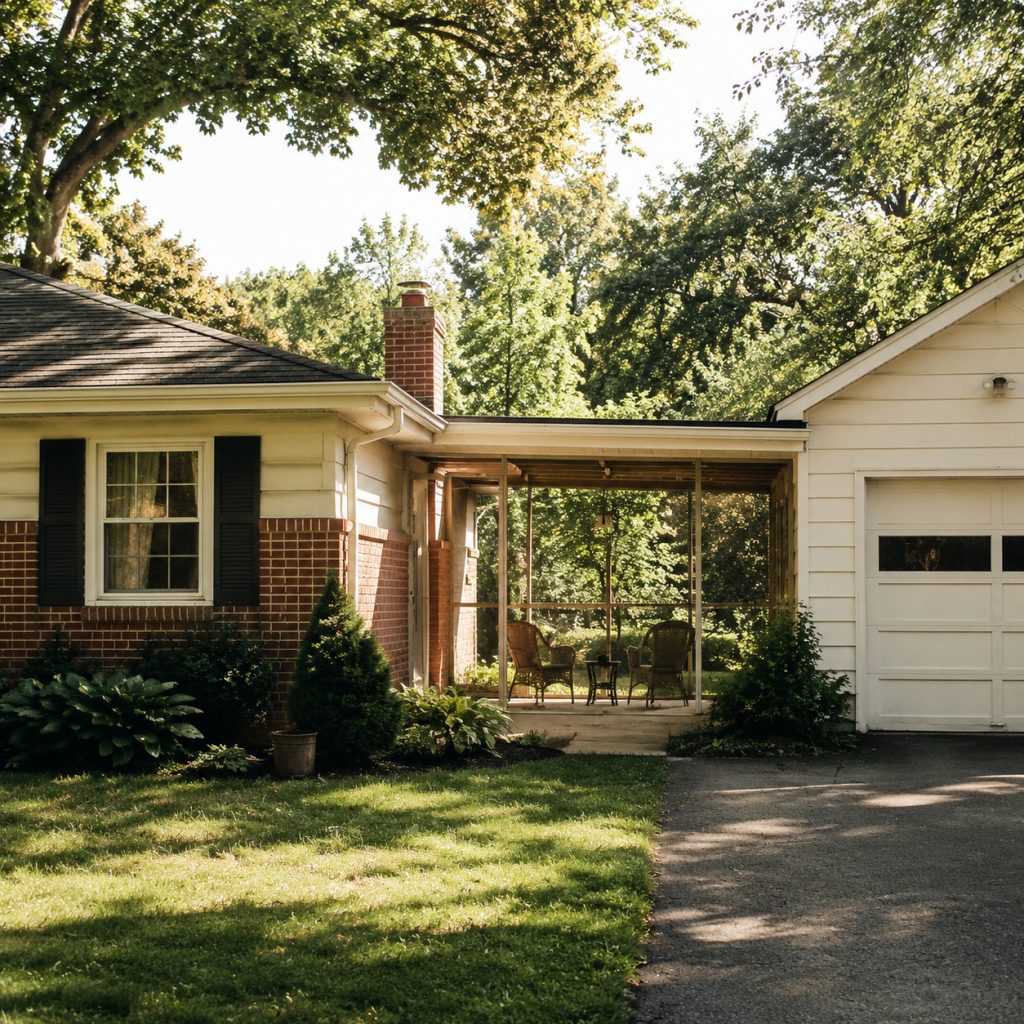
In 1955, the garage wasn’t attached to the house yet — it was connected to it, by an open roofed walkway called a breezeway.
The breezeway was a covered, often screened, open-air passage between the back door and the garage. It afforded a place to sit and enjoy the outdoors, and these outside areas were very popular, included whenever space permitted. You walked through it to get to the car, and on a summer evening you sat in it with a glass of iced tea.
It made sense in a time before air conditioning was standard. The breezeway caught the cross-draft, shaded the back of the house, and gave you an outdoor room that wasn’t quite the yard.
Then air conditioning arrived and the attached garage swallowed the breezeway whole. Why walk through the weather to reach the car when the garage could open straight into the kitchen? The open breezeway got enclosed, insulated, and absorbed into the floor plan. New houses don’t have them, and most of the old ones got closed in decades ago.
7. The Transitional “Ranchette”
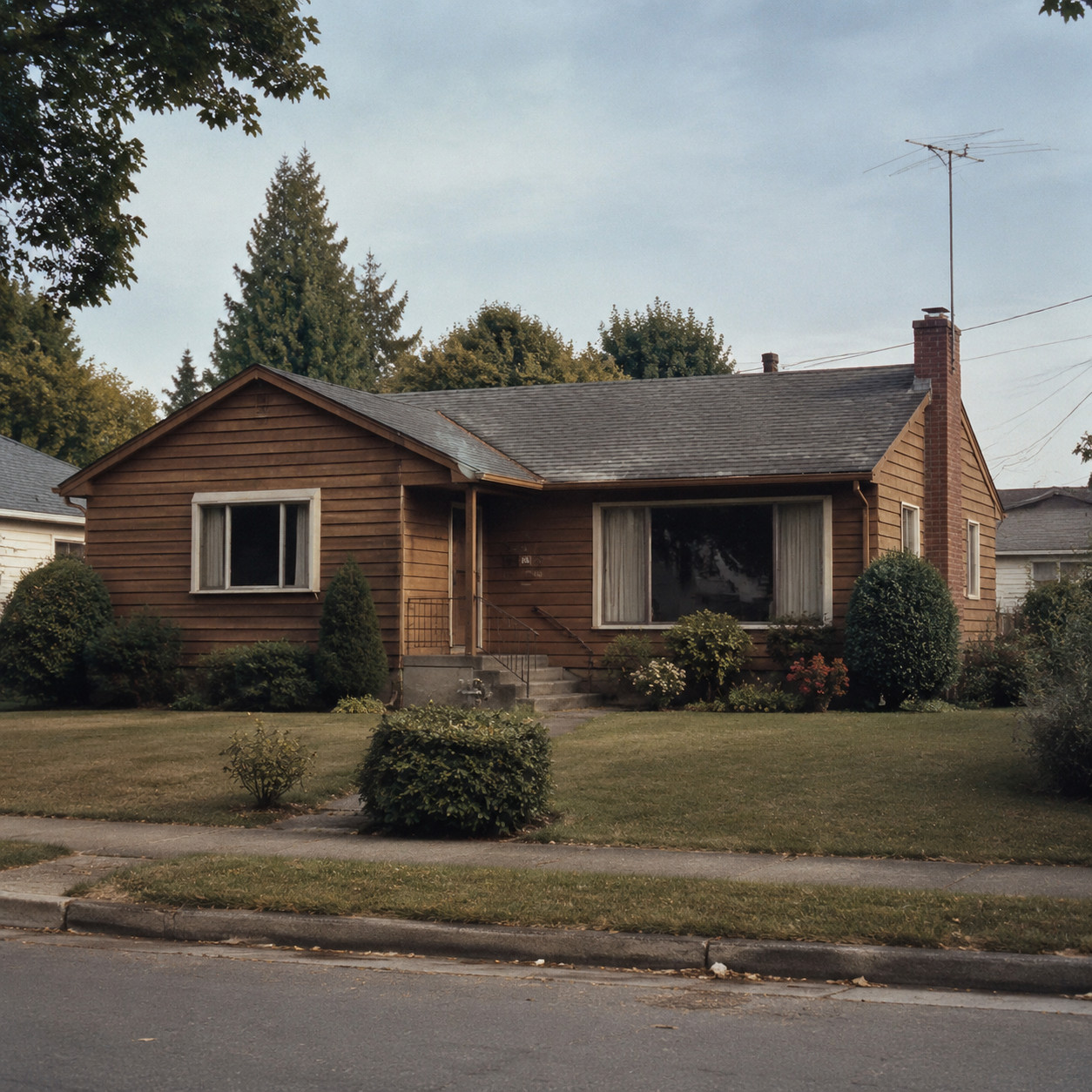
Right around 1954 and 1955 there was a house that was half Minimal Traditional and half ranch — caught in the act of becoming the thing that would take over the country.
The earliest ranch versions, the “Ranchette” or Transitional Ranch, are seen in neighborhoods close to Minimal Traditional homes. They were small, sometimes built without a garage or carport at all, with a large picture window in the front and horizontal cedar cladding. A little bigger than the old cottage, a little lower, but not yet the long low ranch to come.
It was the missing link. You can stand on certain streets and watch the box stretch out and flatten into the ranch, house by house, year by year.
Because it was a transition, it disappeared the fastest. The style only made sense for the two or three years it took the ranch to fully arrive. Builders moved on almost immediately, and the Ranchette became one of the rarest and least-recognized postwar forms — a house most people can’t even name when they see it.
8. The Storybook English Cottage
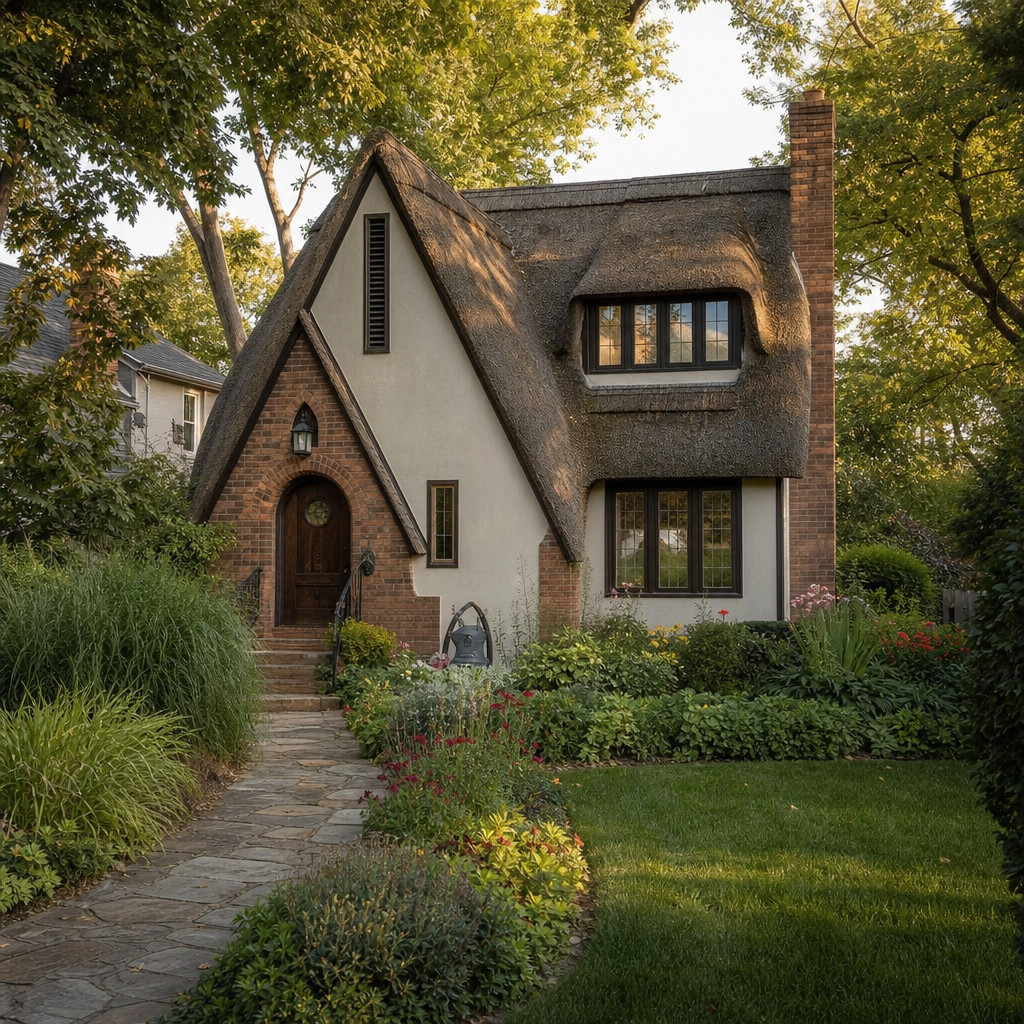
Before the fairy-tale ranch, there was the fairy-tale cottage — a tiny, steep-roofed, English-village-looking house that lingered into the early 1950s as a holdover from the prewar Tudor craze.
These were small, asymmetrical houses with a steeply pitched front gable, a rounded or arched front door, brick or stucco walls, and a roof that sometimes curled at the eaves to mimic an old thatched cottage. The whole house was designed to look like it had been lifted out of a children’s book.
In 1955 they were already old-fashioned. The style belonged to the 1920s and ’30s, and the few that still went up did so in the most conservative, traditional neighborhoods.
The cottage didn’t survive the move to mass production. Every charming detail — the rolled eaves, the arched door, the steep little roof — was expensive handwork that the tract builders couldn’t replicate at the new price points. The ranch was cheaper, faster, and more modern, and the storybook cottage simply stopped being built.
9. The Two-Tone Ranch
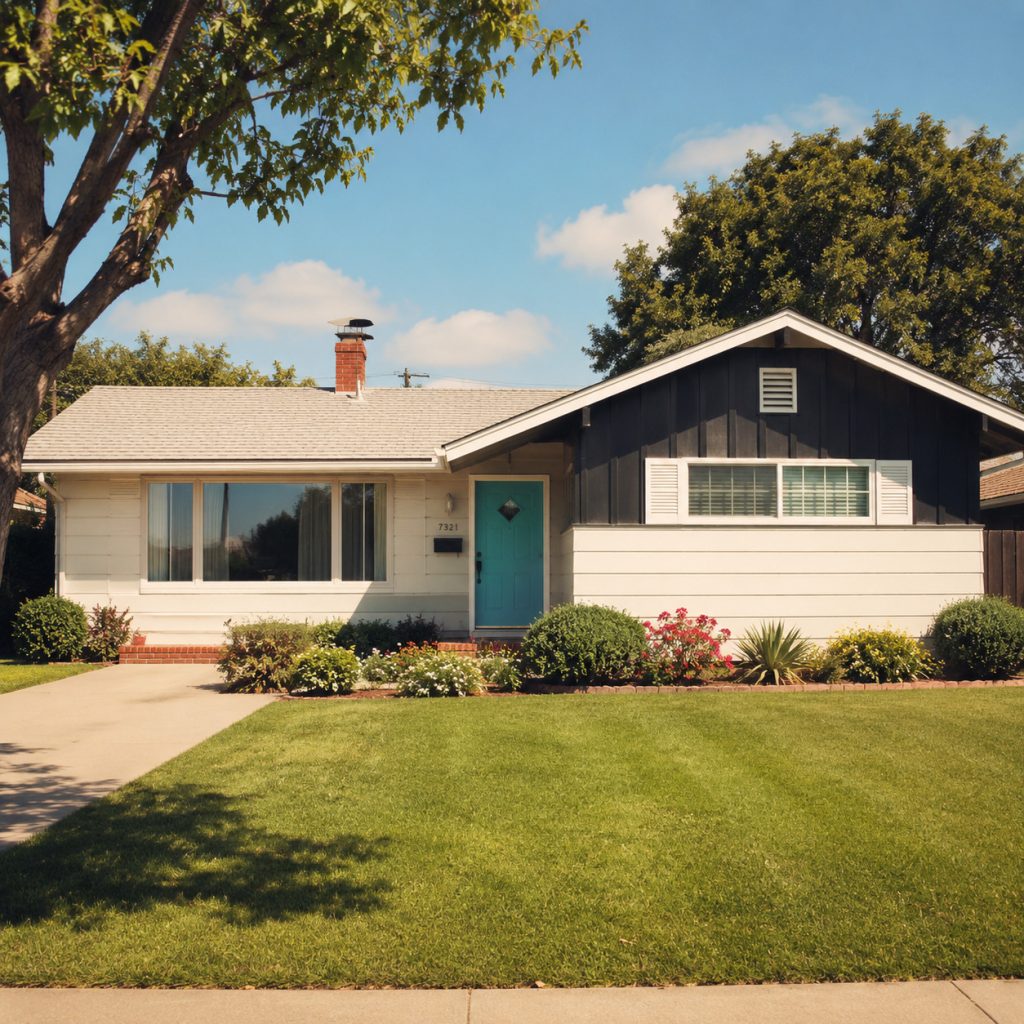
A very 1955 move: take a ranch and paint or clad the gable end in a contrasting color or material, so the house read as two tones from the street.
The body might be a pale clapboard while the front-facing gable wore vertical board-and-batten in a deep contrasting shade, or a panel of stone, or brick against siding. It was a cheap, effective way to give a plain ranch some visual punch and break up the long horizontal line.
It fit the optimism of the moment perfectly. The mid-50s loved color and contrast — turquoise and coral, pink and charcoal — and the two-tone exterior was the house joining in.
The look dated hard. By the 1970s the contrasting gable read as fussy and cheap, and homeowners repainted their houses a single quiet color. New construction went monochrome and stayed there. The deliberately two-tone facade is now a tell that a house hasn’t been touched since the Eisenhower years.
10. The Asbestos-Shingle “Permanent Siding” House
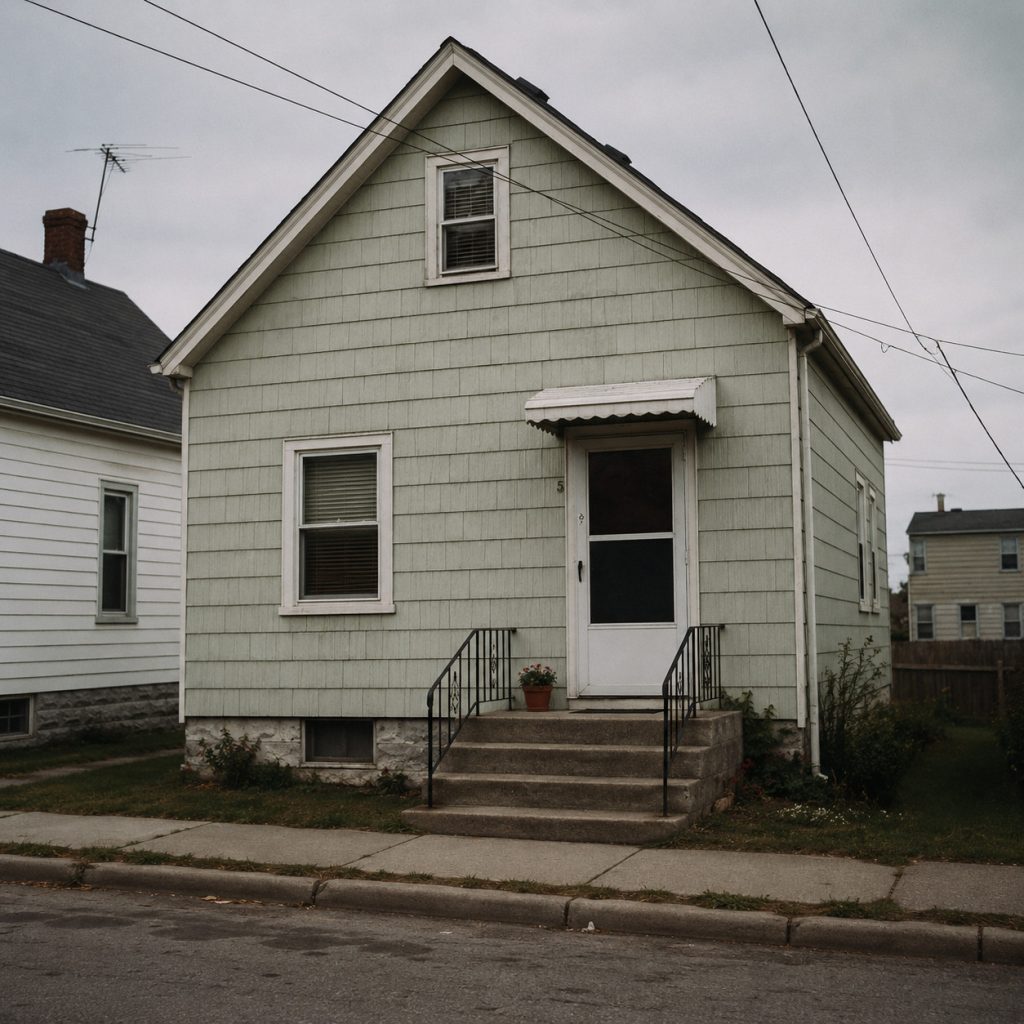
In 1955, the dream siding — the one advertised as the last siding you’d ever need — was made of asbestos cement, and builders wrapped thousands of houses in it.
The shingles were rigid, fireproof, rot-proof, and bug-proof, pressed in a faux-wood-grain texture and sold as the maintenance-free answer to painting clapboard every few years. They came in soft postwar colors and got nailed over everything from new construction to old farmhouses.
For a while it really was a miracle product. It didn’t burn, didn’t rot, and held its color, which was exactly what a busy young family wanted.
Then everyone learned what asbestos does to lungs. The siding isn’t dangerous sitting on a wall, but the moment you cut, drill, sand, or break it, it becomes a hazardous-material problem with special disposal rules. No one makes it or installs it anymore, and houses that still wear it are a renovation headache — you can’t just rip it off and throw it in a dumpster. The “permanent” siding turned out to be the kind nobody can touch.
11. The Concrete-Block House
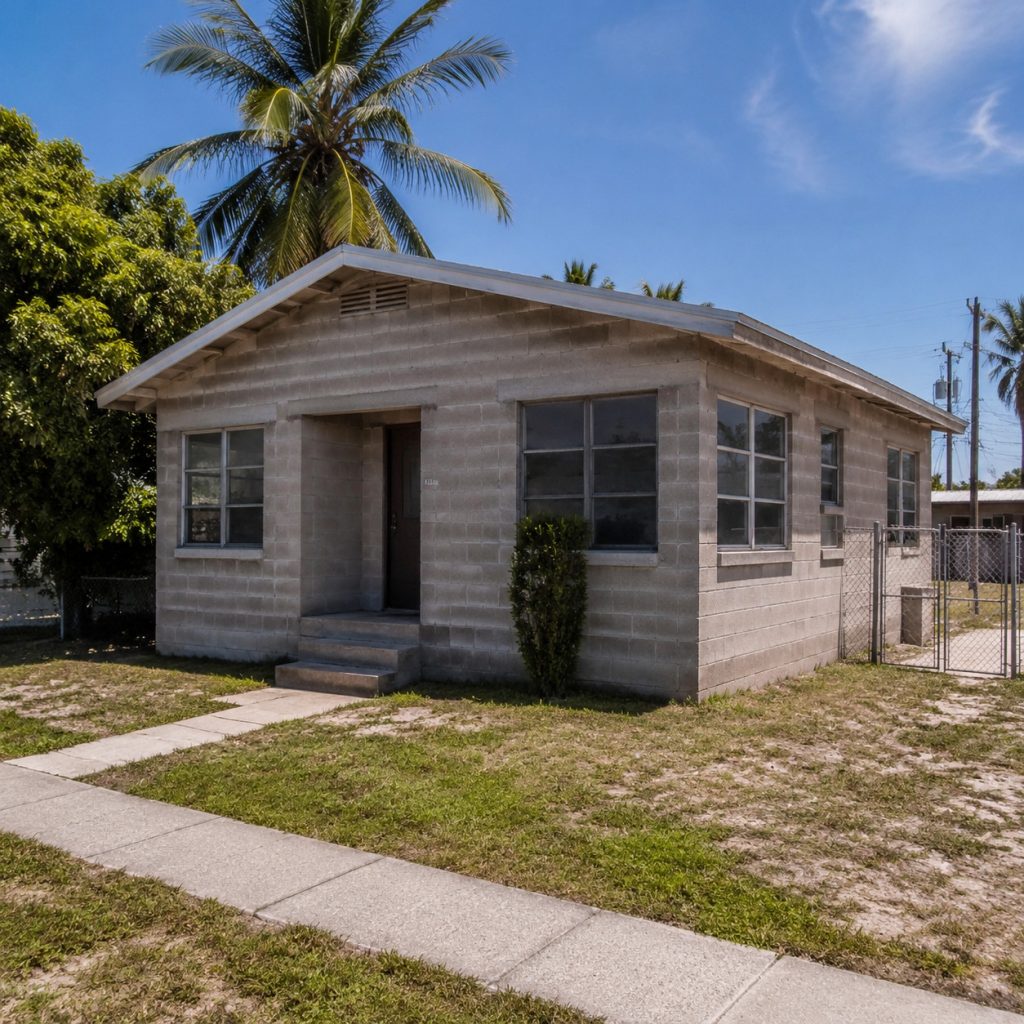
A lot of 1955 houses were built out of plain concrete block — sometimes stuccoed over, but often left bare, gray, and exposed right to the street.
Concrete masonry was cheap, fireproof, and fast, and in warm regions especially it was everywhere. The blocks went up quickly, didn’t rot, didn’t burn, and didn’t feed termites. Builders in Florida, Texas, and the Southwest poured up entire subdivisions of them.
The exposed-block look had a certain honest, sturdy appeal in the mid-50s. It said permanent and modern at a time when both were selling points.
Bare block fell out of favor as buyers came to read it as institutional and cold — it looked like a school or a warehouse, not a home. Where block construction continued, it got wrapped in stucco, brick, or siding to hide it. The frank, exposed gray-block house of 1955 isn’t a look any builder offers on purpose anymore.
12. The Quonset Hut Home
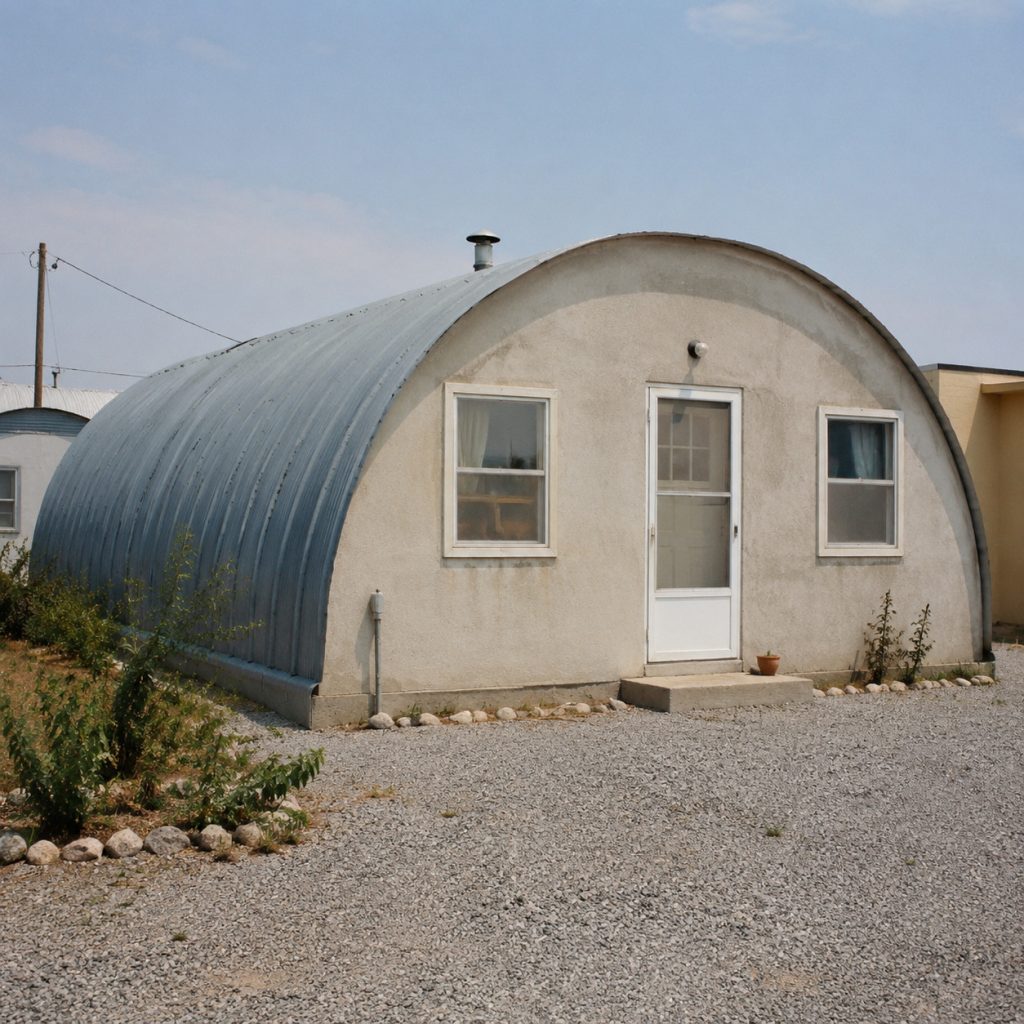
For a few years after the war, you could live in a corrugated-steel half-barrel — a Quonset hut, surplus from the military, repurposed as an actual house.
The hut was a semicircular arch of ribbed galvanized steel sitting on a slab, with flat walls capping each end. The Navy had built tens of thousands of them for the war, and the postwar housing shortage was so severe that families, colleges, and developers pressed them into service as homes and apartments.
They were dirt cheap, went up in a weekend, and were nearly indestructible. For a young veteran who couldn’t find anywhere to live, a Quonset was a roof — sometimes the only one available.
By 1955 the emergency was passing and nobody wanted to raise a family in a metal tube. They were impossible to insulate, brutal in summer and winter, and impossible to lay out into normal rooms because the walls curved in overhead. As real housing got built, the Quonset homes were abandoned or demolished. A handful survive as oddities. As a place to live, the style was over almost as soon as it started.
13. The Streamline / Art Moderne Holdout
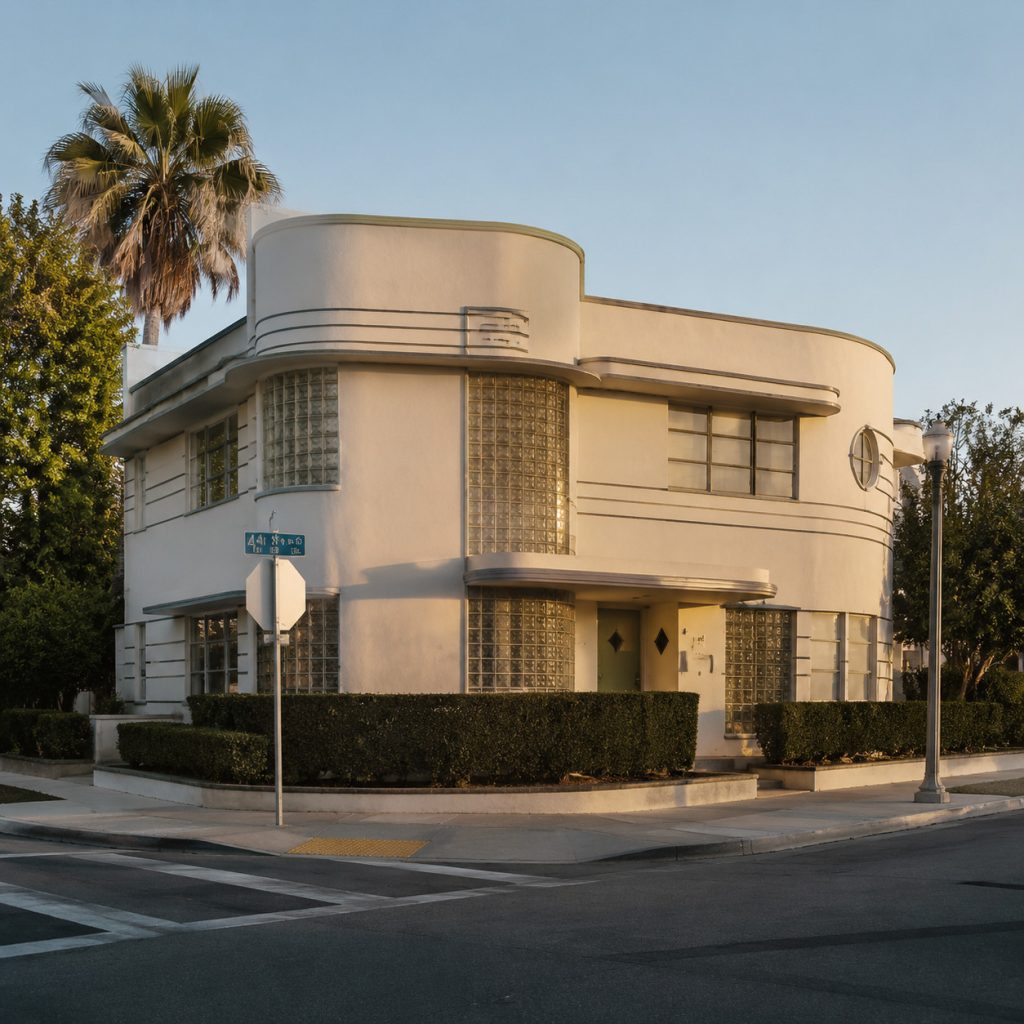
In 1955 you could still find the occasional house that looked like an ocean liner or a diner — rounded corners, smooth white stucco, glass block, flat roof, and a single porthole window. The Streamline Moderne house was already a relic, and the few still going up were the last of their kind.
The style borrowed from 1930s industrial design — the aerodynamic look of trains, planes, and ships. Curved wall corners, horizontal “speed lines” cut into the stucco, steel-framed casement windows, and glass block letting in light without a view.
It was the height of modern in 1936. By 1955 it was twenty years out of date, and the clean low ranch had taken over the “modern” title completely.
The curves are what killed it. Rounded stucco corners, glass block, and flat roofs are all expensive, leak-prone, and slow to build. None of it fit mass production, and the flat roofs failed in any climate with snow or rain. The handful of Streamline houses left are prized by collectors. New ones essentially don’t exist outside of custom architecture.
14. The Monterey Two-Story With the Cantilevered Balcony
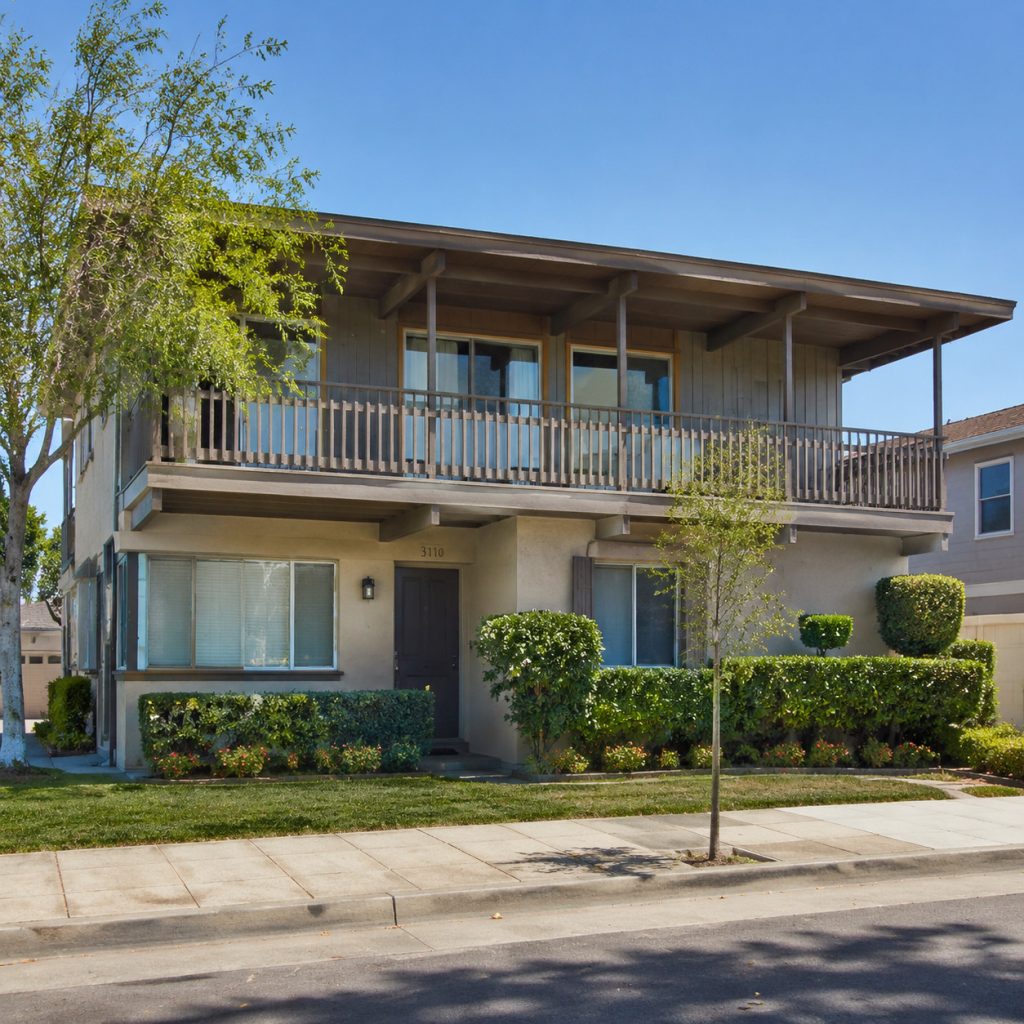
The Monterey style was a two-story house — unusual in a one-story decade — defined by a long covered balcony running across the front of the second floor, cantilevered out over the first.
It was a Spanish-Colonial-meets-New-England hybrid that came out of early California, with low-pitched tile or shingle roofs, stucco or wood siding, and that signature second-story porch with a simple wood railing. In the early 1950s it had a modest revival in warmer markets.
The balcony was the whole personality of the house. It gave a two-story home a graceful horizontal line and an outdoor room upstairs, and it nodded to old California rancho living.
It faded for a few reasons at once. The decade wanted single-story informality, not two-story formality. The cantilevered balcony was a leak-and-rot maintenance problem hanging off the front of the house. And the style was too regional and too specific to go national. New construction abandoned the front balcony entirely, and the Monterey became a rare bird.
15. The Pueblo / Adobe Ranch
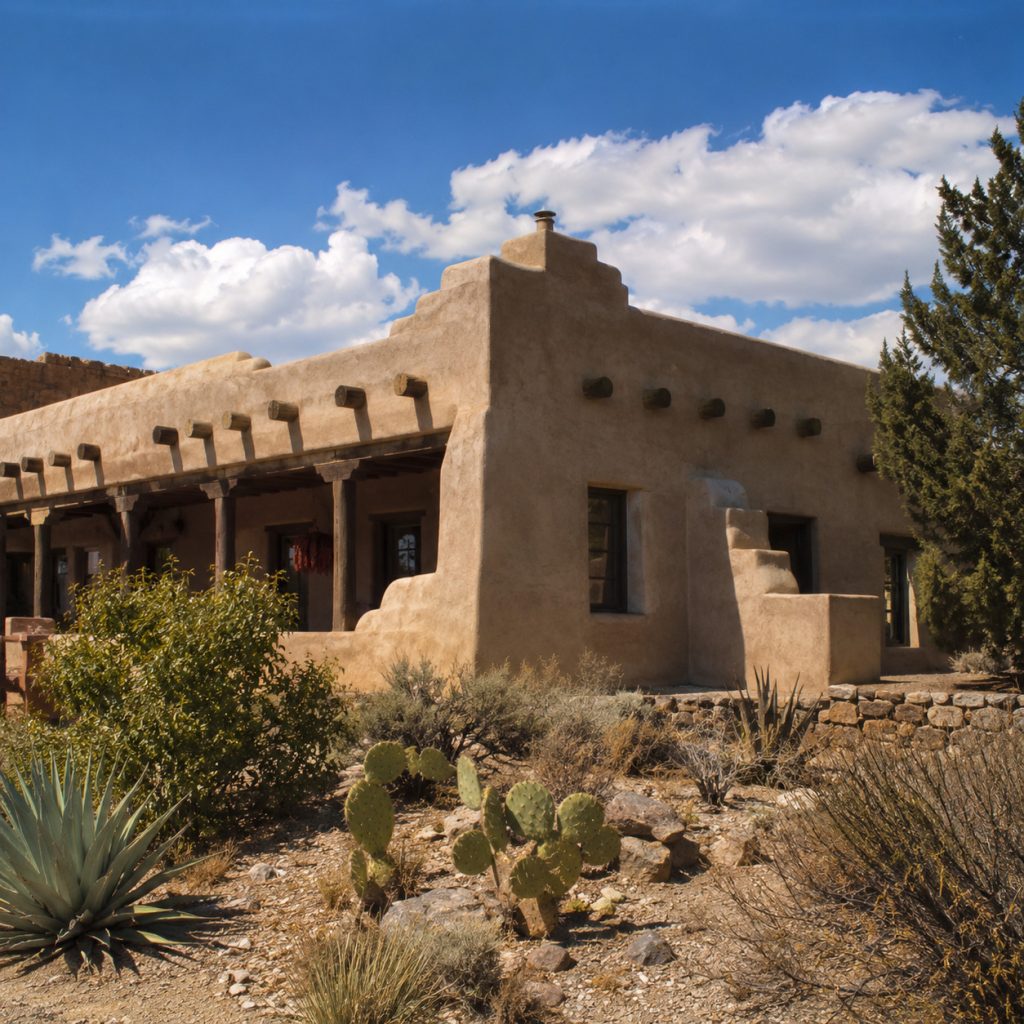
In the Southwest, the 1955 house often wore a flat roof, rounded earth-colored walls, and projecting wooden roof beams poking right through the facade — the Pueblo Revival, built to look like centuries-old adobe.
The style copied the ancestral architecture of the region: thick stucco walls with softly rounded edges and parapets, flat roofs, deep-set small windows, and vigas — the exposed beam ends — punching through the exterior. The color was always the earth, tan and brown and clay.
It belonged to the desert completely. The thick walls held back the heat, the flat roof made sense where it rarely rained, and the look tied the house to the landscape.
Outside the Southwest it never traveled, and even within the region the flat roofs and the maintenance-heavy stucco lost ground to easier conventional construction. The rounded hand-sculpted look is slow and expensive to build right, and most newer “Southwestern” houses just gesture at it with a stucco box and a tile roof. The true low, rounded, viga-studded Pueblo ranch of 1955 is now mostly a preserved style, not a built one.
16. The Ozark Fieldstone Cottage
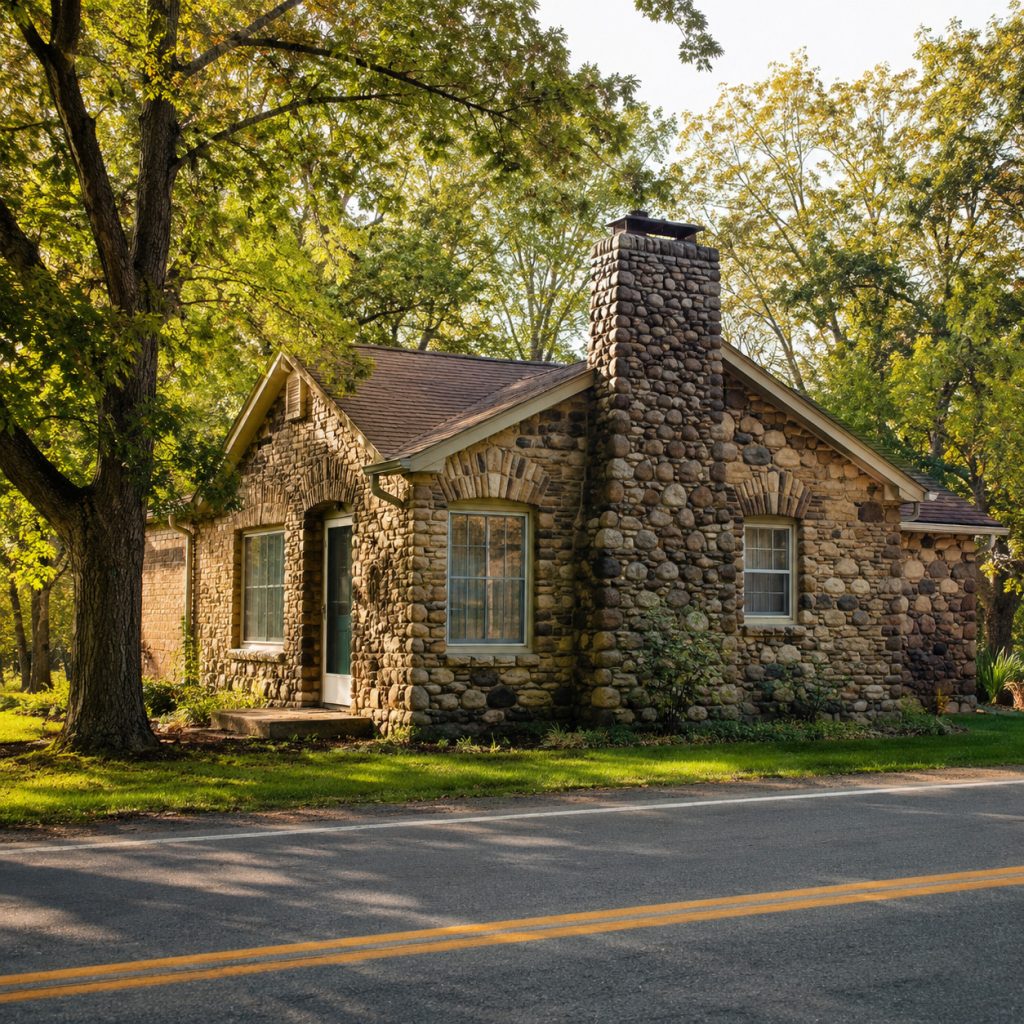
Across the Ozarks and parts of the rural Midwest, the 1955 house was often faced in rounded river rock and fieldstone, hand-laid into walls, chimneys, and even whole facades — sometimes studded with quartz, geodes, and colored stone for decoration.
These “giraffe stone” or “rock veneer” cottages were a regional specialty, built by masons who pressed local creek rock into mortar in elaborate patterns. A roadside tradition grew up around them — stone cottages, stone motels, stone gas stations — all along the early highways.
The appeal was the craft and the local material. Every house was a little different because every mason laid the stone his own way, and the rock came straight out of the nearby creek beds.
The skill is what disappeared. Laying decorative fieldstone by hand is slow, expert, expensive work, and the masons who did it aged out without replacements. Modern construction uses thin manufactured stone veneer that mimics the look at a fraction of the labor — and it doesn’t read the same. The genuine hand-laid fieldstone cottage stopped being built when the craftsmen stopped working.
17. The Hip-Roofed Postwar Small House
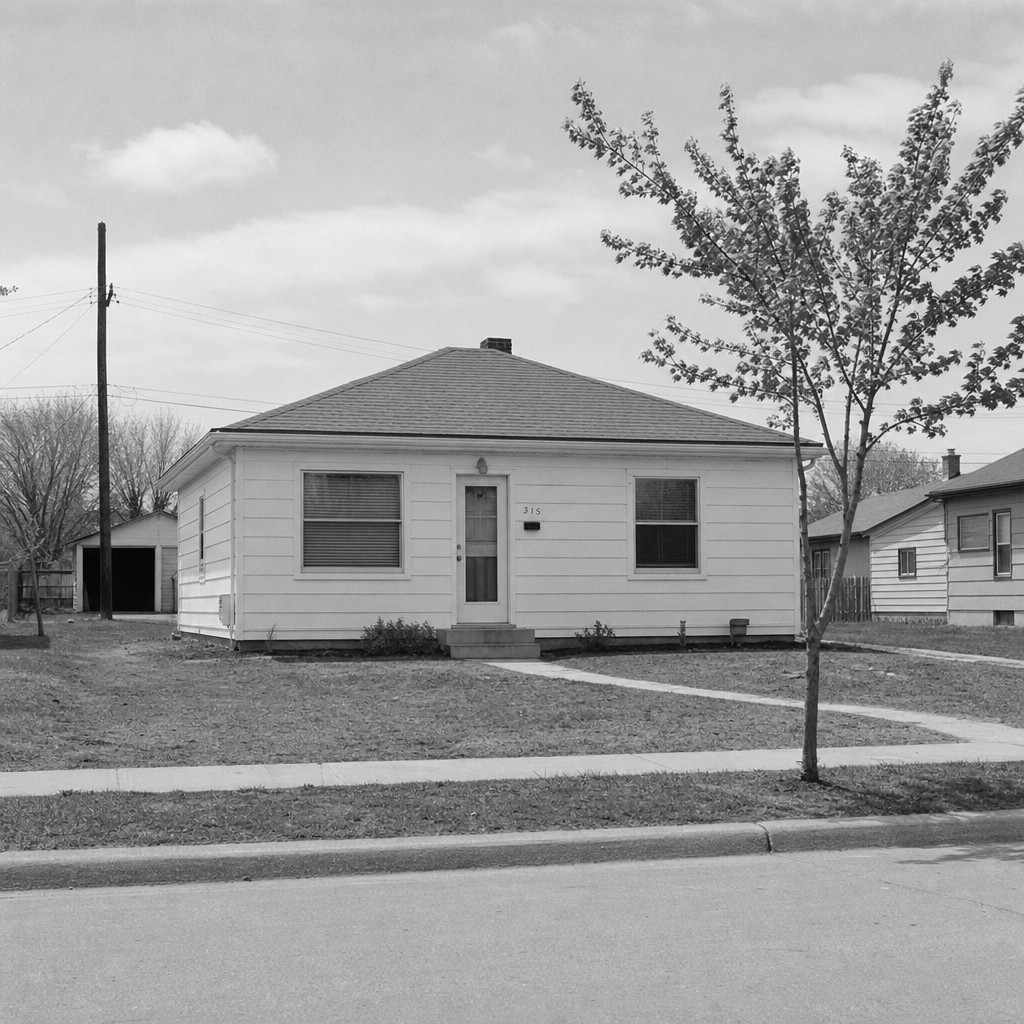
The plainest house on the 1955 block was a simple little square or rectangle with a hipped roof — four slopes meeting at a peak or a short ridge — and almost no other distinguishing feature at all.
This was the bare-minimum house. A compact box, a hip roof because it shed weather well and used short rafters, a couple of windows, a front door, and nothing else. No dormers, no porch, no decoration. Builders threw them up by the thousands because they were the cheapest possible permanent house.
It was honest and it was modest, and in 1955 modest was still respectable. A young family was proud to own one.
The hip-roofed box vanished because the entire market moved upmarket. As soon as people could afford more house, the bare little hip-roofed square looked like the least you could buy — and nobody aspires to the least. Builders stopped offering them, and the ones that remain are usually the smallest, oldest houses in any postwar tract, often expanded beyond recognition.
18. The Board-and-Batten “Modern” Ranch
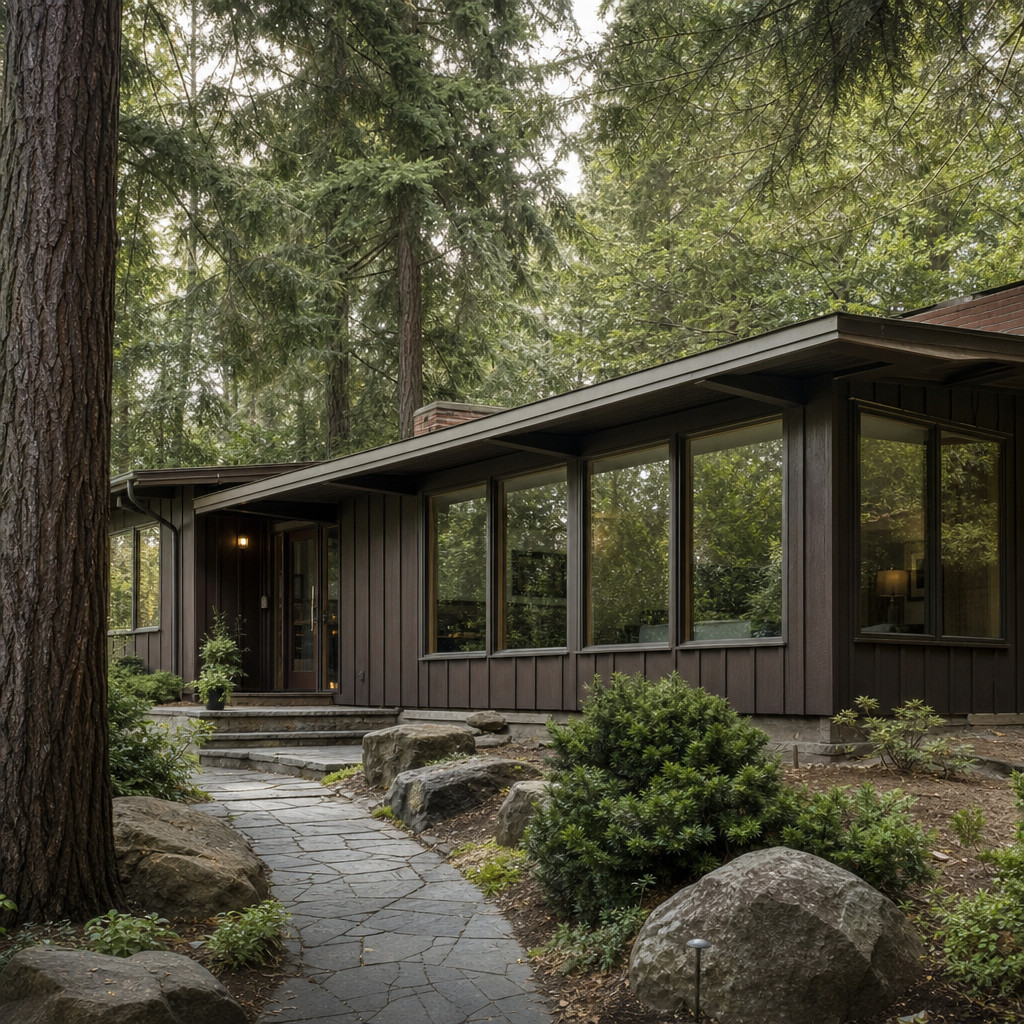
One of the cheapest ways to make a 1955 ranch look modern was to side it in board-and-batten — wide vertical boards with narrow strips covering the seams — usually stained a flat dark brown or painted a bold flat color.
The vertical siding was a deliberate break from traditional horizontal clapboard. It read as contemporary, rustic, and a little architectural, and it was cheap. Builders used it on whole walls or just on the front gable to give an ordinary ranch a modern edge.
It fit the era’s idea of casual, woodsy, modern living — the same impulse that put knotty pine in the den.
The flat dark stain and bold flat paint of the mid-50s dated quickly, and board-and-batten as a primary siding fell out of mass-market favor. It’s had small revivals since, but the specific 1955 version — dark brown vertical boards on a low ranch — now looks unmistakably of its moment. New ranches went back to horizontal siding and mostly stayed there.
19. The Glass-Block-and-Jalousie Sun Belt Cottage
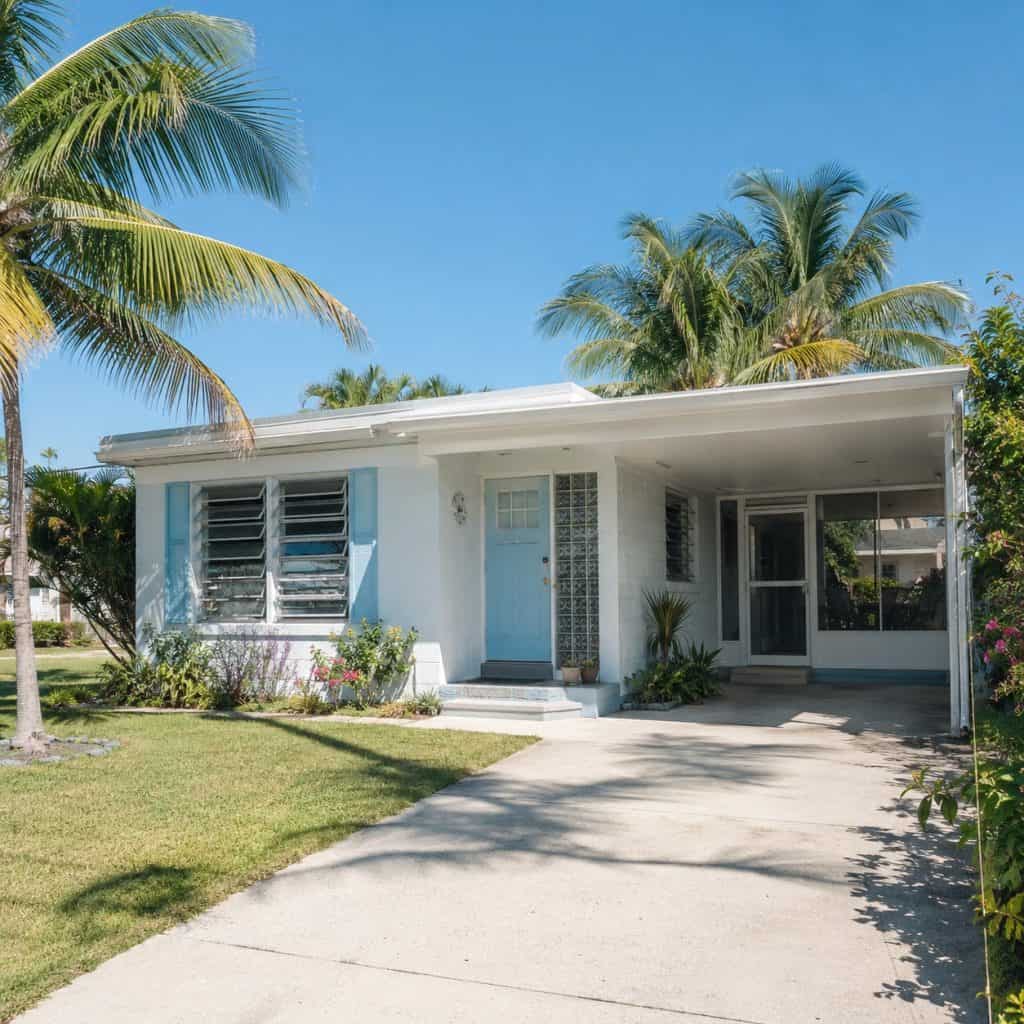
In Florida and the Gulf Coast, the 1955 house was full of two features you almost never see now: panels of glass block, and jalousie windows — those banks of horizontal glass slats that cranked open like venetian blinds made of glass.
The jalousie was perfect for the climate before air conditioning. Jalousie or awning windows on the sides, a wide carport across the front, a screened breezeway, and a Florida room on the back were the standard kit. The slats let the breeze pour through while keeping the rain out, and the glass block brought in light while standing up to storms.
It was tropical, breezy, and exactly suited to a place that was hot and humid ten months a year.
Air conditioning killed both features. Once you sealed and cooled the house, jalousie windows became a liability — they leak air terribly around every slat and don’t meet modern energy or hurricane codes. Glass block fell out of style as it came to look dated and institutional. New Sun Belt construction is sealed, impact-rated, and conventionally windowed. The crank-slat cottage is a period piece.
20. The Panelized Prefab Tract House
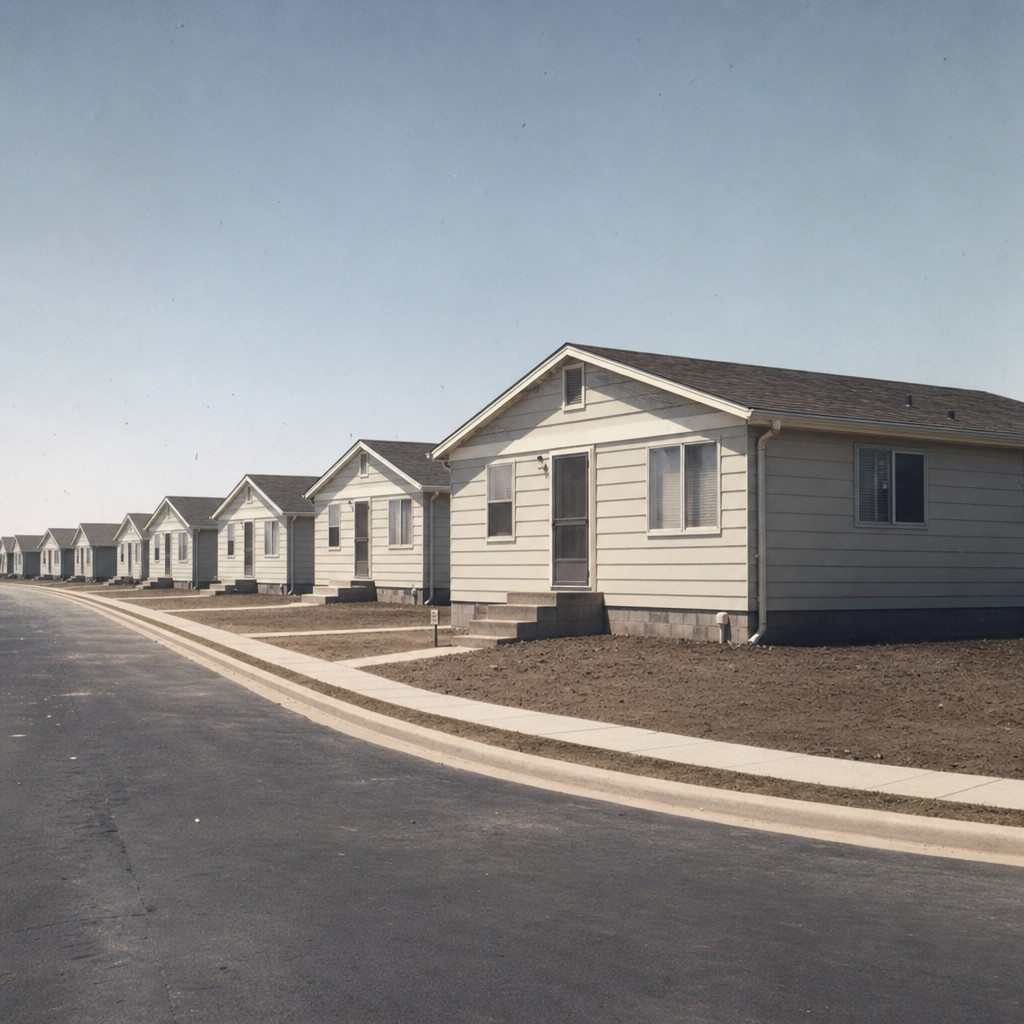
A big slice of 1955 housing didn’t come from a builder framing on site — it came from a factory, shipped to the lot as pre-built wall panels and assembled in days. Companies like National Homes and Gunnison turned out houses by the tens of thousands this way.
The panelized house arrived as a kit of finished wall sections — framing, sheathing, sometimes even windows and siding already attached — that a small crew bolted and nailed together fast. It was the logic of the assembly line applied to the home, and it let builders meet demand that traditional construction couldn’t touch.
For a few years the factory-built house felt like the future. It was cheap, quick, and surprisingly solid, and it put a lot of families under a roof in a hurry.
The big national prefab brands mostly faded as conventional builders got more efficient and as buyers came to distrust the “factory house” label, fairly or not. The houses themselves blended into the tract landscape and lost their identity entirely — most people living in one today have no idea it came off a production line. As a named, branded way to buy a house, the style is gone.
21. The GI Bill “Basement House”
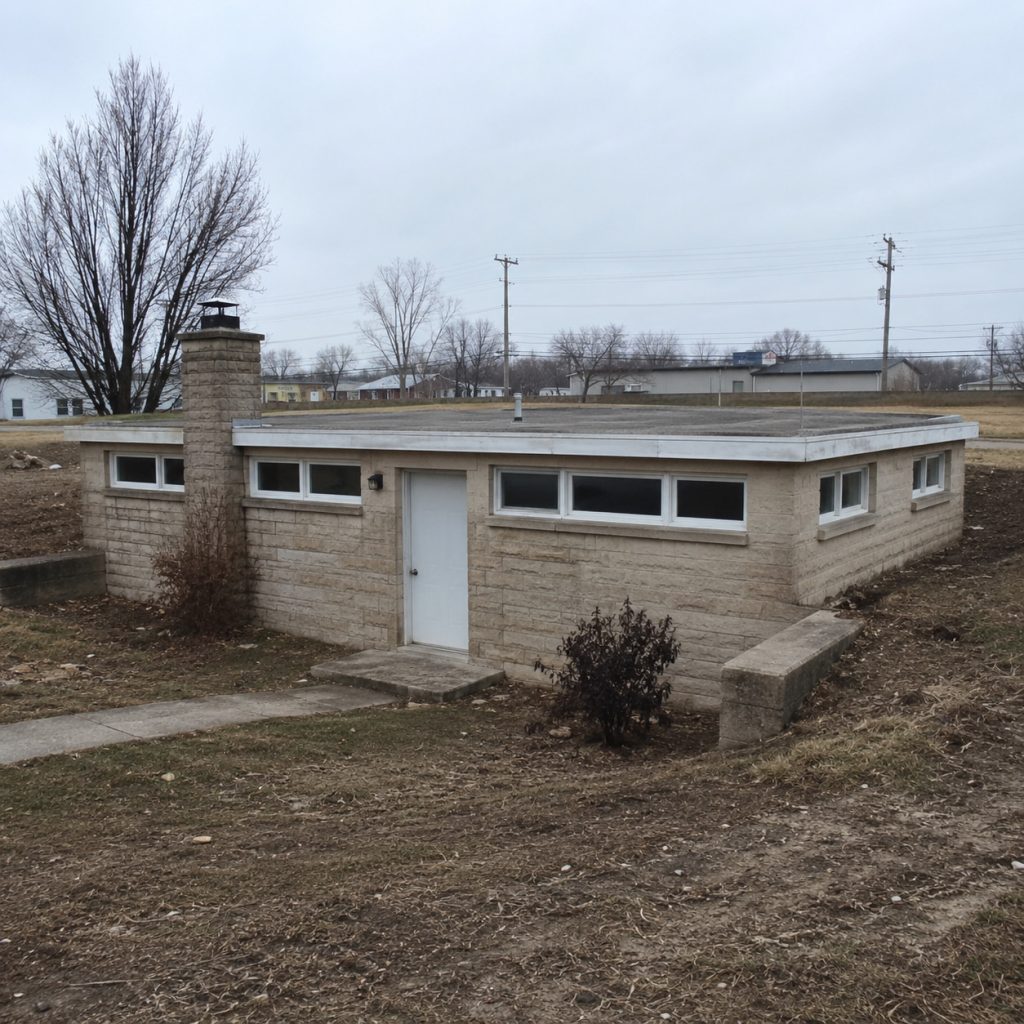
One of the strangest 1955 houses was the one with no house on top — a family living in a finished basement under a flat roof at ground level, with the real house planned for later, once there was money.
The idea was simple and desperate. A veteran with a GI Bill loan would build the foundation and basement, roof it over at grade, move the family in, and save up to build the actual first floor on top someday. Whole neighborhoods of these “tomorrow houses” or basement houses went up in the tightest years of the housing crunch.
It was the cheapest possible way to own land and a roof. You were literally living in the start of your future house.
Most of the time the upstairs never got built. The family grew comfortable, money went elsewhere, and the basement house stayed a basement house. Lenders and code officials eventually stopped allowing the arrangement, and the few that remain look like odd flat-roofed bunkers half-sunk into their lots. No one builds a house from the basement up anymore.
22. The L-Shaped Carport Ranch
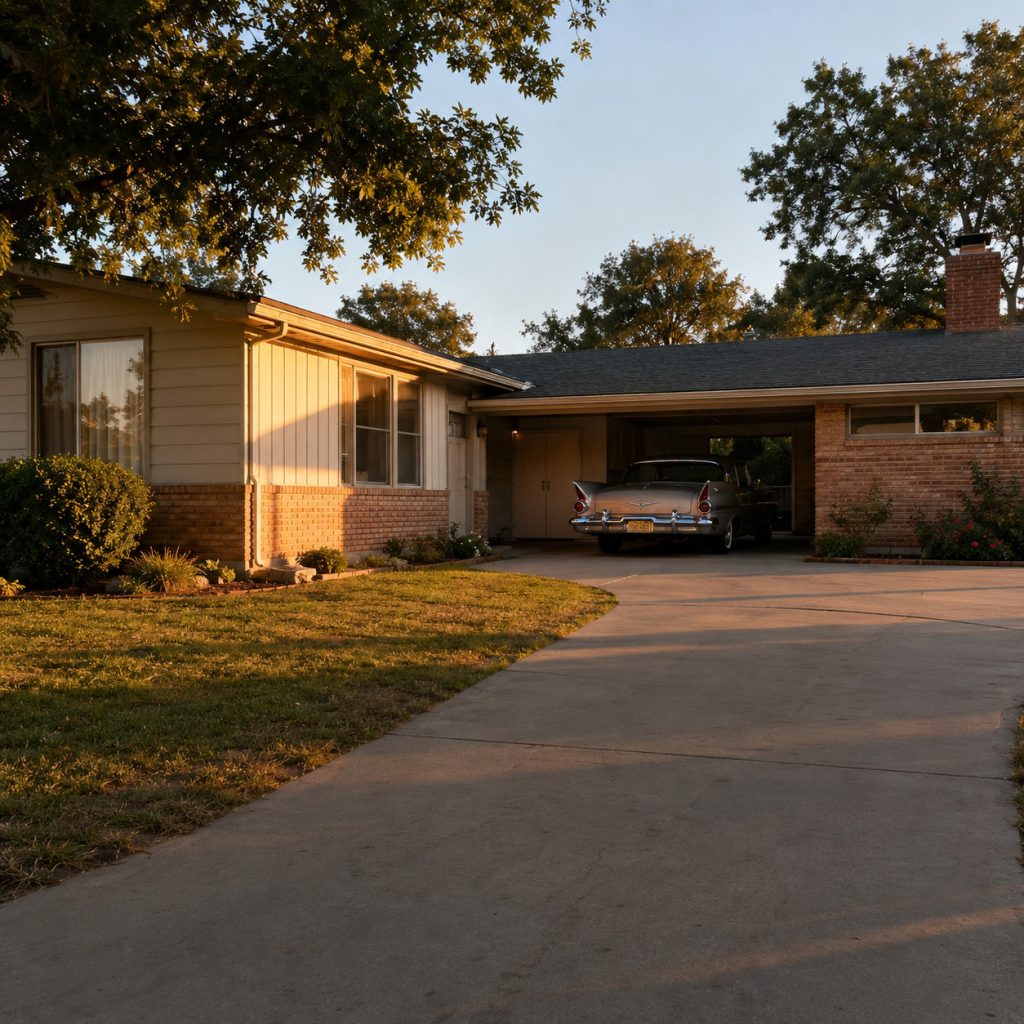
The 1955 ranch usually didn’t have a garage — it had a carport, an open roofed structure with no walls, often tucked into the crook of an L-shaped house.
The house ran long across the front of the lot, turned a corner, and the carport sat in the inside angle of the L, sheltered by the architecture. You parked under the roof but never enclosed the car. A storage closet at the back held the lawn tools.
The carport made sense in a milder, simpler time. It was cheaper than a garage, it kept the worst of the weather off the car, and it kept the house’s long low line uninterrupted.
Americans decided they wanted their cars locked up — for security, for storage, for a place to put the workbench and the chest freezer. Carports got walled in and turned into garages, and new construction skipped straight to the enclosed two-car garage. The open carport tucked into an L is a sight you only get in the old neighborhoods now.
23. The Spanish Eclectic Stucco Cottage
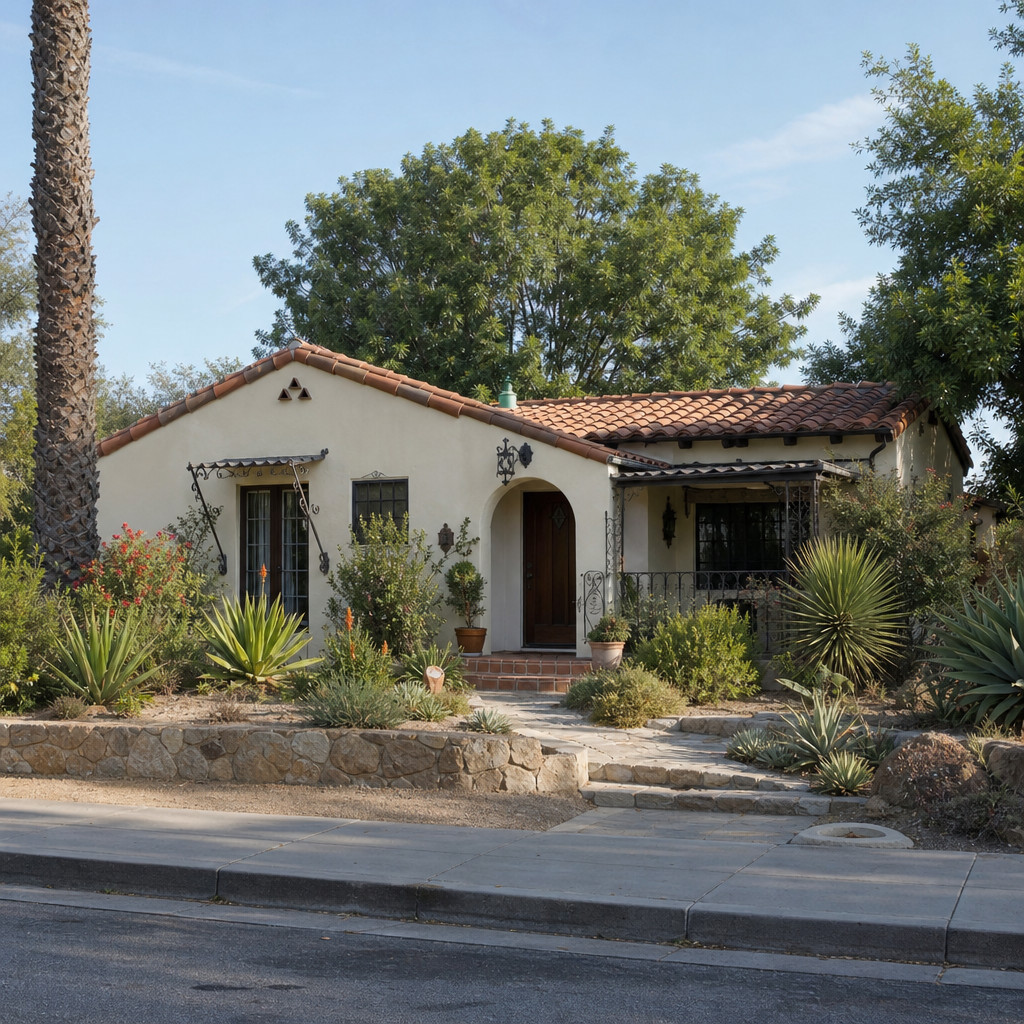
In the warmer states, the early 1950s still produced small Spanish-style cottages — white or cream stucco, a low red clay tile roof, an arched front door or window, and maybe a bit of wrought iron — shrunk down to starter-home size.
This was the modest, tract-scale descendant of the grand 1920s Spanish Revival. A little stucco box with just enough Spanish detail — the arch, the tile, the texture — to give it romance without the cost of the real thing. Builders in California, Arizona, Texas, and Florida used it as an affordable regional style.
It carried a whiff of old-world charm into a brand-new subdivision, which buyers liked.
The little Spanish cottage got squeezed out from both sides. The plain modern ranch was cheaper and more fashionable, and where Spanish style survived it ballooned into the big “Mediterranean” house of later decades — taller, grander, and nothing like the humble 1955 cottage. The small stucco-and-tile starter, with its single arch and its low tile roof, simply stopped being built at that size.
24. The Levittown Cape Starter
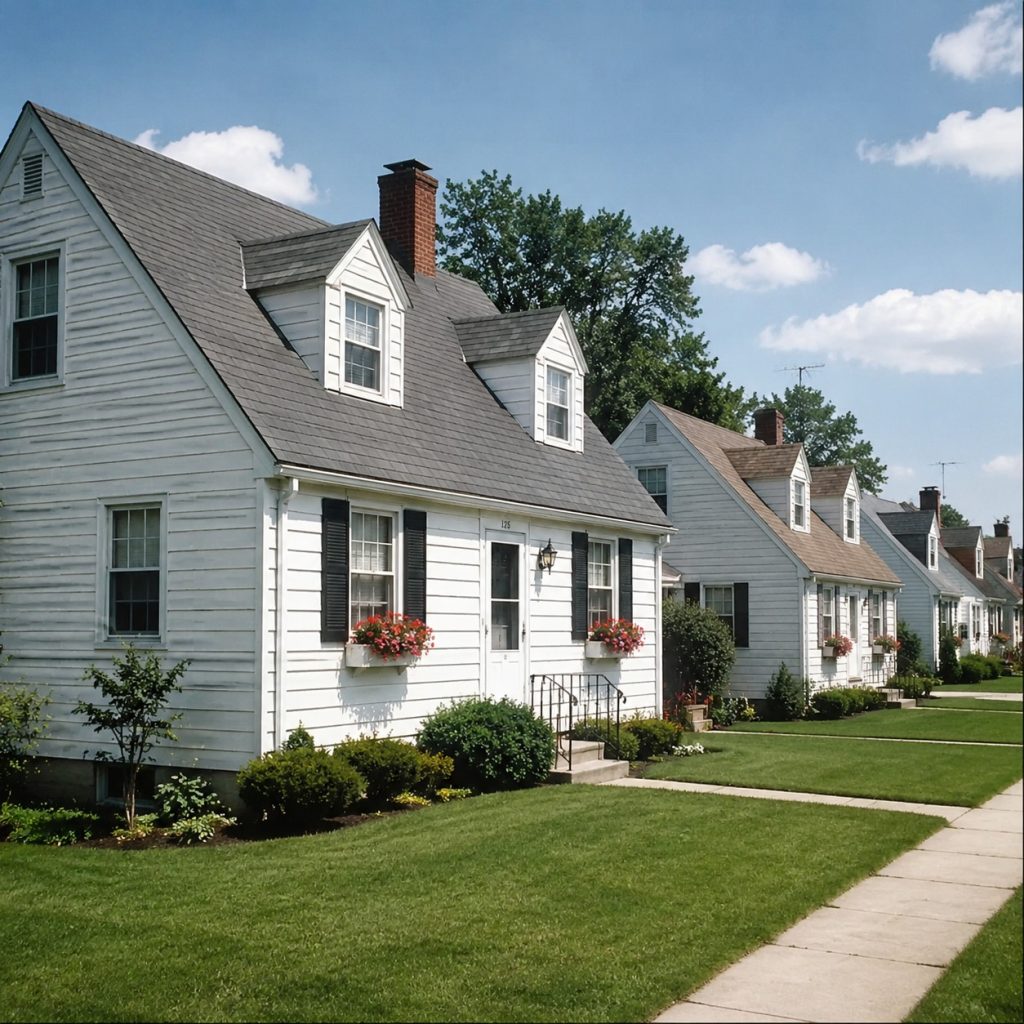
The house that started it all was still going strong in 1955 — the basic Levittown Cape, the tiny mass-produced cottage that taught America how to build a suburb.
The Levitts didn’t invent the Cape Cod — it’s a traditional colonial-era style, boxy and low with a sharply pitched roof and narrow eaves — but they mass-produced it. Every house came complete with a built-in washing machine, a kitchen range and refrigerator, a built-in bookcase, and flower boxes under the front windows, all in the price. Seven exterior color schemes and four roof-and-front variations made sure no two houses in view of each other looked exactly alike.
It was small, it was identical, and it was the American dream made affordable on one income.
Nobody builds an 800-square-foot Cape starter anymore. Land costs too much, labor costs the same whether the house is small or large, and code piles too many required systems onto a tiny house for the math to work. The little Levitt Cape was the foundation of the postwar middle class, and it’s a foundation no builder can profitably pour today.
25. The Honeymoon Cottage
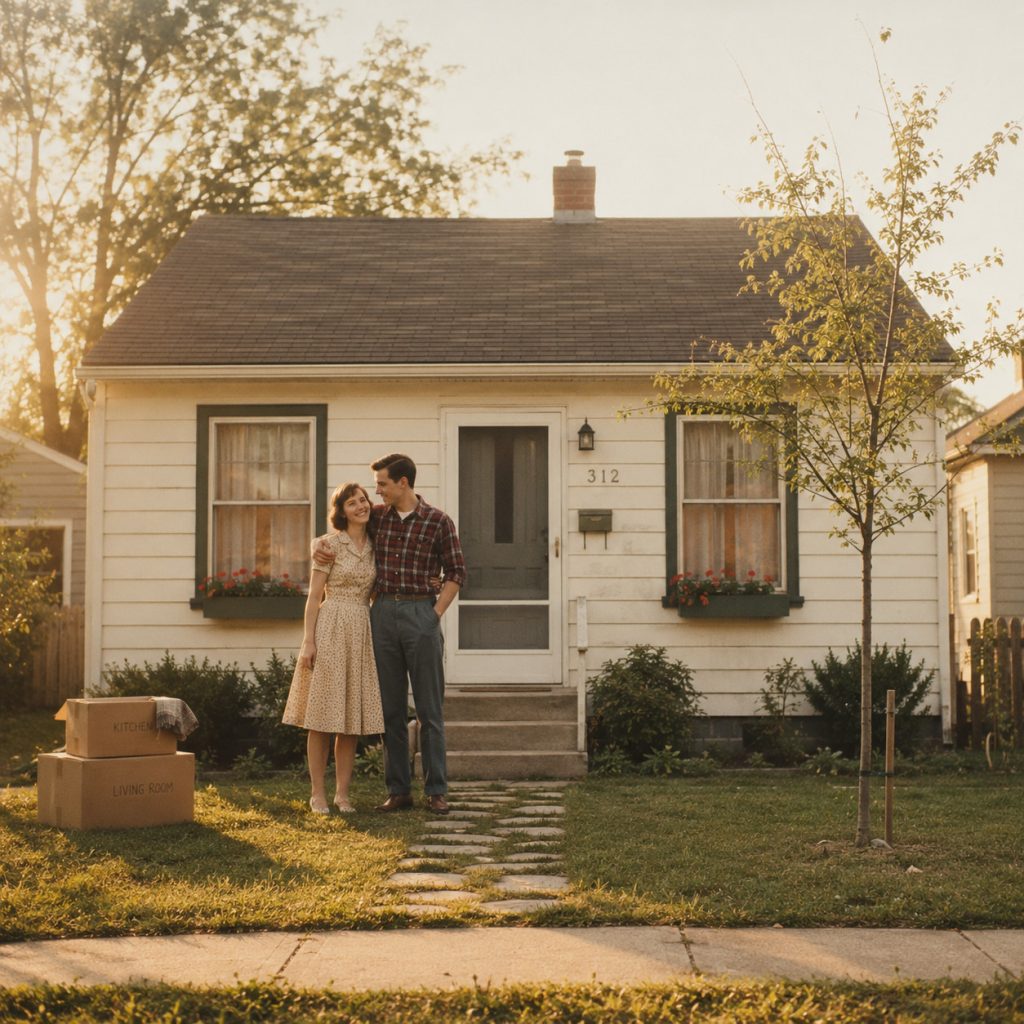
The one that mattered most was the smallest — the honeymoon cottage, the first tiny house a brand-new family could actually afford to own.
It went by a lot of names — starter home, honeymoon house, GI cottage — but it was always the same idea. Two bedrooms, one bath, maybe seven hundred square feet, on a small lot, priced so that a young couple with one paycheck and a VA loan could sign the papers and move in. It wasn’t the house you’d die in. It was the house you’d start in.
It was never meant to be permanent, and that was the genius of it. You bought the cottage, you outgrew it, you sold it to the next young couple, and you moved up. The whole ladder of postwar homeownership rested on that first cheap rung.
That rung is gone now. Nobody builds a 700-square-foot starter, because the land, the labor, and the code requirements force every new house to be bigger and more expensive. A young family today either buys something several times the size of a 1955 cottage or buys nothing at all and rents instead.
You can still drive through those first postwar streets. The honeymoon cottages are still there — sided over, added onto, their carports enclosed and their picture windows replaced — but the shape is intact, lined up one after another down the block.
Look at them on your next drive. You’re looking at the first rung of a ladder that millions of families climbed, and at the houses that, for one strange and hopeful decade, made it possible to start small and still own a piece of the country.