

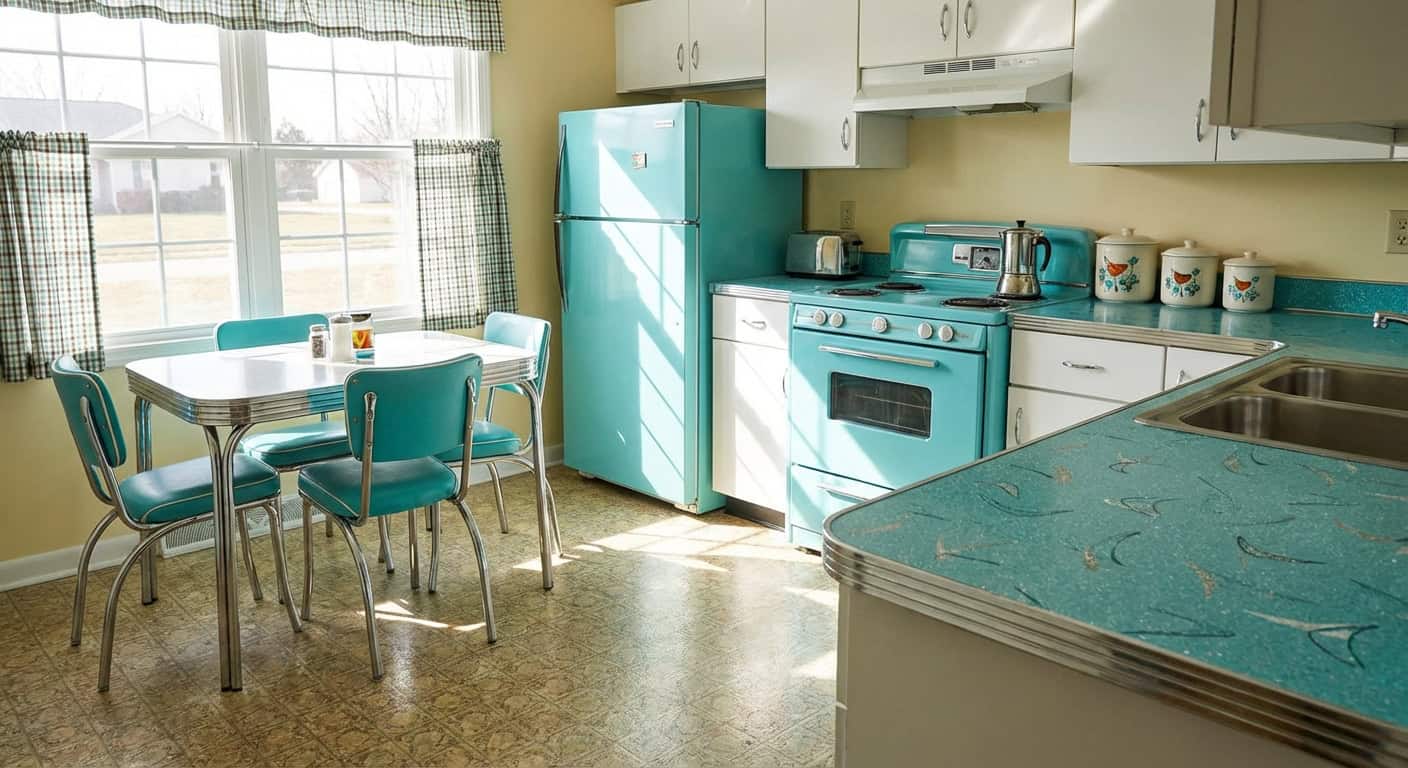
The 1960s home believed in the future.
It believed in science, in progress, in the idea that a kitchen could be turquoise and a living room could have a television the size of a dresser and somehow both of those things meant America was winning.
The furniture was low and sleek. The colors were bold. The appliances came in shades that had names like “coppertone” and “dawn pink.” Everything was designed to look modern — a word that meant something very specific in 1963 and has never quite meant the same thing since.
If you walked through the front door of an American home between 1960 and 1969, these 25 things were almost certainly there. Some were revolutionary. Some were ridiculous. And all of them tell you more about how America saw itself than any history book ever could.
How many do you remember?
1. The Console Television
Before the entertainment center, before the flat screen, the television was a piece of furniture.
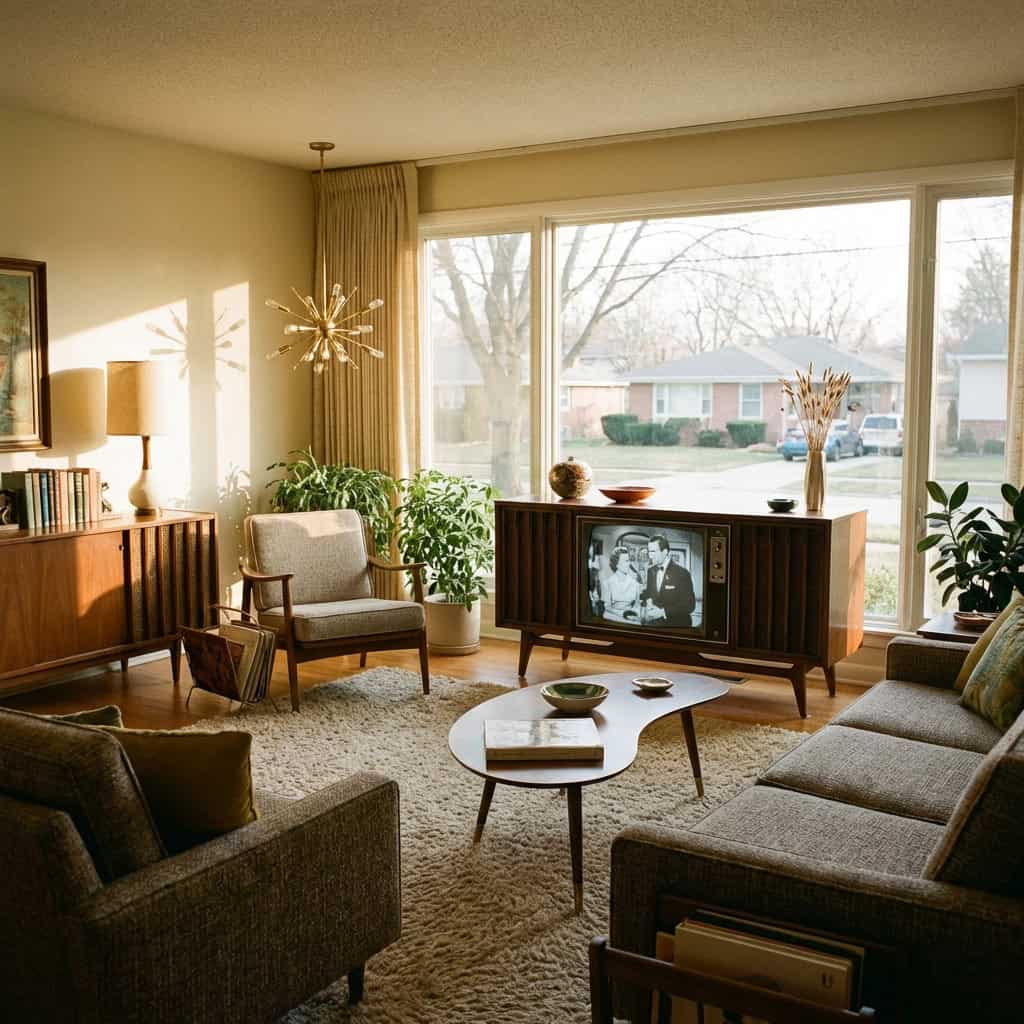
The 1960s console TV sat on the floor on four tapered legs, encased in a wooden cabinet that was designed to look like it belonged in the living room. Because it did. It was the living room.
The screen was small by modern standards — maybe 19 or 21 inches — but the cabinet around it was enormous. Polished walnut or mahogany, sometimes with doors that closed over the screen when the set was off, as if the family needed to pretend they did not own a television.
The whole family gathered around it. There was one TV in the house, one set of channels, and whatever was on was what everyone watched. Arguments over the dial were settled by whoever got to the set first — or by dad.
The console TV was heavy enough to anchor a boat. Moving day was a nightmare. But it was the single most important piece of furniture in the American home, and it changed everything about how families spent their evenings.
2. The Chrome and Vinyl Dinette Set
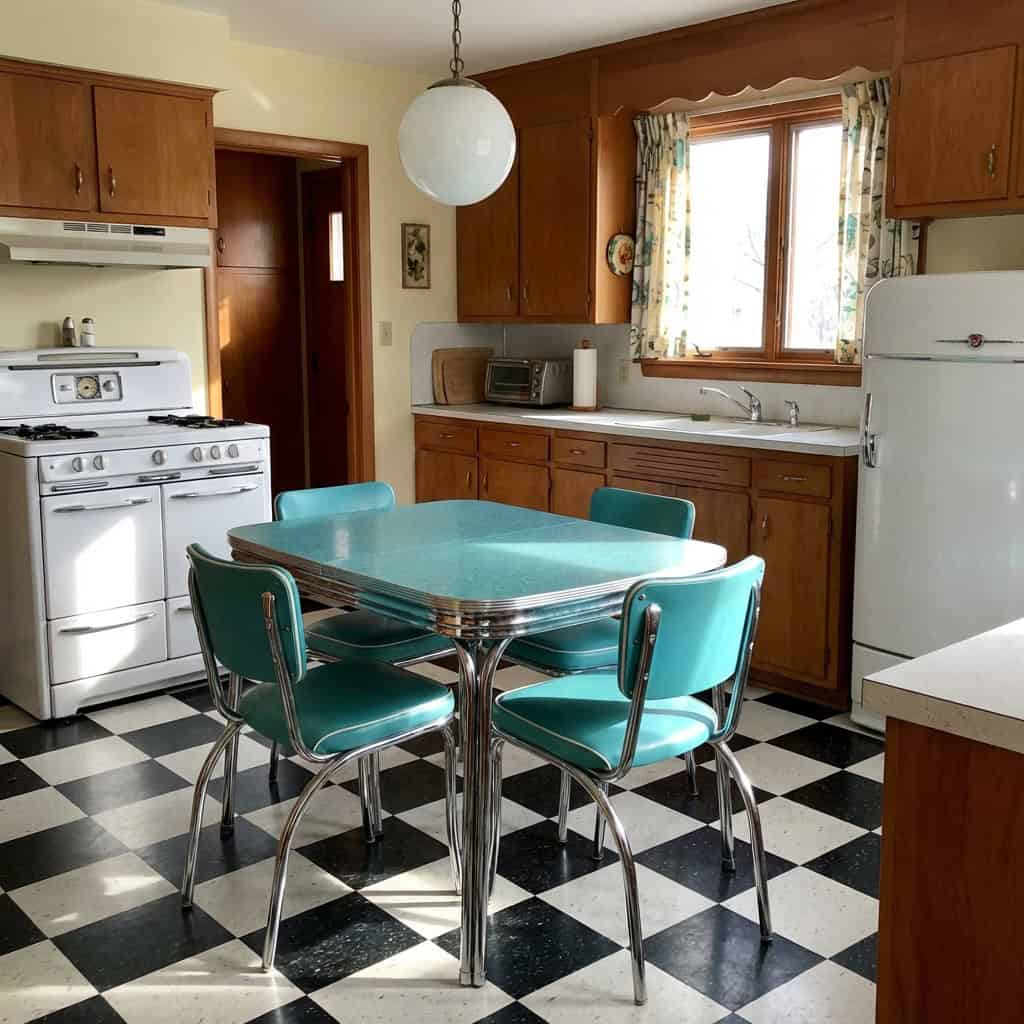
The kitchen table in the 1960s home was not wood. It was chrome and vinyl — and it was indestructible.
A Formica top in some cheerful color — yellow, turquoise, red, or white with a boomerang pattern — sat on chrome-plated steel legs. The chairs matched, with padded vinyl seats and chrome frames that bounced slightly when you sat down.
Kids ate breakfast there. Homework happened there. Mom drank coffee and read the paper there. The table was wiped clean with a damp cloth ten times a day and never showed a scratch.
The vinyl seats cracked eventually, especially along the seams. The chrome pitted over time. But the dinette set served families for decades — and the ones that survived are now selling at mid-century vintage shops for more than they cost new.
3. Bold Colored Appliances
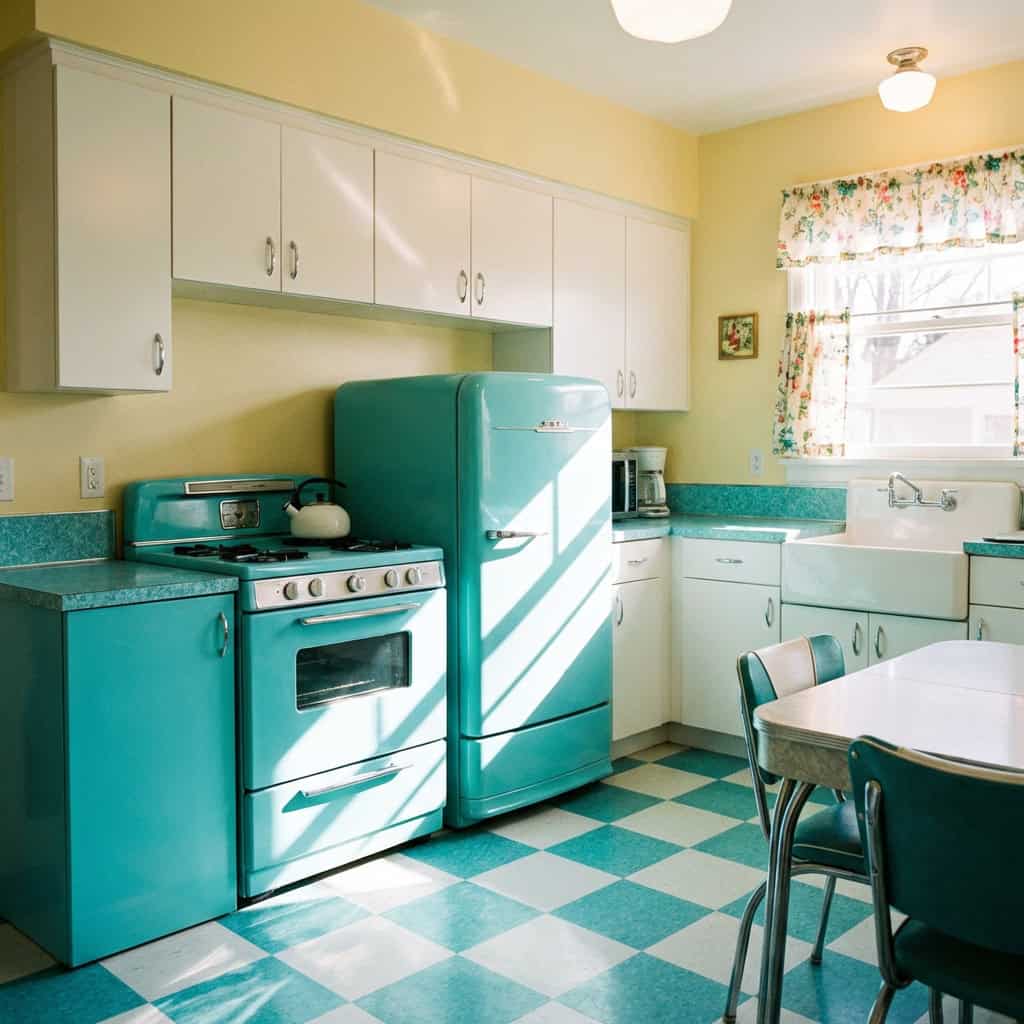
The 1960s kitchen was not interested in blending in.
Refrigerators came in turquoise, coppertone, dawn pink, and canary yellow. Stoves matched. Even the dishwasher — if you were lucky enough to have one — coordinated with the rest of the kitchen in a color that would make a modern designer break out in hives.
These were not accent colors. These were full-commitment, every-appliance-in-the-room colors. A turquoise refrigerator next to a turquoise stove next to a turquoise wall — and somehow it worked.
The shift to white appliances in the 70s and stainless steel in the 2000s erased the colored kitchen from American life. But the 1960s kitchen had a personality that a row of identical stainless steel boxes will never have.
4. The Hi-Fi Stereo Console
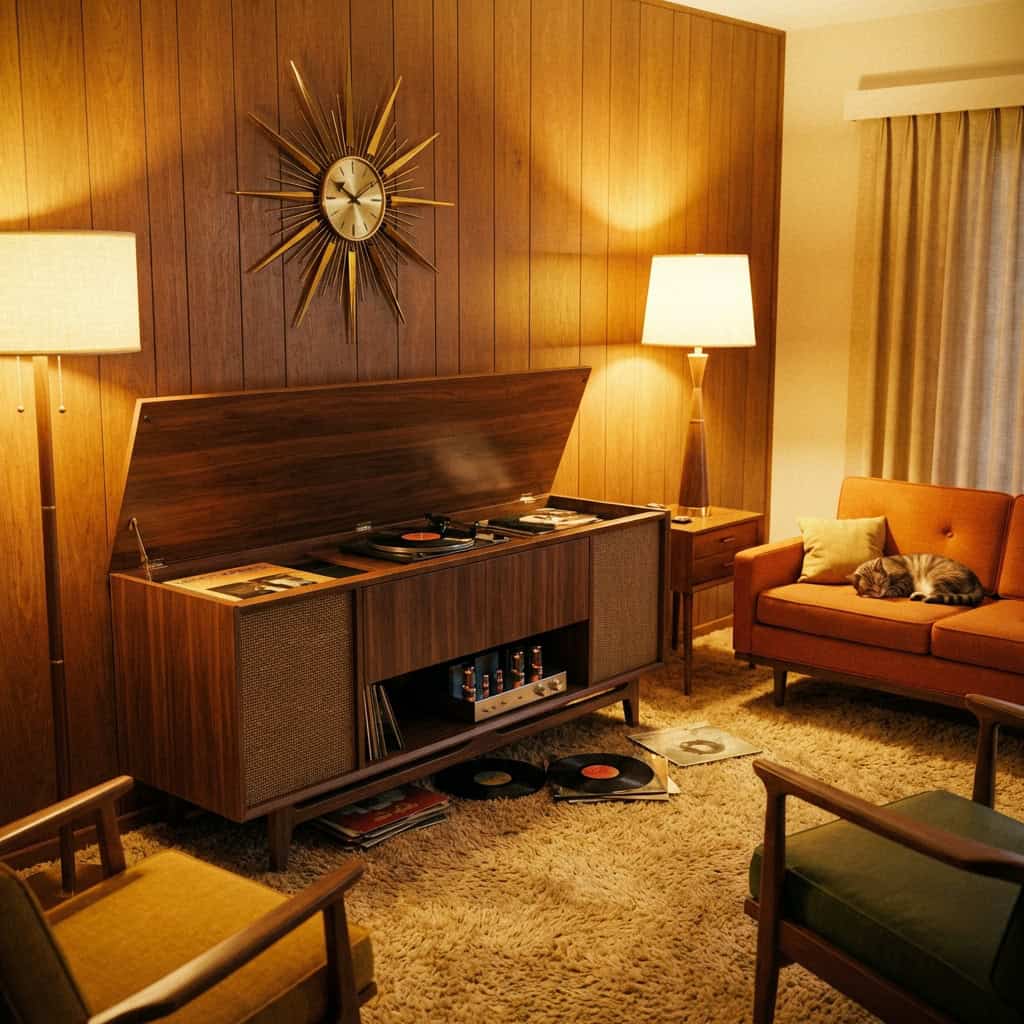
Before component stereos, before boom boxes, the hi-fi was a single piece of furniture that held everything.
The stereo console was a long, low wooden cabinet — usually walnut or teak — with a turntable under a hinged lid, a radio tuner behind a glass panel, and speakers built into both ends. Some models had storage below for record albums.
It sat in the living room like a credenza. It was the cultural center of the house — the place where parents played Frank Sinatra and the kids sneaked in the Beatles when nobody was looking.
The sound was warm and full, partly because the speakers were big enough to actually move air. Modern wireless speakers are smaller and smarter, but they have never matched the rich, room-filling sound of a console stereo with the lid open and a record spinning.
5. The Princess Telephone
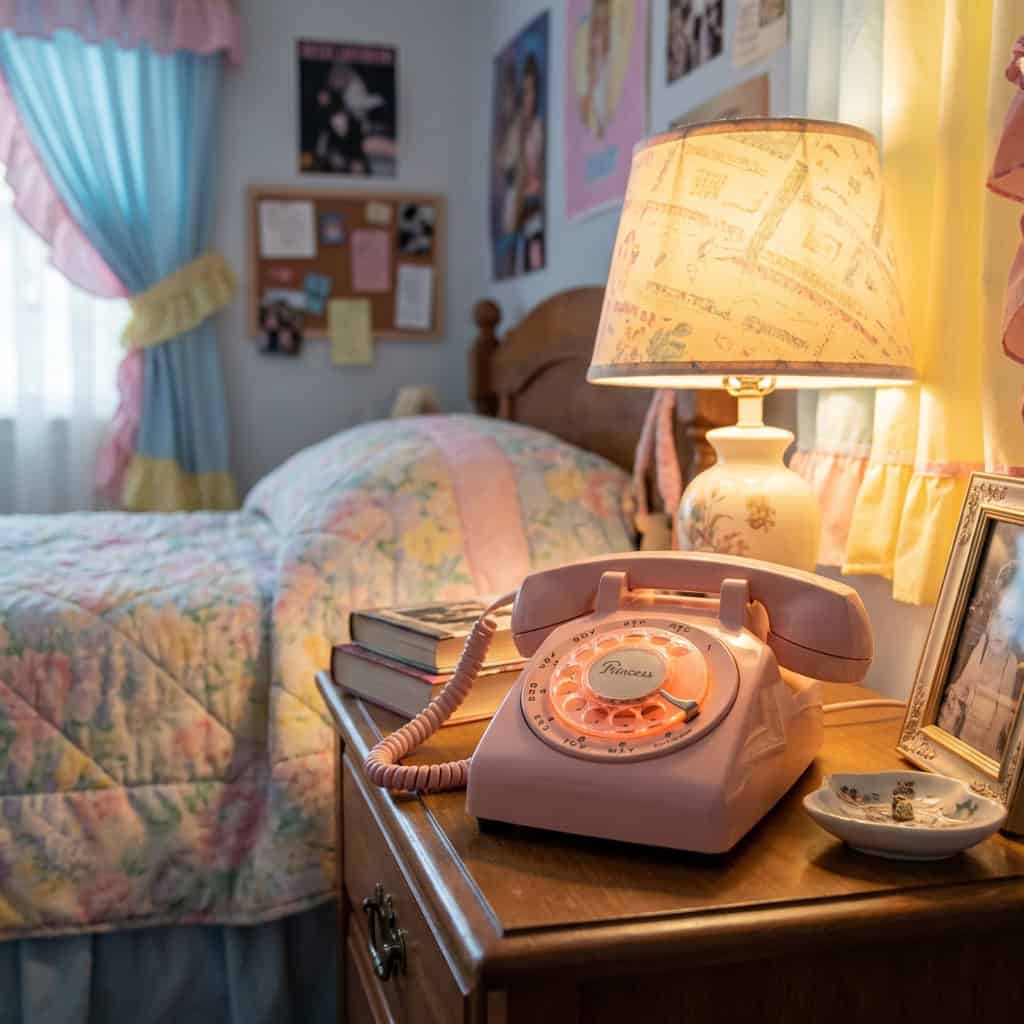
The standard telephone in the 1960s home was black, heavy, and utilitarian. Then Bell Telephone introduced the Princess phone, and everything changed.
The Princess was small, sleek, and came in colors — pink, turquoise, white, beige, and light blue. It had a lighted dial that glowed in the dark. It was marketed to women and teenagers, and it worked.
The Princess phone showed up on nightstands in the master bedroom and in teenage daughters’ rooms across America. Having your own phone in your room was the 1960s equivalent of having your own cell phone — a declaration of independence.
The lighted dial was the feature that sold it. In a dark bedroom, the Princess phone glowed like a small beacon, and reaching for it in the middle of the night felt like something out of a movie.
6. The Fallout Shelter
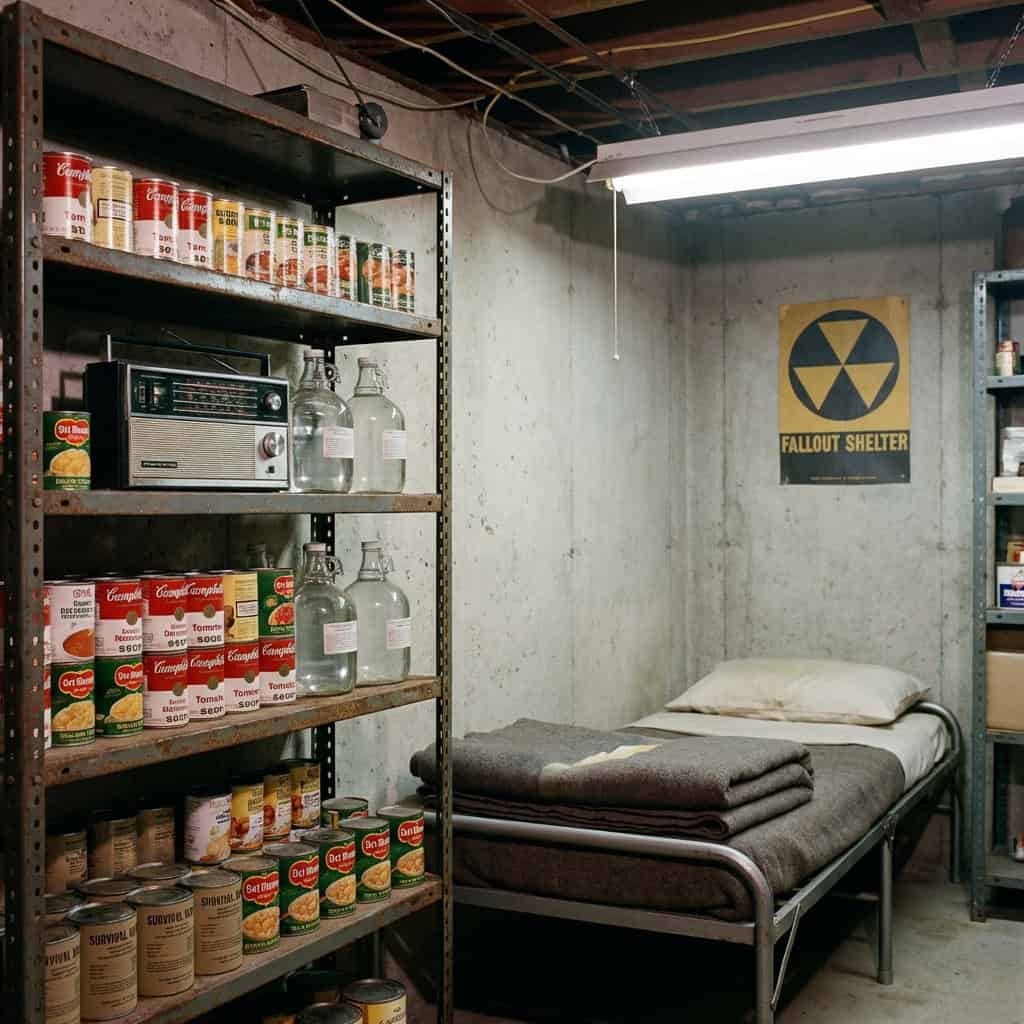
The Cold War was not an abstraction in the 1960s. It was a concrete room in the basement.
After the Cuban Missile Crisis in 1962, thousands of American families built — or at least stocked — home fallout shelters. Some were dedicated underground rooms with reinforced concrete walls. Others were simply a corner of the basement with supplies.
The supplies were specific: canned food, water, a first aid kit, a battery-powered radio, blankets, and a manual from the Office of Civil Defense that explained how many days you would need to stay underground after a nuclear attack.
Many families kept those supplies in the basement for years, slowly forgetting they were there. The canned goods expired. The batteries corroded. But the shelter — or the shelf of supplies — sat quietly in the corner as a reminder that the world outside the picture window was not as safe as it looked.
7. The Kidney-Shaped Coffee Table
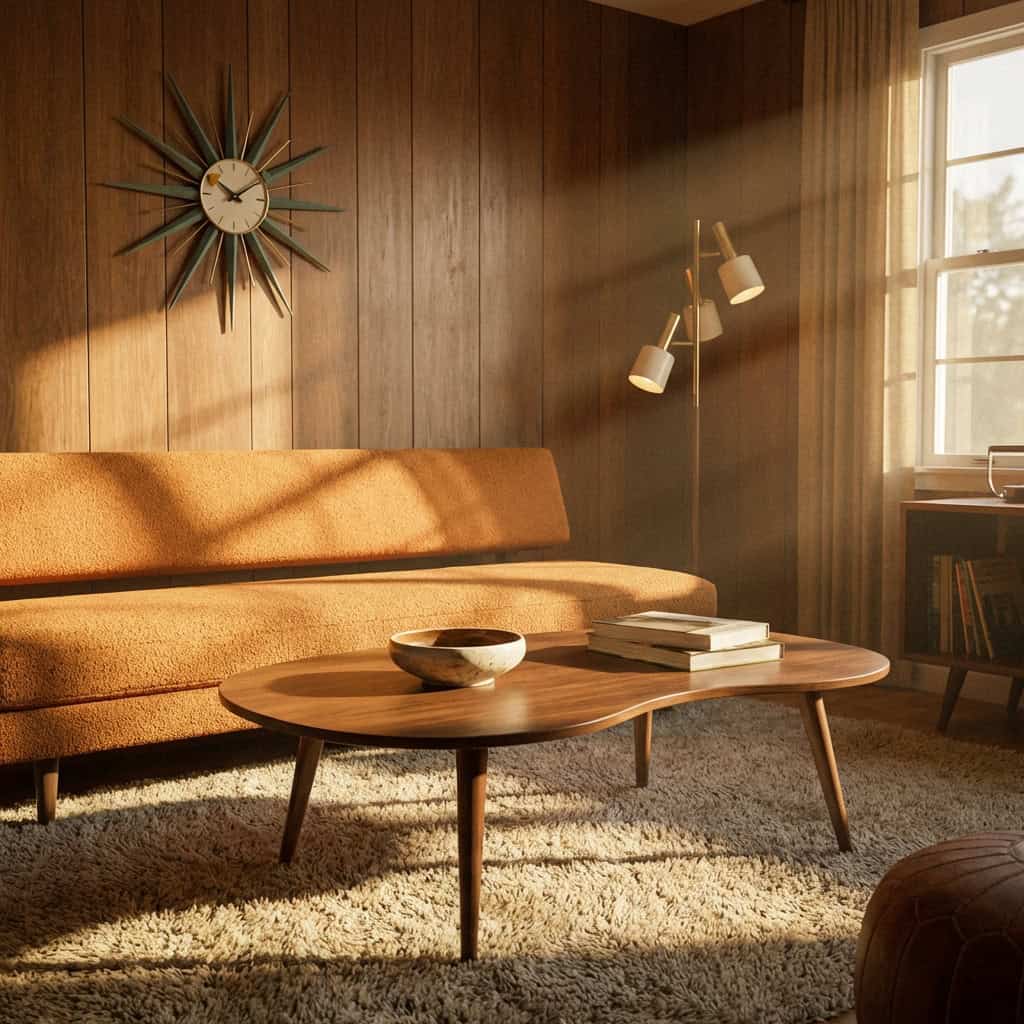
Not every coffee table in the 1960s was kidney-shaped. But enough of them were to make it the decade’s defining furniture silhouette.
The kidney shape — sometimes called a boomerang or amoeba shape — was an organic, curved form that rejected the sharp corners and straight lines of traditional furniture. It was part of the mid-century modern movement, which believed that furniture should look like it grew rather than was built.
These tables were low to the ground, often made of walnut or teak, and paired with a matching sofa and armchair. The shape meant there were no sharp corners to bang your shins on, which was either a design triumph or a happy accident.
The kidney-shaped table disappeared in the 70s when heavier, blockier furniture took over. But it is now one of the most sought-after mid-century pieces, and originals in good condition sell for prices that would have baffled the families who bought them for $30 at a department store.
8. The Sliding Glass Patio Door
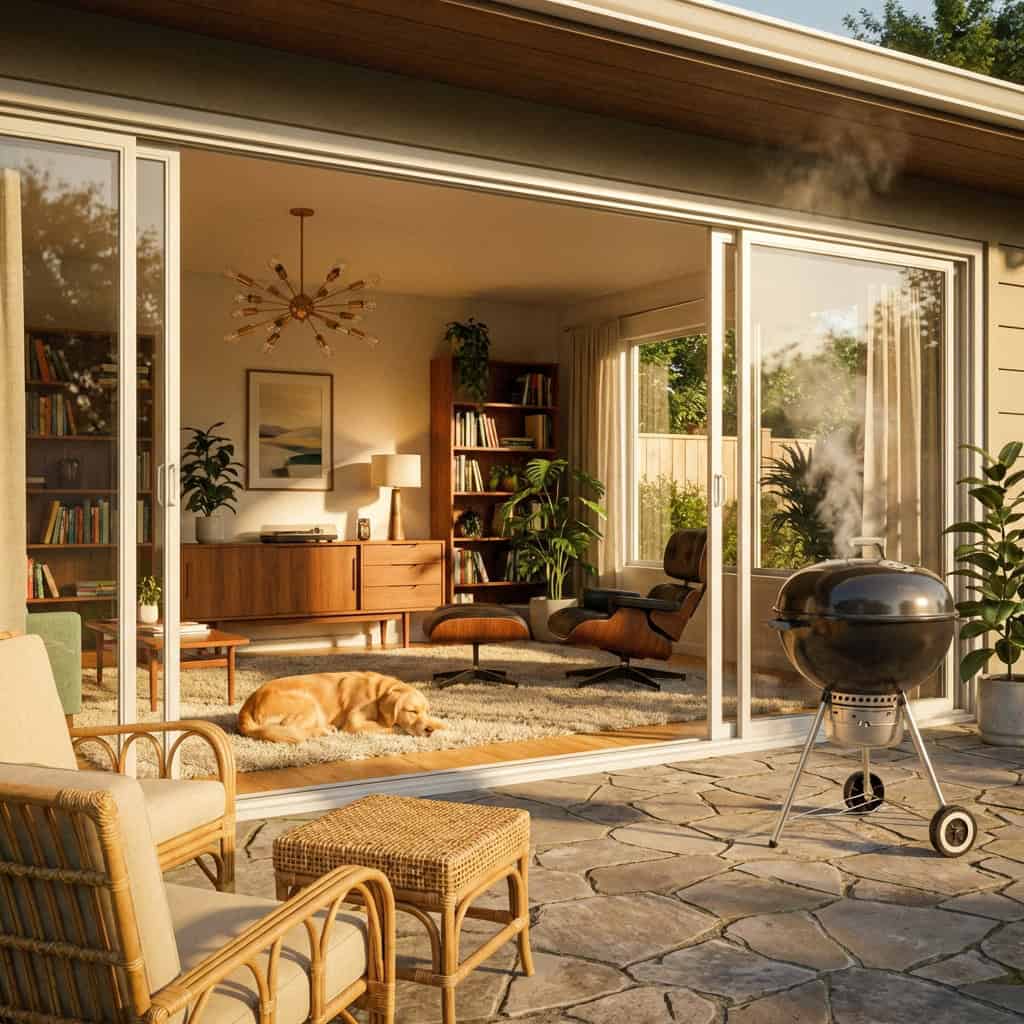
The 1960s invented the idea that your living room should flow directly into your backyard.
The sliding glass patio door was the bridge. A wall of glass on a track that slid open to reveal the patio, the barbecue, and the backyard — connecting indoor and outdoor space in a way that previous generations of homes never attempted.
It let light flood the living room and family room. It made the house feel bigger. And it gave the backyard a visual presence inside the home that changed how Americans thought about their property.
It also became the most walked-into surface in the American home. The number of foreheads, noses, and palms that hit that glass at full speed is incalculable. The invention of the sliding glass door decal — that little strip or sticker at eye level — was not a design choice. It was a public health measure.
9. The Split-Level Home
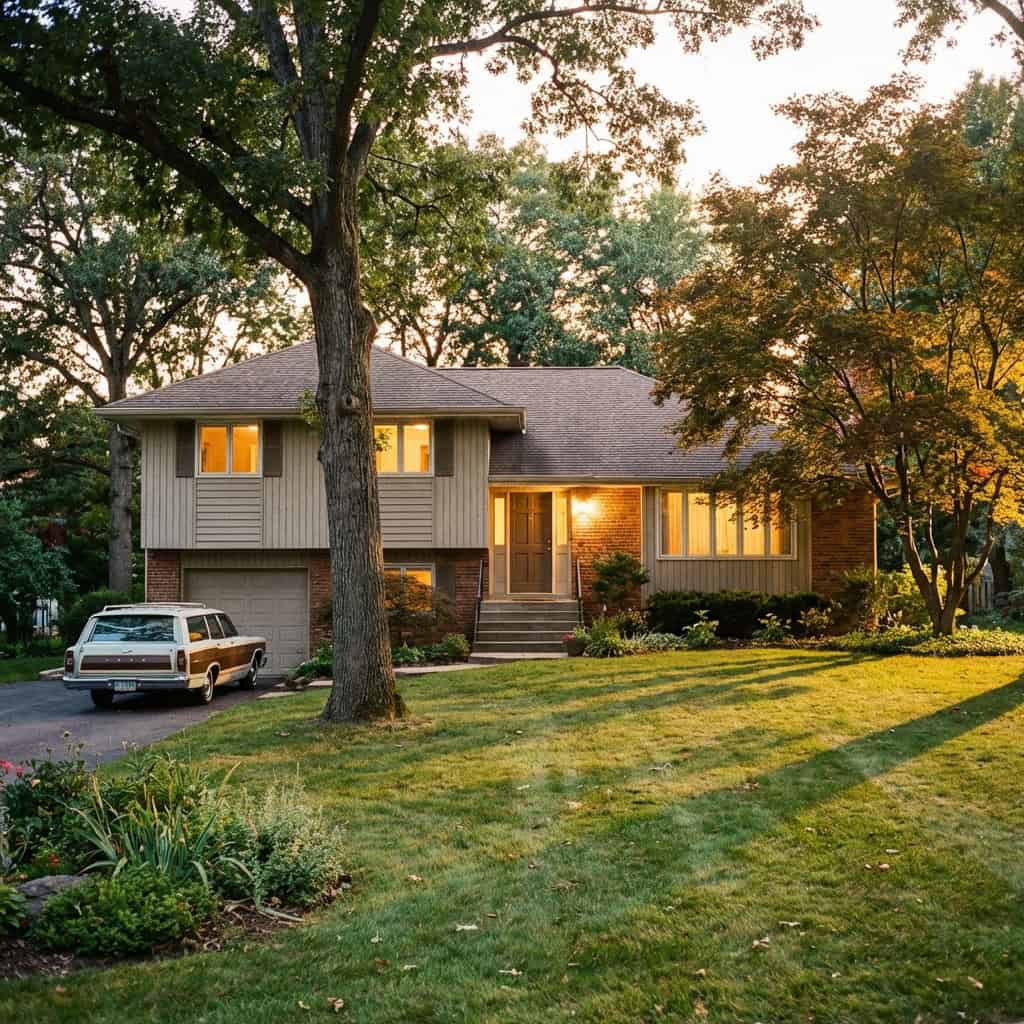
The split-level was the 1960s’ answer to the question: how do you fit more house on a small suburban lot?
The design staggered the floors — you walked in the front door to a small landing, then went up a half-flight to the living area and bedrooms or down a half-flight to the family room and garage. It created three or four distinct living zones on what was essentially a two-story footprint.
From the outside, the split-level was instantly recognizable — a roofline that stepped down in sections, a front door that sat between the two visible levels, and a garage door on the lower level.
Millions of them were built in the suburbs during the 1960s. They were efficient, affordable, and gave families a dedicated space for everything — living, sleeping, playing, and parking.
The split-level fell out of fashion in the 80s and 90s when open floor plans took over. But anyone who grew up in one remembers the specific sound of running up and down those half-flights of stairs — a rhythm that was part of the house’s personality.
10. The Family Room
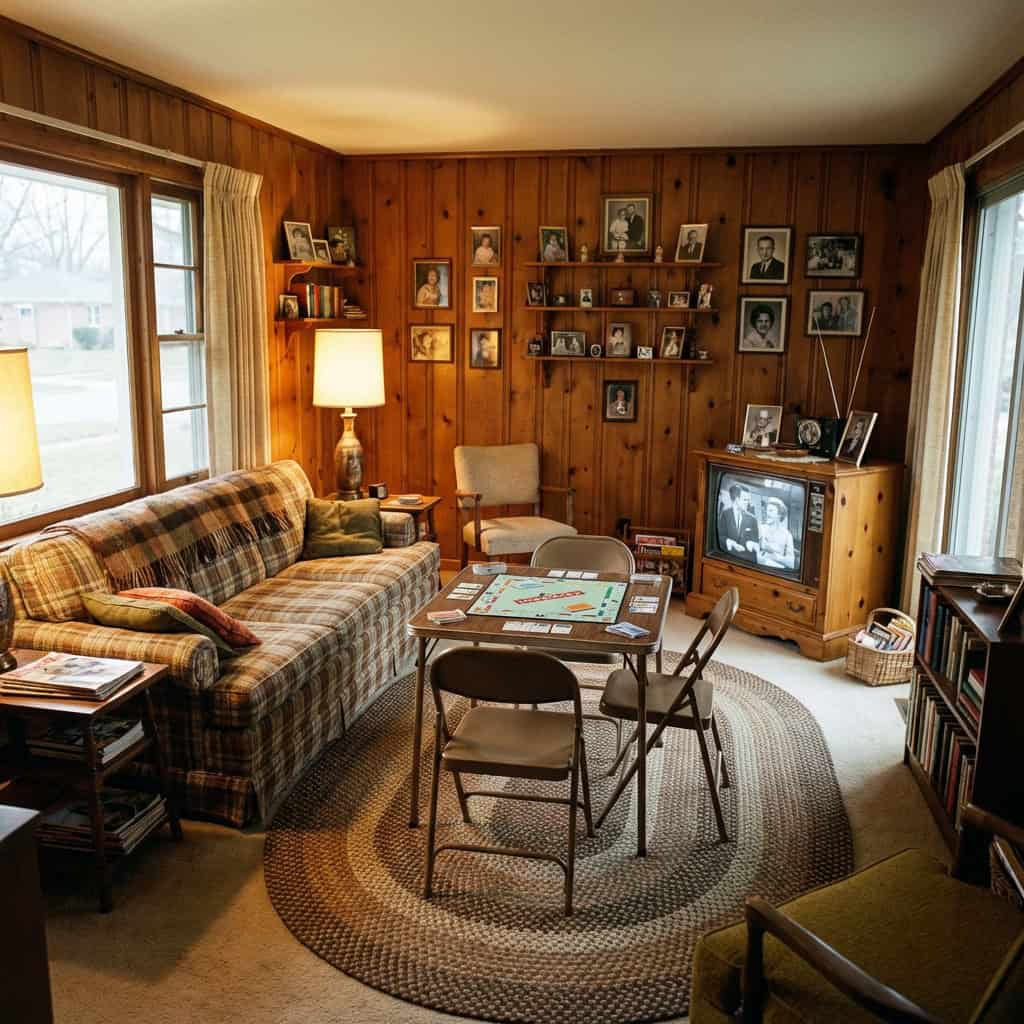
Before the 1960s, the American home had a living room. That was it.
The family room was a brand new concept — a separate, casual room where the family could watch TV, play games, and actually live without worrying about messing up the good furniture.
The living room remained formal. The couch was off-limits. The carpet was vacuumed in neat lines. Guests were received there.
The family room was the opposite. It had a TV, a comfortable sofa, maybe a card table, and rules that were considerably more relaxed. This was where kids could eat snacks, where the dog was allowed, and where dad could fall asleep in the recliner without anyone judging him.
The concept was revolutionary. For the first time, the American home had a room that prioritized comfort over appearance. Every open-concept great room that exists today is a direct descendant of the 1960s family room.
11. The Starburst Clock
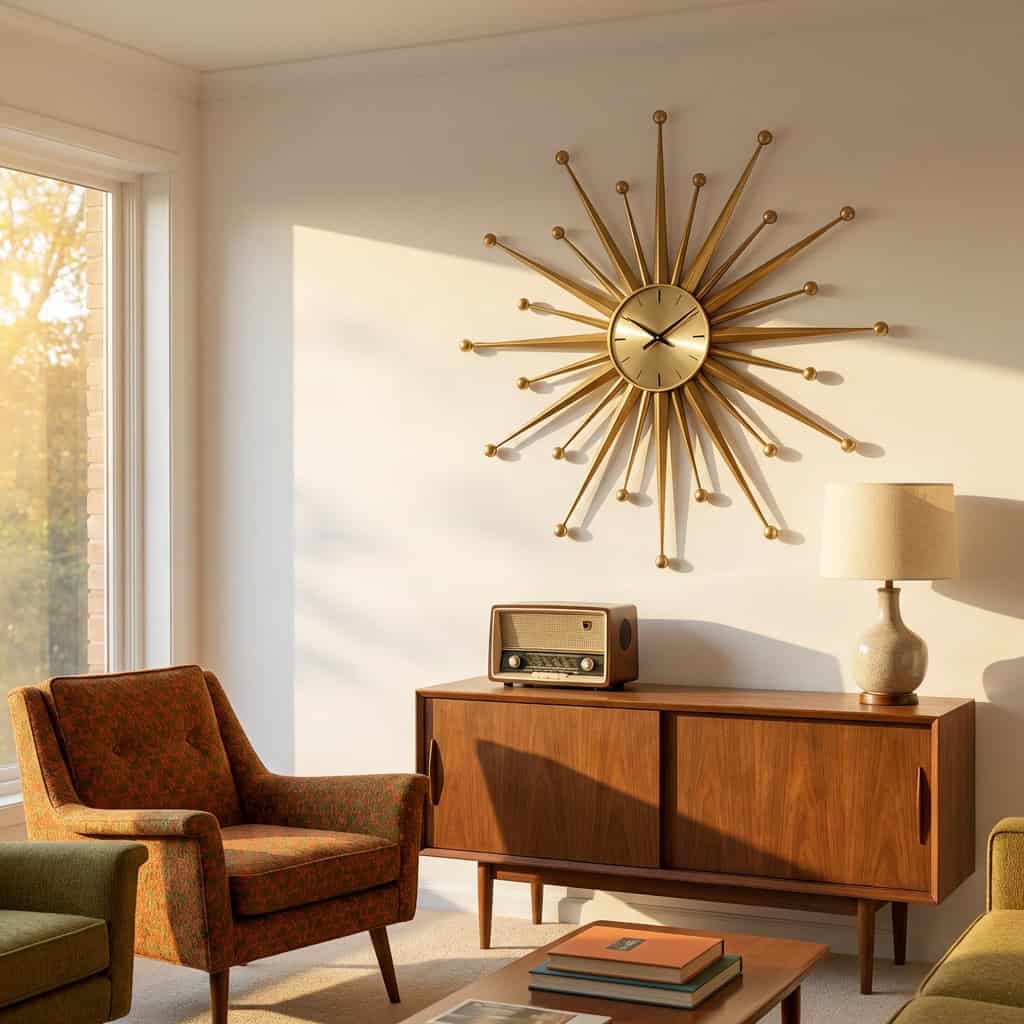
If there is a single object that says “1960s” more than any other, it is the starburst clock.
A round clock face surrounded by radiating metal spokes — some tipped with small spheres, some with diamond shapes, some with abstract forms — that created a sunburst or starburst pattern on the wall. The whole thing was two or three feet across and impossible to ignore.
It hung in the living room, the kitchen, or the entryway, and it turned a blank wall into a statement. George Nelson’s designs for Howard Miller were the most famous, but dozens of manufacturers made their own versions.
The starburst clock was the 1960s home’s way of saying “we are modern.” It was bold, graphic, and completely unlike anything that had come before. The fact that it also told time was almost beside the point.
12. The Pole Lamp
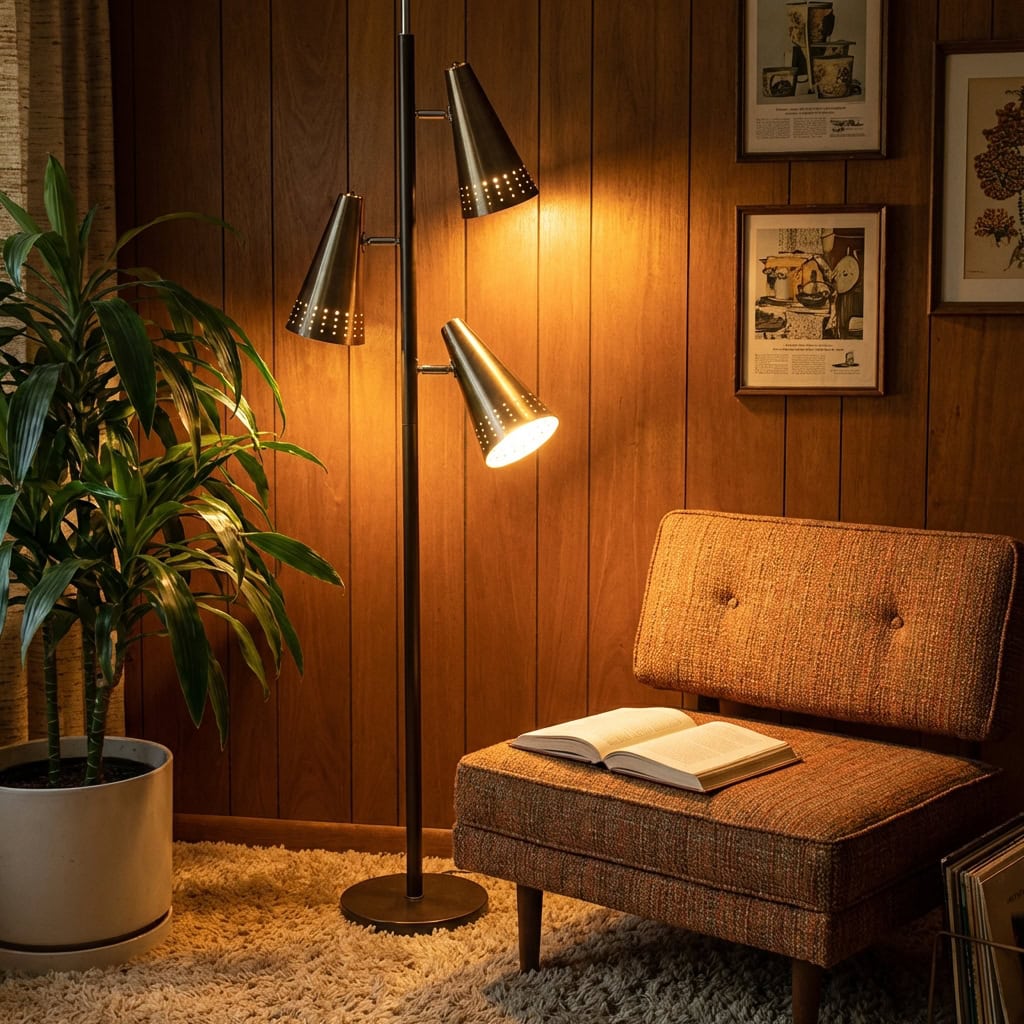
A metal pole that extended from floor to ceiling using spring tension, with two or three adjustable cone-shaped light fixtures attached at different heights.
The pole lamp was everywhere in the 1960s — next to the sofa, beside the recliner, in the corner of the bedroom. It required no wiring, no drilling, no installation beyond wedging it between the floor and the ceiling and twisting it tight.
The light cones swiveled and aimed, so you could direct light exactly where you needed it — over a book, toward the television, or at the wall for ambient glow.
It was the most flexible lighting solution of its time, and it occupied exactly zero floor space beyond the diameter of the pole itself. In the compact homes of the 60s, that efficiency mattered.
The pole lamp disappeared when track lighting and recessed cans took over in the 70s and 80s. But as a piece of design — functional, minimal, elegant — it was ahead of its time.
13. The Room Divider
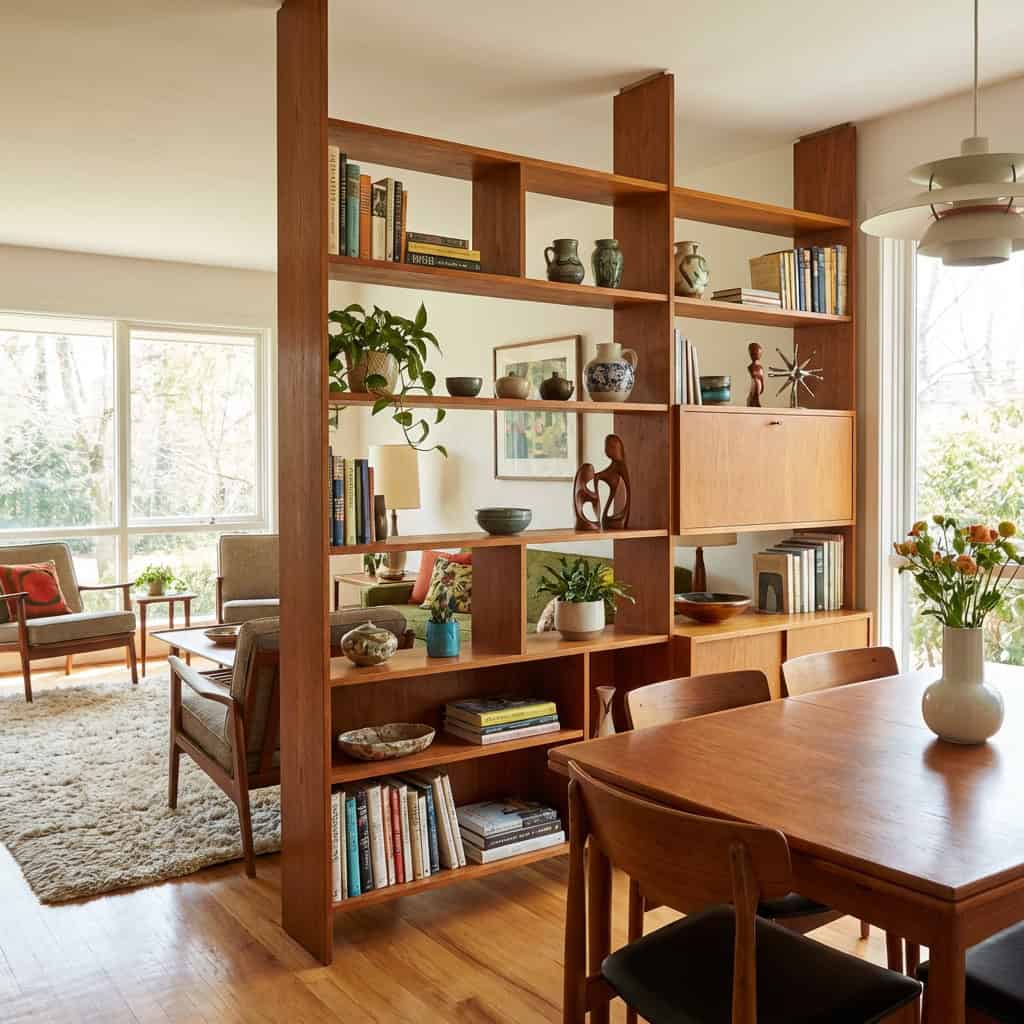
Open floor plans were starting to emerge in the 1960s, and the room divider was how homeowners made one big space feel like two.
The most common version was a built-in bookshelf wall — open on both sides — that separated the living room from the dining room or the entryway from the rest of the house. The shelves held books, decorative objects, a vase, maybe a small sculpture.
Freestanding room dividers also appeared — screens, bead curtains, and modular shelving units that could be rearranged.
The room divider was a distinctly 60s solution to a distinctly 60s problem. Homes were getting more open, but families still wanted defined spaces. The bookshelf wall gave them both — openness and boundary — without building a solid wall.
It was also one of the few design elements that was equally practical and beautiful. A well-styled room divider was a piece of architecture and a display case rolled into one.
14. Terrazzo Flooring
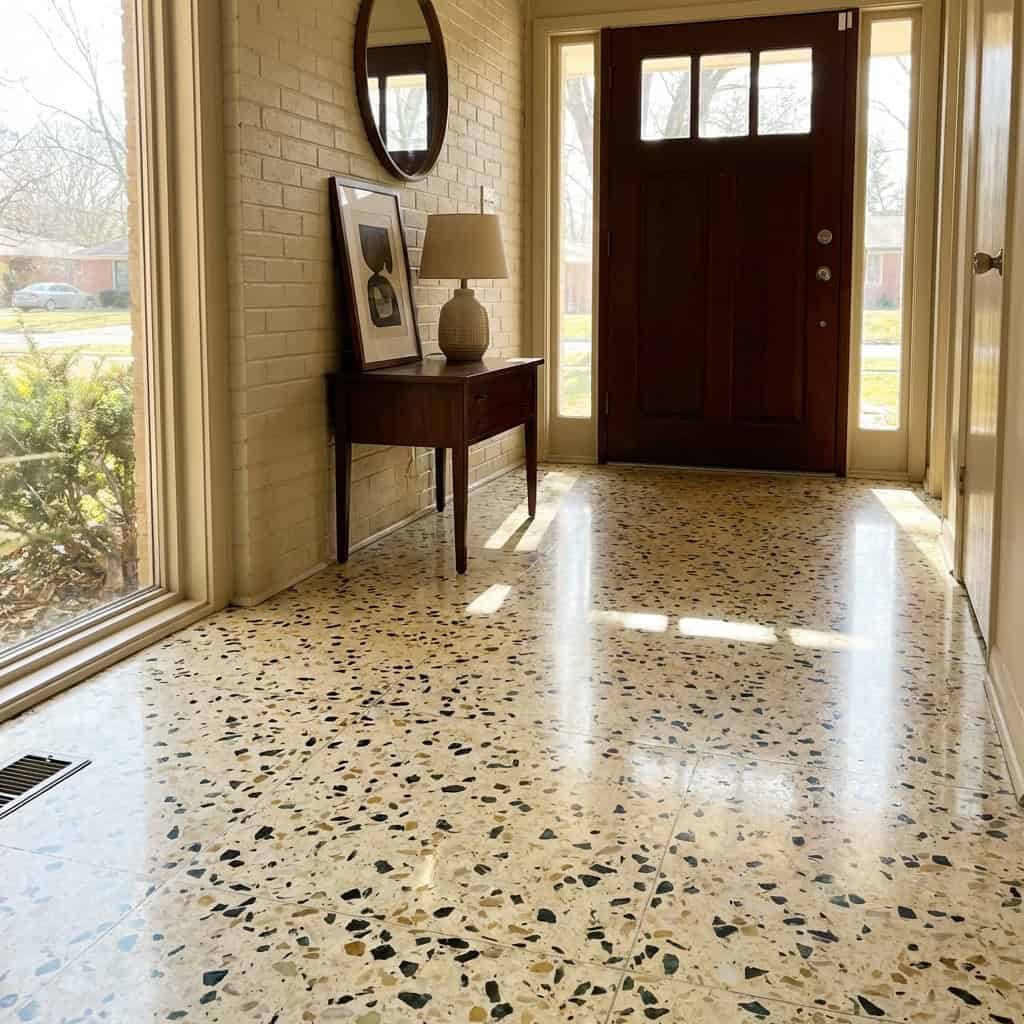
Terrazzo was the flooring of the future in the 1960s — and it turned out the future was right.
Chips of marble, granite, or glass were mixed into a cement or resin base, poured, and then ground and polished to a smooth, glossy finish. The result was a speckled, multi-colored surface that was harder than tile, easier to clean than wood, and more interesting than anything else on the market.
It showed up in entryways, kitchens, bathrooms, and Florida rooms across America. The color combinations were endless — white with green and gold chips, gray with black and red, cream with blue and brown.
Terrazzo fell out of fashion in the 70s when carpet and vinyl took over, and many homeowners covered their terrazzo with other flooring without realizing what was underneath. The discovery of original terrazzo during a renovation is now one of the happiest accidents in home improvement.
15. Ashtrays on Every Surface
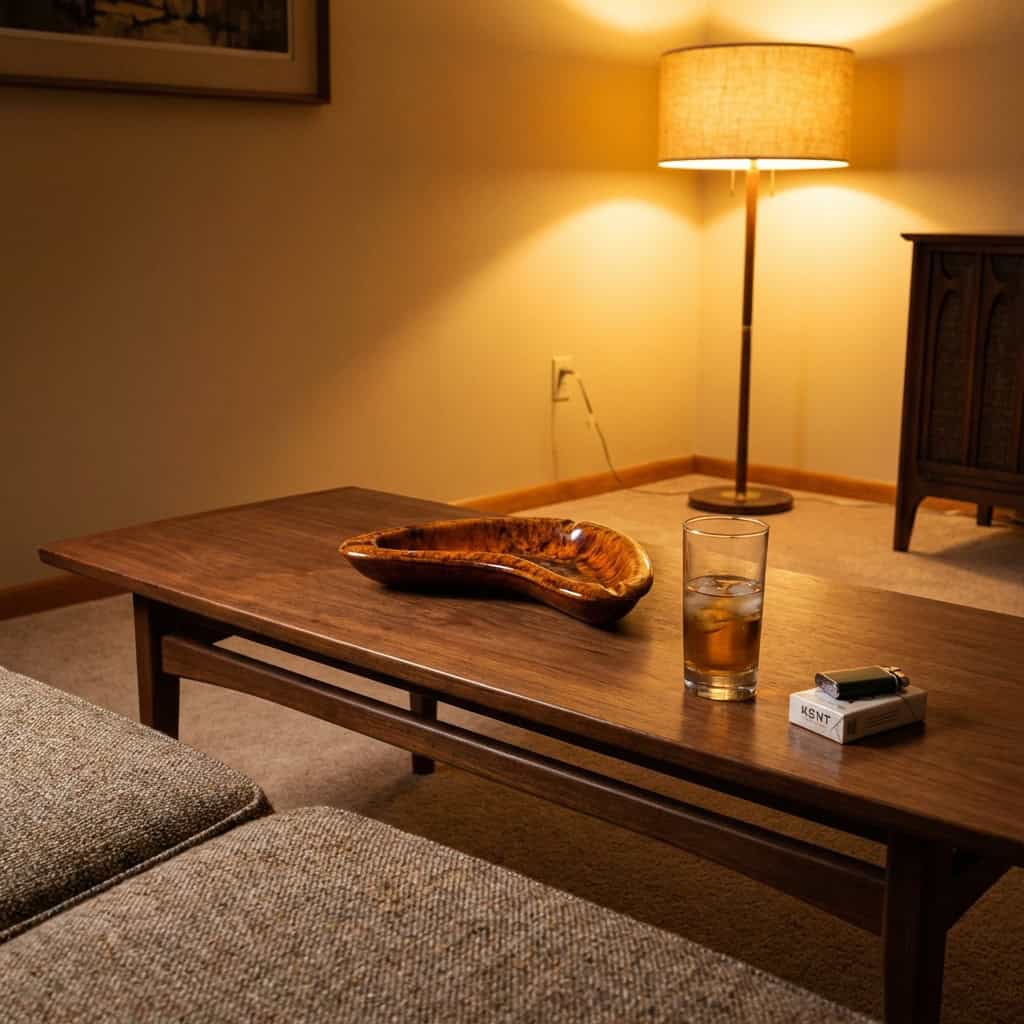
It is hard to explain to anyone born after 1980 just how many ashtrays were in a 1960s home.
There was one on the coffee table. One on the end table. One on the kitchen counter. One on the nightstand. One on the back of the toilet. One on the patio table. One built into the arm of the recliner.
They were ceramic, glass, metal, and crystal. They were shaped like boomerangs, leaves, animals, and abstract sculptures. Some were gifts. Some were souvenirs. Some were stolen from restaurants and hotels.
Everybody smoked — or at least it seemed that way. Guests expected an ashtray within reach at all times, and a good host made sure one was there.
The ashtrays disappeared as smoking declined, but the ones that survived are now collectible. A vintage mid-century ashtray in good condition — especially one by a known designer — is worth more today than the cigarettes that once filled it.
16. The TV Dinner and TV Tray
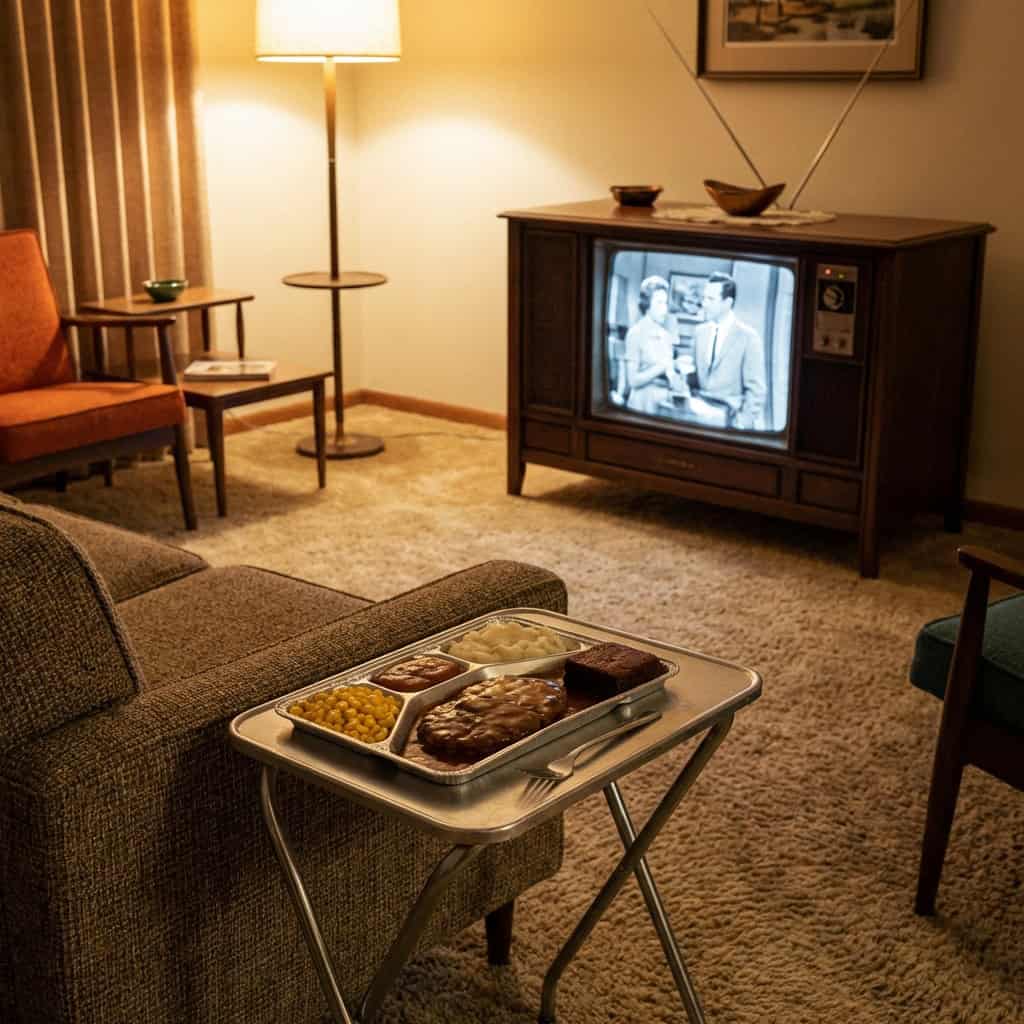
The frozen TV dinner was invented in the 1950s. But the 1960s turned it into a way of life.
Swanson, Banquet, and other brands offered complete meals — a main course, a side, and a dessert — in a compartmented aluminum tray that went directly from the freezer to the oven. Salisbury steak. Turkey with stuffing. Fried chicken. All ready in 25 minutes.
The TV tray was the essential companion. A folding metal tray table on collapsible legs that set up in front of the sofa so the family could eat while watching television. When dinner was over, the trays folded flat and slid behind the couch or into a closet.
The TV dinner and the TV tray together represented a fundamental shift in how American families ate. The dining table was no longer the only option. The living room — in front of the television — became an acceptable place to have a meal.
It was convenient, efficient, and the beginning of something that has only accelerated since. The TV dinner was the ancestor of every meal eaten in front of a screen.
17. The Sputnik Chandelier
The Space Race did not just change geopolitics. It changed light fixtures.
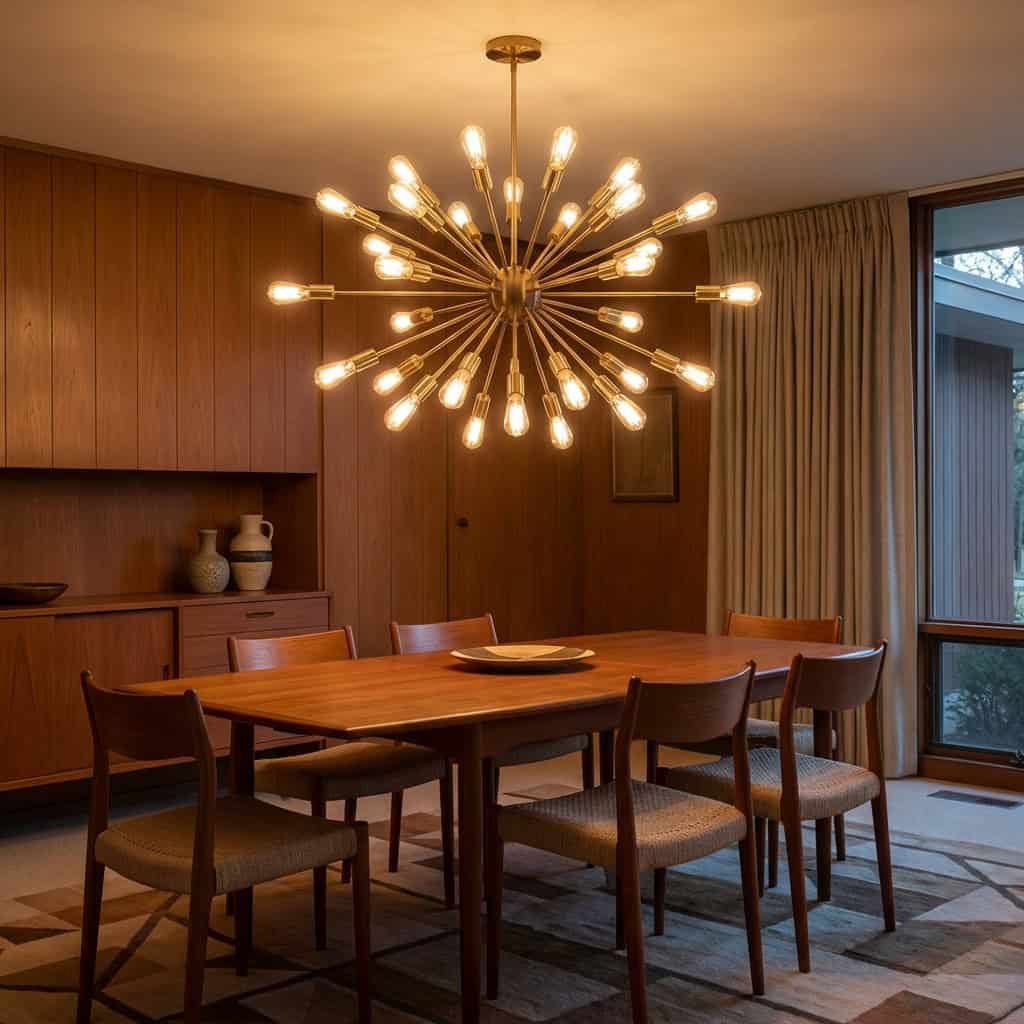
The Sputnik chandelier — named after the Soviet satellite that launched in 1957 — was a ball of radiating metal arms, each tipped with a light bulb, that hung from the ceiling like a starburst frozen in midair. It was the starburst clock’s more dramatic sibling.
It showed up in dining rooms, entryways, and living rooms of homes that wanted to make a statement. The arms radiated in every direction, the bulbs glowed at the tips, and the whole fixture seemed to float.
It was bold, futuristic, and unmistakably 60s. The space-age optimism of the decade — the belief that we were headed somewhere exciting — was captured in a single light fixture.
Sputnik chandeliers never fully disappeared, and they are now one of the most popular mid-century reproduction pieces on the market. The original ones, if you can find them, are worth a small fortune.
18. Pop Art Prints and Bold Graphic Fabrics
Andy Warhol did not just change art. He changed living rooms.
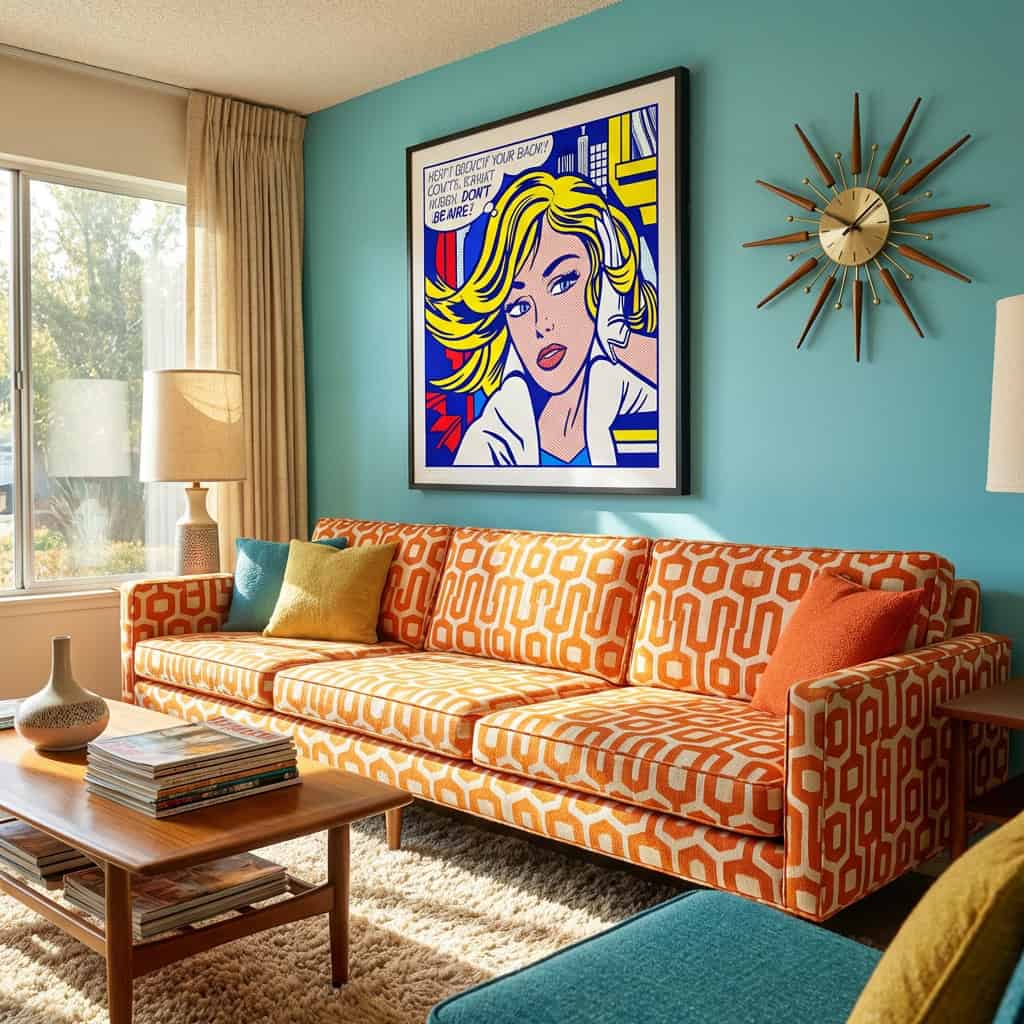
The Pop Art movement of the early 1960s brought bold, graphic imagery into mainstream culture, and homeowners followed. Prints inspired by Warhol, Lichtenstein, and Jasper Johns started showing up on living room walls — bright colors, hard edges, and subjects taken from advertising and everyday life.
The influence extended to fabrics. Sofa upholstery, curtains, and bedspreads featured oversized geometric patterns, bold stripes, and abstract prints in colors that had never appeared on furniture before — electric orange, hot pink, acid green.
The 1960s home was not afraid of visual intensity. A turquoise sofa with a geometric print, a Pop Art print on the wall, and a starburst clock beside it was not unusual — it was aspirational.
The look was confident, youthful, and a complete rejection of the restrained good taste that had defined the 1950s. The 60s home wanted to be seen.
19. Formica Countertops in Bold Colors
Before granite, before quartz, before butcher block — there was Formica.
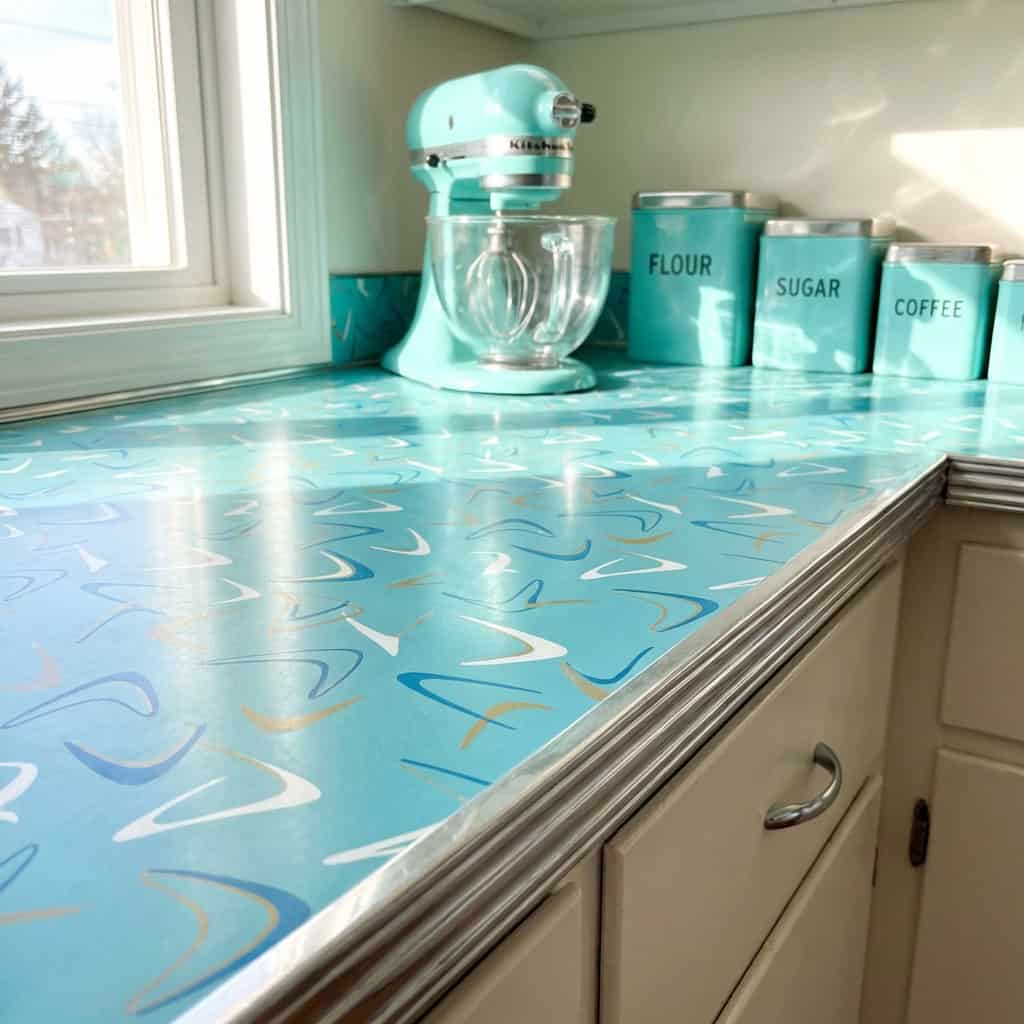
Formica laminate countertops were the 1960s kitchen surface of choice. They were affordable, durable, easy to clean, and available in an astonishing range of colors and patterns — turquoise, pink, yellow, red, and a whole catalog of boomerang, starburst, and atomic patterns that looked like something from a science fiction movie.
The laminate was bonded to a plywood substrate with a metal edging strip, and it could take years of abuse without showing wear. Hot pans were the one weakness — set one down and you had a permanent scorch mark.
Formica is still manufactured today, but the bold colors and atomic patterns of the 60s are long gone from the standard catalog. Finding original 60s Formica in a kitchen that has not been remodeled is like finding a time capsule — vivid, cheerful, and completely unlike anything sold at a home improvement store in 2026.
20. The Aluminum Christmas Tree
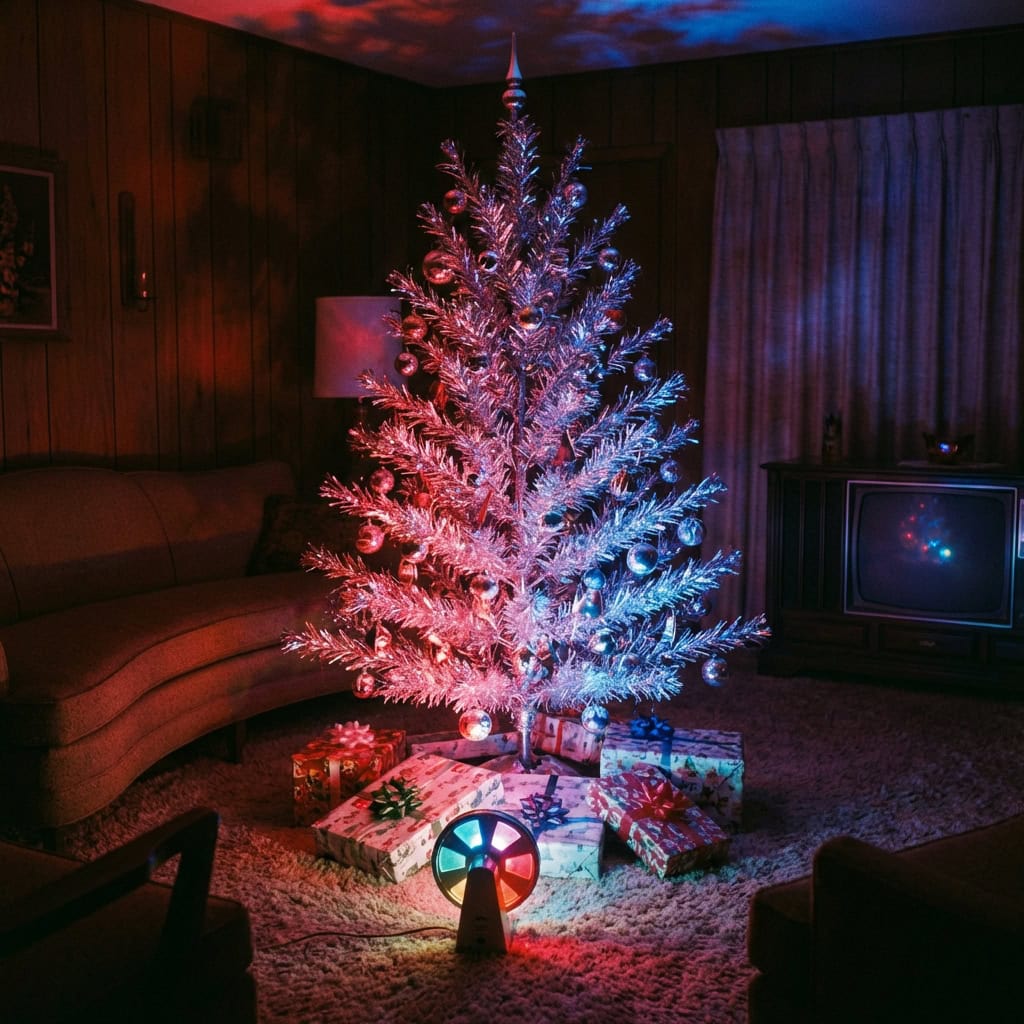
For one brief, shining decade, Christmas trees were silver.
The aluminum Christmas tree was exactly what it sounds like — a tree made of aluminum branches, usually silver, that reflected light rather than absorbed it. You did not put lights on an aluminum tree — the risk of electrical shock was real. Instead, you aimed a rotating color wheel at it — a spotlight with a spinning disc of colored gels that bathed the tree in red, then blue, then green, then gold.
The effect was otherworldly. A silver tree in a dark living room, slowly cycling through colors, looked like something from a department store window or a movie set.
Nearly a million aluminum trees were sold in the early to mid-1960s. They fell out of fashion fast — a Charlie Brown Christmas special in 1965 mocked them, and the natural tree made a comeback almost immediately.
The ones that survived — boxed up in attics for 60 years — are now collector’s items worth hundreds of dollars.
21. The Breakfast Nook
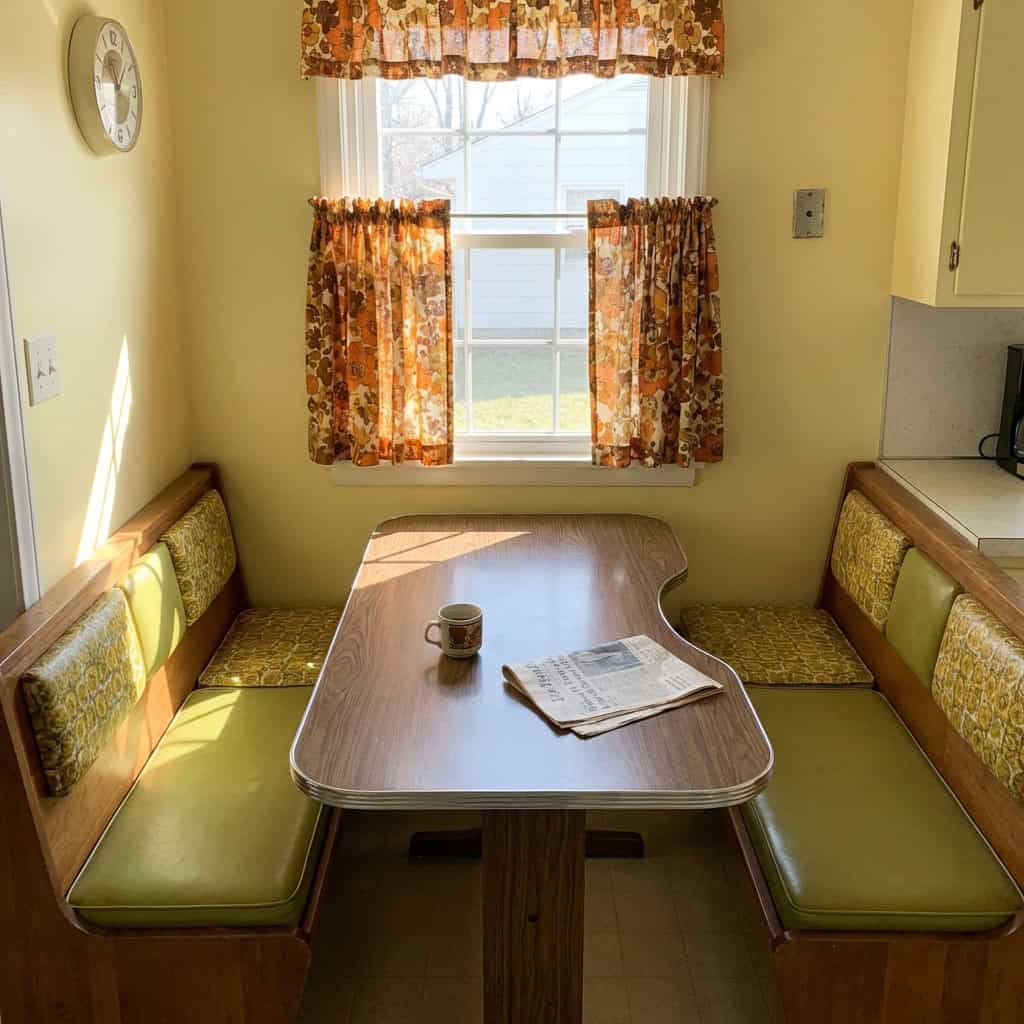
Before the kitchen island, before the breakfast bar, the breakfast nook was where the family started every morning.
It was a built-in booth — usually tucked into a corner of the kitchen or against a window — with bench seating on two or three sides and a small table in the center. The benches often had storage underneath, lifting up on hinges to reveal space for linens, cookbooks, or the good china.
The nook was small, intimate, and efficient. Three or four people could sit comfortably, and the built-in design meant it took up less space than a table and chairs.
Kids did homework in the nook. Mom read the paper there. Dad had his coffee and toast before leaving for work. It was the most used surface in the kitchen even though it was the smallest.
Open floor plans and kitchen islands replaced the nook in later decades. But the breakfast nook had a coziness that a barstool at a kitchen island has never matched.
22. The Tiki Bar
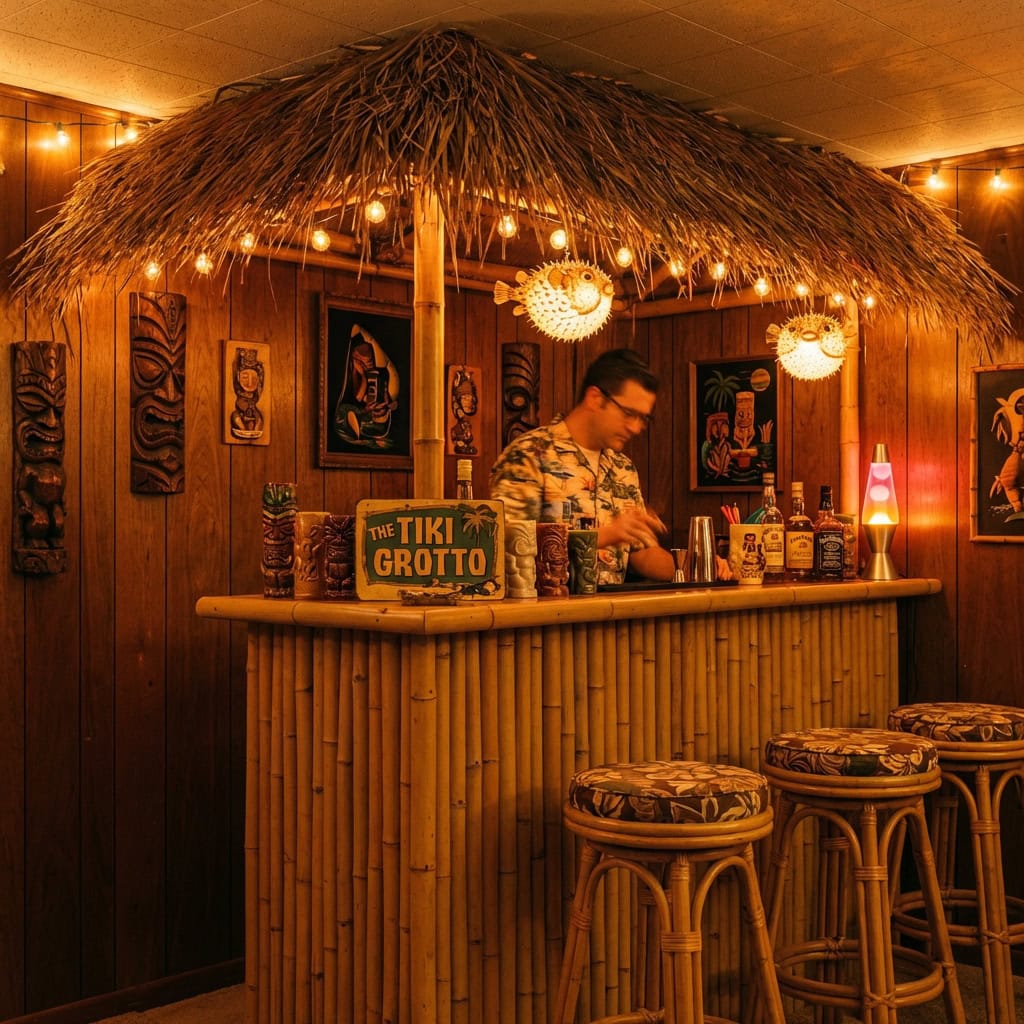
The 1960s had a love affair with the South Pacific that bordered on obsession.
Inspired by tiki restaurants, Polynesian-themed lounges, and the 1958 musical South Pacific, homeowners across America built tiki bars in their basements, patios, and rec rooms. Bamboo facades. Thatched roofs. Carved tiki masks on the wall. Tiki mugs shaped like faces and pineapples.
The drinks were specific — Mai Tais, Zombies, Blue Hawaiians, and anything served in a hollowed-out coconut with a paper umbrella.
The tiki bar was escapism built into the floor plan. You walked into a suburban basement in Ohio and suddenly you were in the tropics — or at least a version of the tropics imagined by someone who had seen a cocktail menu.
The tiki craze faded in the 70s as tastes changed, but it never fully disappeared. Tiki culture has had multiple revivals, and original 60s tiki mugs and decor are now highly collectible.
23. The Bar Cart
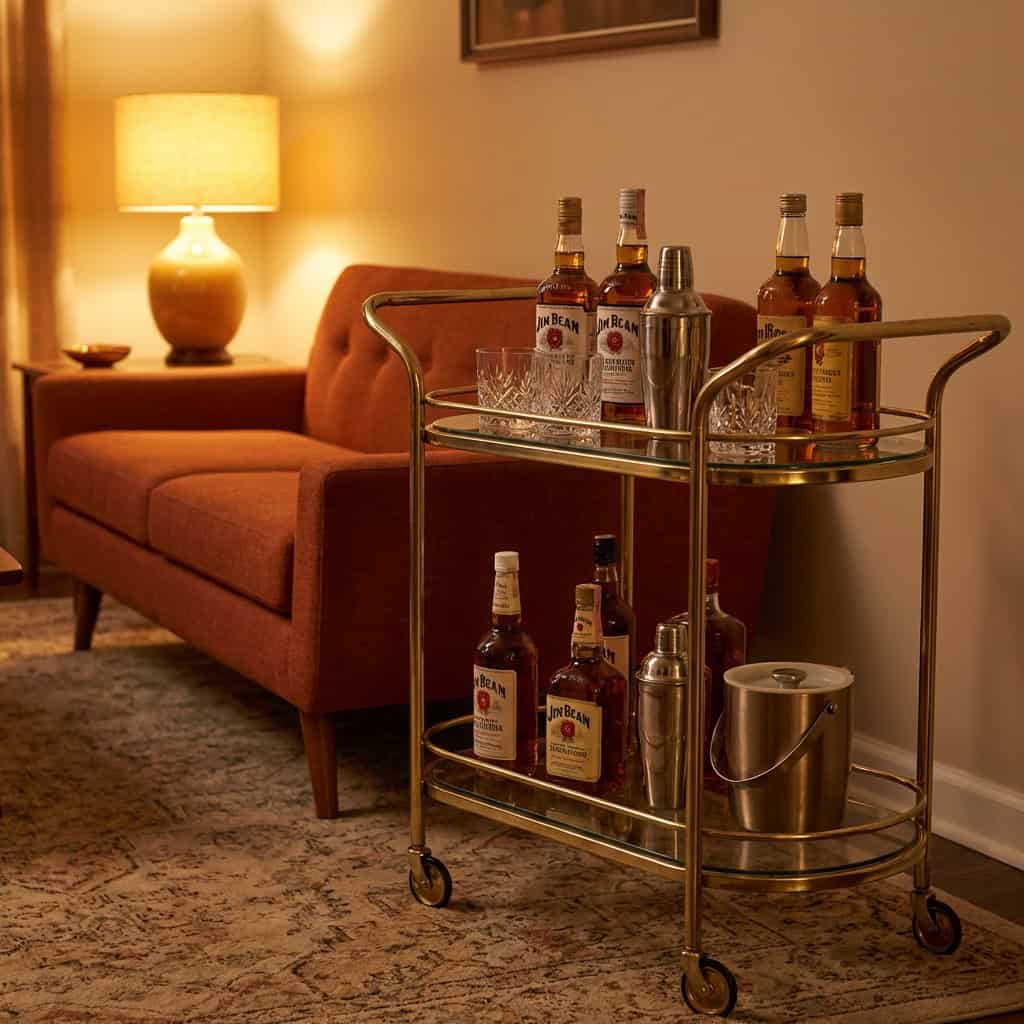
Not every home had room for a tiki bar or a globe bar. But almost every 1960s home had a bar cart.
It was a small, wheeled cart — usually brass or chrome with glass shelves — that held a few bottles of liquor, a set of glasses, a cocktail shaker, and maybe a small ice bucket. It rolled from room to room as needed and parked in the living room or dining room when not in use.
The bar cart said “we are adults, and adults drink cocktails at home.” It was a piece of furniture and a social statement rolled into one.
The ritual of the home cocktail hour — dad mixing Manhattans or gin and tonics after work — was a 1960s institution, and the bar cart was its altar.
The bar cart has had a major revival in recent years, which means the 60s got this one exactly right the first time.
24. The Home Intercom System
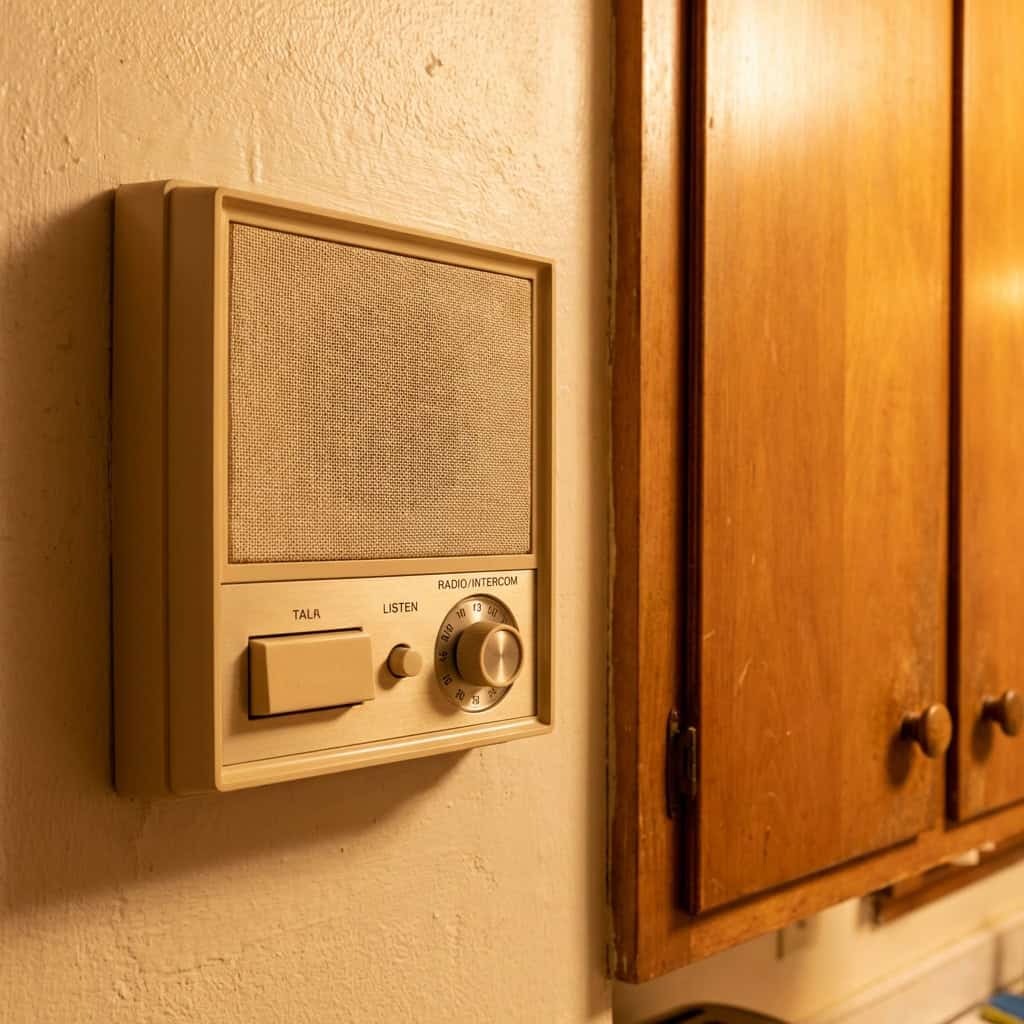
The 1960s home of the future had an intercom on the wall.
A small panel with a speaker and a call button was installed in the kitchen, the master bedroom, and sometimes the front door. You pressed the button, spoke into the speaker, and your voice came out of the panel in another room.
Some systems included a radio tuner, so you could pipe music through the house — the 1960s version of a whole-home speaker system.
In practice, the intercom was used to call the kids for dinner, to answer the front door without getting up, and to broadcast vaguely threatening parental announcements like “whoever left their shoes in the hallway has five seconds.”
The systems were wired into the walls and nearly impossible to remove, which is why you can still find dead intercom panels in homes built between 1960 and 1975 — small beige rectangles on the wall that have not worked in decades but refuse to go away.
25. The Window Air Conditioning Unit
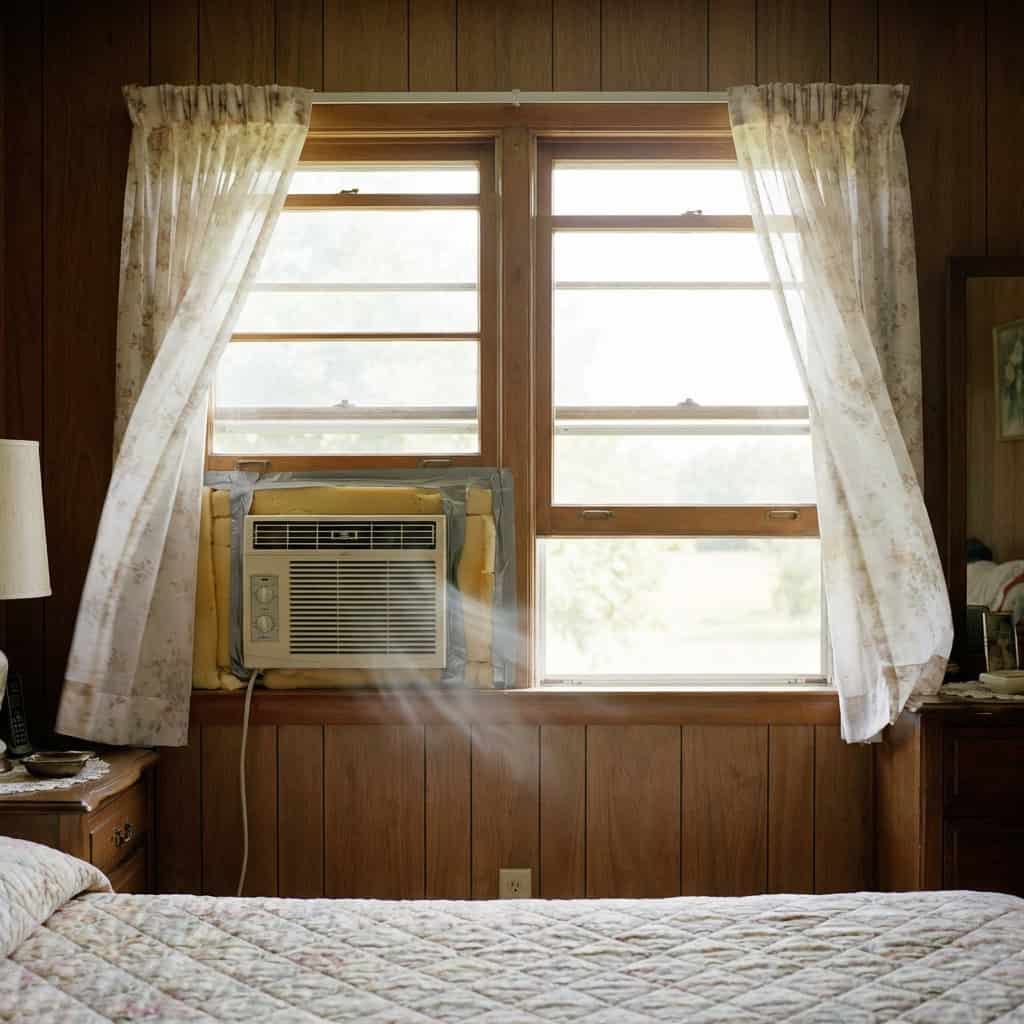
Central air conditioning was a luxury in the 1960s. The window unit was the democratic alternative.
A heavy, noisy metal box was wedged into a window frame — usually in the bedroom or the living room — propped up with a bracket, and sealed with foam strips. It dripped condensation onto the sidewalk below, hummed loud enough to drown out conversation, and cooled exactly one room to a temperature that made sleep possible on a July night.
Every family had a system. Close the doors to the room with the unit. Do not open them. Do not let the cold air escape. The rest of the house was warm, but the room with the window unit was a refrigerated sanctuary.
The sound of a window air conditioner — that steady, droning hum — is one of the most specific sensory memories of mid-century American summers. Central air does the job silently and invisibly, but it does not have the presence of that metal box in the window, rattling against the frame, working harder than anything else in the house.
Conclusion
That is 25. How many did you have?
The 1960s home was a house that believed in something. It believed that the future would be better than the past, that science and design could improve everyday life, and that a turquoise refrigerator was evidence of progress.
It was the decade that gave us the family room, the sliding glass door, and the idea that a house should connect to the outdoors. It gave us the split-level, the breakfast nook, and the concept of a room just for living — not for impressing guests.
It gave us Formica countertops in colors that had never existed before, stereo consoles that filled a room with sound, and a clock on the wall shaped like the future itself.
The 1960s home was optimistic. Confidently, unapologetically, sometimes absurdly optimistic.
And walking into one today — if you can find one that has not been gutted — still feels like stepping into a world that was absolutely certain things were about to get better.